
Eppendorf to Present Latest Innovations and Extensive Product Portfolio at Biotechnica 2013
23 Sept 2013Product news
At this year's BIOTECHNICA industry trade fair in Hannover from October 8-10, Eppendorf AG will present its innovations and extensive product portfolio across 260 m² of exhibition space at booth F09 in Hall 9.
BIOTECHNICA is Europe's leading trade fair and conference event for biotechnology, life sciences and lab technology. Here visitors can see what modern biotechnology can do for every part of life, now and in the future. The focal point of this year's event was bio-economics.
Eppendorf, a technology partner in the life sciences, will introduce five innovative new products at BIOTECHNICA. Among them are the new Reference 2 pipette, the new Multipette M4 and the new generation of mixers with a total of four new devices. Visitors will also discover innovations in bioprocess technology: the new 1L single-use bioreactor BioBLU 1 extends the existing BioBLU family and the familiar DASbox mini-bioreactor system with a new design.
And as a highlight of the exhibition, the company will present its new 5mL Tube with its complete system. In conjunction with the 50th anniversary of the Eppendorf tube, this unique new product inspired the motto for Eppendorf's appearance at BIOTECHNICA this year – "50 Years of Consumables & 5mL Tube".
About Eppendorf AG:
Eppendorf is a leading life science company that develops and sells instruments, consumables and services for liquid, sample and cell handling in laboratories worldwide. Its product range includes pipettes and automated pipetting systems, dispensers, centrifuges, mixers, spectrometers and DNA amplification equipment as well as ultra-low temperature freezers, fermentors, bioreactors, CO2 incubators, shakers and cell manipulation systems. Associated consumables like pipette tips, test tubes, microliter plates and disposable bioreactors complement the instruments for highest quality workflow solutions.
Eppendorf products are most broadly used in academic and commercial research laboratories, e.g., in companies from the pharmaceutical and biotechnological as well as the chemical and food industries. They are also aimed at clinical and environmental analysis laboratories, forensics and at industrial laboratories performing process analysis, production and quality assurance.
Eppendorf was founded in Hamburg, Germany in 1945 and has about 2,700 employees worldwide. The company has subsidiaries in 25 countries and is represented in all other markets by distributors.
Related products
Request Quote for All Products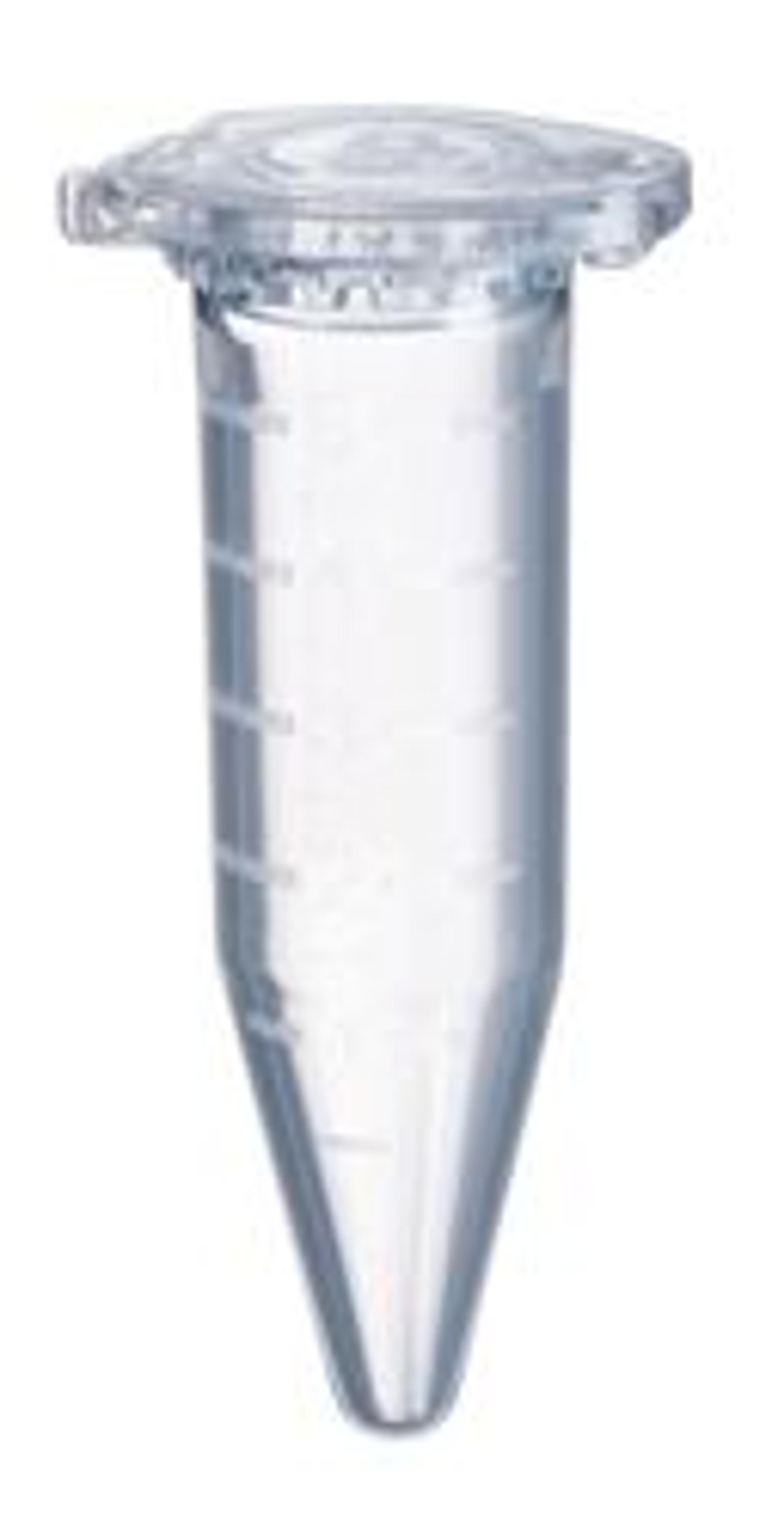
Eppendorf Tubes® 5.0 mL
EppendorfEppendorf Tubes are the benchmark for simple and safe sample preparation from 0.5 to 2.0 mL. For larger volumes, 15 mL and 50 mL conical tubes are available. With medium sample volumes you may face an issue: they need to be processed with large conical screw cap tubes - impractical, inconvenient and often prone to contamination. Eppendorf now offers the "missing link": the Eppendorf Tube 5.0 mL. This product fills the gap between existing tube versions and enables the simple and safe processing of sample volumes up to 5.0 mL!Eppendorf Tubes® 5.0 mL Features: Ergonomic operation - Simple, practical and ergonomic single-hand operation. Large labeling area. Lid design - Hinged lid for minimized sample evaporation during storage and incubation in a wide range of temperatures from -86 °C to 80 °C. Material - Exceptionally high-quality, transparent polypropylene, free of plasticizers, biocides or mold release agents, for reliable test results. Certified purity - Available in lot-tested and certified Eppendorf Quality, PCR clean, Sterile and Eppendorf Biopur® purity levels. Centrifugation safety - Maximum safety and stability for centrifugation up to 25,000 × g and fast and efficient protocols. Conical shape - Compatible with accessories for conical 15 mL tubes - many existing adapters and racks can be used. Sample recovery - Available in Eppendorf LoBind® material for maximum recovery of valuable samples. Applications: Easier processing of samples up to 5.0 mL Higher yields in DNA isolation, especially with samples with limited quantity of source material Convenient and safe cell culture applications Easier sample access lowers the risk of contamination Preparation of mastermixes and buffers Less storage space needed Safe cell and tissue lysis
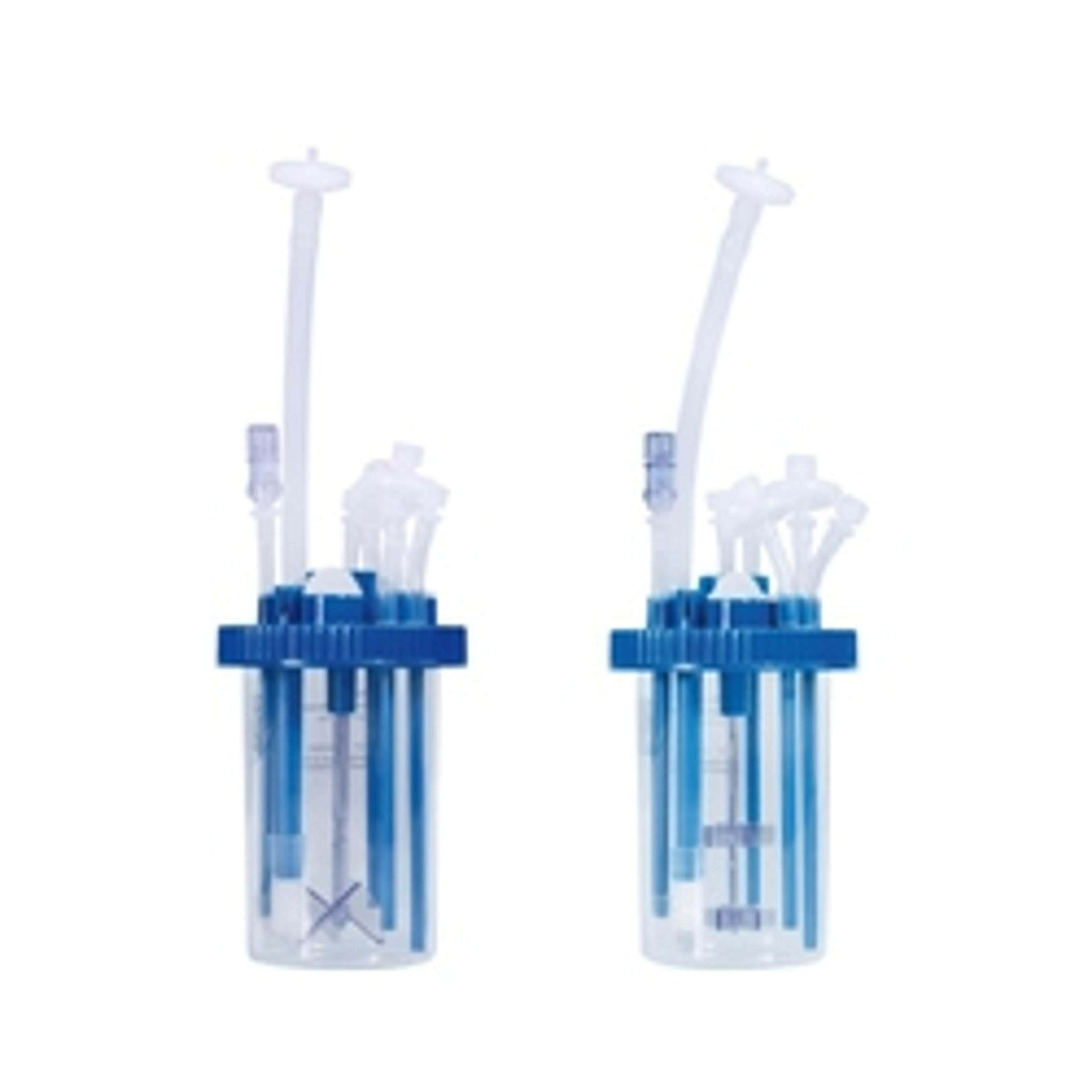
BioBLU® 0.3 Single-Use Vessels
EppendorfAs the smallest vessel of the Eppendorf single-use bioreactor family the BioBLU 0.3 is ideally suited for use as a scale-down model. Designed for use with the DASbox Mini Bioreactor System it is able to accelerate process development in biopharmaceutical and biotechnological applications using cell cultures and microorganisms.All critical process parameters can be precisely controlled and users benefit from easy handling, minimized set-up time and the elimination of cleaning and sterilization steps. The unique liquid-free exhaust gas condenser reduces negative effects caused by change of medium osmolarity and efficiently prevents blocking of the exhaust gas filter.BioBLU® 0.3 Single-Use Vessels Features: Fully instrumented single-use mini bioreactors for accelerated process development in cell culture and microbial applications. Excellent scalability and reproducibility. Small working volumes starting at 65 mL save on cell material, media and supplements. Used with the DASbox mini bioreactor system for parallel set-up of 4, 8, 12 or more bioreactors. Liquid-free exhaust condenser with easy handling by automatic click in activation and click out deactivation mode. Magnet-coupled overhead drive reduces the risk of contamination, up- or downflow. Headplate with 2x PG 13.5 ports, 4x integrated long dip tubes, 2x integrated short dip tubes, one thermowell, DO sensor port with permeable membrane. Operating with industry standard probes for precise measurement and control of temperature, pH, DO. Vessels are delivered pre-sterilized by ß-irradiation to dose exceeding 15 kGy (DIN EN ISO 11137-2:2007). All wetted materials are USP Class VI certified. Applications: Process development in cell culture and microbiology Design of Experiments (DoE) Media optimization Clone & cell line screening, strain characterization