Eppendorf concentrates on versatility plus ease of use

18 Mar 2008
Greg Smith
Analyst / Analytical Chemist

Product news

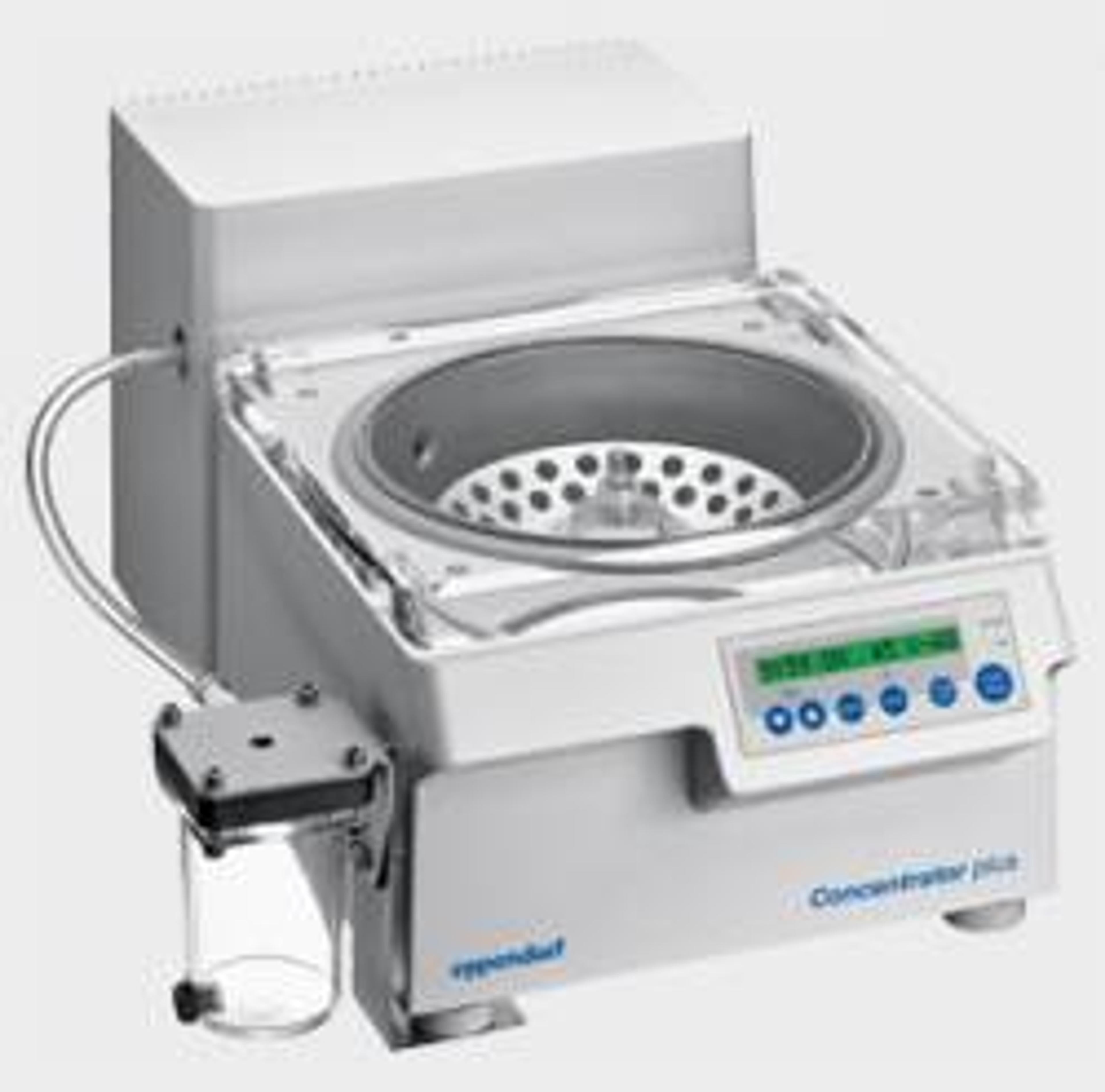
Featuring a new LCD display and user-friendly control panel, the Eppendorf Concentrator plus is designed for concentration, drying and purification of biomolecules. With three concentrator modes as well as centrifuge and integrated dessicator functions, the Concentrator plus provides valuable versatility for molecular and cell biology labs.

Pre-selection of one of four different heating levels allows optimised drying times for different samples, while three application modes – for aqueous, alcohol or high vapour pressure solvents – provide faster evaporation, reducing processing time by up to 20 per cent.

The dessicator function can be used for fast evaporation of filters with optimised vapour pressure conditions and the 1,400 rpm centrifugation function is ideal for spinning down droplets after re-suspension. Eppendorf supplies 14 different compatible rotors, ranging from 0.2 ml PCR tubes to 25 ml tubes, and increased throughput is possible using two stacked rotors.

According to Peter Schreiner, Product Manager Multipurpose Centrifuges, Eppendorf AG, Hamburg, ‘Handling samples up to 240 ml, the new Concentrator plus offers a compelling alternative to concentration by freeze drying, rotary evaporation, precipitation or evaporation by nitrogene stream. Target applications are those requiring fast, gentle concentration of DNA, RNA, oligonucleotides and proteins, including small volume and temperature-sensitive samples.’

The Eppendorf Concentrator plus is available in a choice of two configurations: the basic device or a complete system with integrated service-free diaphragm pump, vapour condenser and optional junction to connect an external device such as a gel dryer. The compact design saves on bench space and clear allocation between soft keys and the digital display ensures easy, intuitive use.

Concentrator plus

Eppendorf

The new Concentrator plus from Eppendorf is available in two configurations: * Complete system with an integrated service-free diaphragm pump * Basic concentrator for connecting to an existing vacuum. The concentrator can easily be upgraded to a complete system at a later stage if desired. Power to external vacuum pumps can be automatically controlled by using the AC receptacle in the rear of the concentrator. The Concentrator’s heating technology optimizes the evaporation process. No matter which configuration you choose, you’re assured of quick and efficient—yet gentle—vacuum concentration of your samples (e.g. DNA/RNA, proteins). The complete system includes a vapour condenser that purifies the exhaust air by up to 85%. This serves as protection against unpleasant vapours. At the same time, an automatic condensate drain extends the service life of all components that come into contact with the vapours. The new Concentrator plus features a new LCD display and user-friendly control panel with clearly labeled function keys.

(5)

Links

Tags

Sample PreparationSample preparation can improve the quality and speed of separation techniques. Products to assist sample preparation include filtration equipment, evaporators, membranes and sieves.PCR and Thermal CyclingPolymerase chain reaction (PCR) kits and thermal cyclers are used for the in vitro amplification of DNA permitting subsequent analysis and experimental procedures. Explore a range of high-quality polymerase, primers and nucleotides or simplify your workflow with a PCR mastermix. Find reverse transcription PCR (RT-PCR) and cDNA synthesis kits for RNA products and libraries. Quantitatively measure the amplification of DNA with real-time PCR (qPCR) and droplet digital PCR (ddPCR) kits and systems, and discover automated PCR setup solutions to increase throughput. Alternative DNA amplification methods also include recombinase polymerase amplification (RPA) kits. Find the best PCR kits and thermal cyclers and purification equipment in our peer-reviewed product directory: compare products, check customer reviews and receive pricing direct from manufacturers.FiltrationFiltration and microfiltration are used to separate solids, particulates or large molecules from fluids (liquid or gases) in order to purify the filtrate. Explore a range of filter formats, including filter paper, plates and membranes for your separation needs. While larger particulates may be separated by gravity filtration, smaller particulates may require additional force for timely separation. Microfiltration equipment includes vacuum filters, as well as positive pressure, crossflow and centrifugal filtration devices. Find the best filtration products in our peer-reviewed product directory: compare products, check customer reviews and receive pricing direct from manufacturers.CentrifugesCentrifuges are used to separate particulates suspended in a liquid via the application of a centrifugal force including cells, macromolecules, nanoparticles and precipitates. Centrifuges come in three sizes: microcentrifuges, benchtop and floor-standing centrifuges, depending on the volume and number of samples that require separation. When choosing a centrifuge, consider its maximum separation power indicated by its relative centrifugal force (RCF) value. Low force centrifuges reach a maximum RCF of 8,000 g, high-force centrifuges can reach maximum RCF values of 80,000 g. For extremely high forces, consider ultracentrifuges (up to 800,000 g). Refrigerated and vacuum centrifuges also known as concentrators are available for more specialized applications. A range of volumes are available for centrifuge tubes and microfuge tubes, depending on sample sizes. Find the best centrifuges in our peer-reviewed product directory: compare products, check customer reviews and receive pricing direct from manufacturers.DNA / RNA Extraction and PurificationPurified DNA and RNA are required for numerous downstream molecular biology applications. Consequently, the importance of high-quality DNA/RNA extraction and purification equipment cannot be underestimated. Many purification kits are available and are typically optimized for nucleic acid type and source, including plasmid DNA, genomic DNA, mRNA, RNA and viral nucleic acid purification kits. Automated extraction and purification of nucleic acids can be implemented with magnetic bead separator instruments or high-throughput purification workstations. Find the best DNA/RNA extraction and purification equipment in our peer-reviewed product directory: compare products, check customer reviews and receive pricing direct from manufacturers.Protein PurificationProtein purification is a vital step in drug discovery, therapeutics, biotech and life science research. The purification process typically involves subcellular or membrane protein extraction with cell lysis kits, separation of proteins from cell debris by filtration or spin columns, and the isolation of proteins of interest from other proteins and impurities with affinity purification (including fusion protein tags and antibody binding proteins A, G and L), immunoprecipitation or chromatographic methods, such as ion exchange, size exclusion and immobilized metal affinity chromatography. All purification methods come in multiple formats for your laboratory needs, including agarose or magnetic beads, resins, columns and filter plates. Find the best protein purification equipment in our peer-reviewed product directory: compare products, check customer reviews and receive pricing direct from manufacturers.
Eppendorf concentrates on versatility plus ease of use