Ensuring food quality, safety, and authenticity

Explore the cutting-edge technologies and methods driving advancements in food quality, safety, and authenticity, from streamlined quality control monitoring to automated cryogen-free analysis systems

19 Feb 2024

Lawrence Howes
Editorial Assistant

Editorial article

In today's rapidly evolving food landscape, ensuring the integrity of our food supply chain has become more critical than ever. From concerns over foodborne illnesses to the rise of counterfeit products, consumers are increasingly demanding more transparency in the foods they consume. When consumers can rely on the safety and quality of the food they purchase, they are more likely to make informed choices and support businesses that prioritize safety and quality.

Unsafe or poor-quality food can lead to a range of illnesses, from mild cases of food poisoning to more severe and sometimes life-threatening conditions. This can also result in companies discarding entire batches of food, which can harm their brand reputation. Ensuring food safety and meeting relevant regulations, safeguards consumers from these risks, promoting overall well-being, and reducing the burden on our healthcare systems. Food safety testing involves analyzing samples for microbiological, physical, and chemical components. Various analytical methods are used to detect contamination, residues, pesticides, dioxins, PFAS, and mycotoxins. Additionally, it includes assessing shelf-life and analyzing food packaging materials for safety. Authenticity testing ensures transparency in the food supply chain by confirming the accuracy of food products and their ingredients, and with the emergence of more meat alternative and vegan products, these too undergo rigorous testing to meet safety standards.

Read on to explore the latest technologies and methodologies that are driving advancements in food quality, safety, and authenticity. By exploring topics such as effective quality control monitoring and automated cryogen-free analysis, we aim to shed light on the innovative solutions that are reshaping the way we approach food assurance.


1. Achieve same-day strain typing results
In this video, find out how the Bruker IR Biotyper® system is designed to enable microbial strain typing for rapid source tracking and quality control monitoring.

Watch video


2. Cryogenic homogenization in food sample preparation

Discover Retsch's GRINDOMIX GM 200 knife mill, developed for homogenizing food samples with varied properties such as high water, oil, sugar, or fat content. This mill provides reproducible preparation of samples, ensuring minimum standard deviation of analysis results.

Download resource


3. Power of NIR: Benefits, investment strategies, and ROI

Discover how BUCHI’s NIR solutions are rapid, versatile, and non-destructive, and why eco-friendly analysis is preferred over traditional wet chemistry. Plus, learn how to wisely invest in or upgrade NIR equipment, considering the high initial cost and the necessity of conducting ROI analysis.

Download resource


4. Fully automated cryogen-free analysis of ethylene oxide and 2-chloroethanol

Learn about an efficient extraction technique for the analysis of ethylene oxide and 2-chloroethanol in foods using headspace-trap, multi-step enrichment and GC-MS. Plus, explore how this approach has improved sensitivity to enhance food safety measures.

Download resource


5. Navigating microbiological risks in global food networks

Strong microbiological defences, including advanced technologies like PCR DNA fingerprinting, are crucial for accurate detection. Discover how the Stomacher® lab blenders play a vital role in sample preparation for these essential techniques, supported by ongoing development from Seward Limited.

Read article


6. Analyzing moisture and ash for food quality assurance

Moisture and ash content are key indicators of food quality, influencing factors such as nutritional value, shelf-life, appearance, texture, and taste. Learn how to efficiently and accurately analyze these parameters using the Techcomp Lab Products by Precisa series 340 prepASH® thermogravimetric analyzer.

Download resource


7. Top considerations for the food testing laboratory

View this video for comprehensive insights into food contamination, pesticides, food fraud, and the essential technologies required for ensuring food safety. Additionally, explore key considerations that testing laboratories must prioritize to guarantee food quality, safety, and authenticity.
Download resource

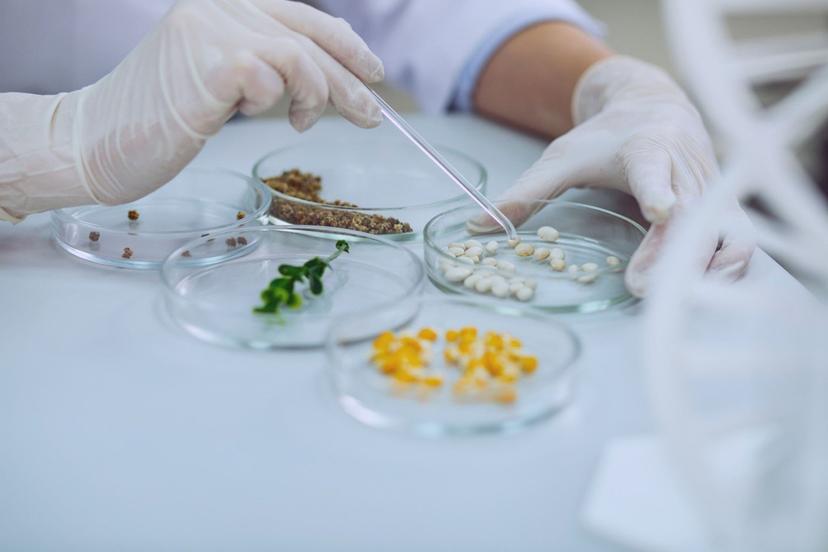
In today's rapidly evolving food landscape, ensuring the integrity of our food supply chain has become more critical than ever ©zinkevych @123rf.com  Additional resources to enhance food safety, quality, and authenticity Pesticide residues: In this article, Dr. Lorna De Leoz, Global Food Market Manager at Agilent Technologies, discusses meeting the changing demands of food testing. Read article >> Sustainable nanomaterials: In this article, find out how sustainable nanomaterials are tackling PFAS contamination and pain biosensing, whilst preventing harmful knock-on effects on the environment. Read article >>  Untargeted food analysis: In this whitepaper, discover the importance of untargeted food analysis and learn about analytical techniques that can be used to identify unknown food contaminants. Download resource >>  NIR calibration: In this free expert guide, explore a variety of technology solutions for the effective analysis of macronutrients to ensure that food and pet food products remain compliant. Download eBook >>  Mycotoxins: Learn about key considerations for efficient food testing workflows to ensure product safety that will help protect brands, human health, and the food chain, and discover how chromatography and mass spectrometry solutions can help streamline mycotoxin analysis. Watch video >>

Links

Tags

Gas ChromatographyGas chromatography (GC) is an analytical technique used to separate and quantitate mixtures of small and volatile compounds. Gas chromatographs or GC systems include components such as GC columns, detectors, pumps and autosamplers. Choose from packed or capillary GC columns, flame ionization (FID), photoionization (PID) electron capture detectors and selective or non-selective detectors. Find the best gas chromatographs in our peer-reviewed product directory: compare products, check customer reviews and receive pricing direct from manufacturers.UHPLC and HPLCHigh performance liquid chromatography (HPLC) and ultra high performance liquid chromatography (UHPLC), also known as UPLC, are analytical techniques used to separate, identify and quantitate components of complex mixtures including biological samples such as proteins and lipids as well as chemical mixtures of pesticides, drugs and oils. Both techniques are liquid chromatographic methods but differ by operating pressures (HPLC < 6000 psi < UHPLC ). Components of HPLC and UHPLC systems include columns, detectors, pumps, autosamplers and column heaters. Explore a range of UHPLC and HPLC columns for your specific sample needs including reverse phase, normal phase, ion exchange, HILIC, ion exclusion and size exclusion columns. For more specialized HPLC, explore FPLC, countercurrent LC and simulated moving bed systems. Find the best UHPLC and HPLC equipment in our peer reviewed product directory: compare products, check customer reviews and receive pricing direct from manufacturers.Atomic Absorption / Emission SpectroscopyAtomic absorption spectroscopy (AAS) and atomic emission spectroscopy (AES) — also called optical emission spectroscopy (OES) — are used to detect the elemental constituents in samples. Both techniques involve the atomization of a sample. Atomic absorption spectrometers may use a flame or furnace to create an atomic vapor of the sample before irradiation with spectral light. Optical emission spectrometers may use a flame, inductively coupled plasma (ICP), microwave plasma (MP) or spark arcs to atomize and excite the sample. At higher excitation energies, electrons can be emitted instead of photons, which can be useful for samples that can’t be atomized and for surface analysis. Explore electron spectroscopy equipment such as Auger spectrometers and photoelectron spectrometers for surface elemental analysis of samples. Find the best atomic absorption, photoelectron and optical emission spectrometers in our peer-reviewed product directory: compare products, check customer reviews and receive pricing direct from manufacturers.Infrared / IR SpectroscopyInfrared (IR) spectroscopy measures the interaction of infrared light with a sample, including transmission, reflectance & absorbance, facilitating the identification of analytes. Equipment used for quantitative analysis includes Fourier-transform infrared (FTIR) spectrometers, infrared cameras, FTIR gas analyzers, as well as attenuated total reflectance (ATR) accessories and pellet or film presses. Find the best IR spectroscopy products in our peer-reviewed product directory: compare products, check customer reviews and receive pricing direct from manufacturers.LC-MSLC-MS (liquid chromatography-mass spectrometry) systems and equipment are used for separation and quantitative analysis of complex mixtures, combining liquid chromatography and mass spectrometry. Quantify proteins, contaminants, pesticides or screen for drug metabolites with a high level of sensitivity. LC-MS systems and equipment include reverse phase, normal phase and specialized columns integrated with various MS detectors such as time-of-flight (TOF), quadrupole, orbitrap or ion trap mass analyzers. LC-MS/MS instruments equipped with a qTOF or triple quadrupole analyzer give greater sensitivity and resolving power to your analysis. Find the best LC-MS equipment in our peer-reviewed product directory: compare products, check customer reviews and receive pricing direct from manufacturers.Mass SpectrometryMass spectrometry (MS) is a powerful analytical technique used to identify and quantify molecules based on the mass-to-charge ratio of gas-phase ions. It provides detailed information about the structure, composition, and properties of compounds and is widely used across fields such as environmental monitoring, materials science, drug discovery and development, food and beverage testing, and wider chemical research. Key MS techniques include tandem mass spectrometry (MS/MS), liquid chromatography–mass spectrometry (LS-MS) and inductively coupled plasma (ICP-MS). Choosing from these wide range of techniques and technologies can be a daunting task, so keep up to date with scientific applications, performance expectations, and customer reviews here all in one place. Visit our product directory to receive quotes direct from the manufacturer. UV-Visible SpectroscopyUltraviolet-visible (UV-Vis) spectrophotometers are used to measure the interaction of UV and visible light with a sample, including transmission, reflectance & absorbance. The two major instrument classes are single-beam or double-beam spectrophotometers. More specialized equipment includes colorimeters, spectroradiometers and refractometers. Portable and microvolume spectrophotometers are also available. For the modular spectroscopy lab, explore a range of light sources for combination with a spectrograph/spectrometer and optics. Find the best UV-Vis spectroscopy products in our peer-reviewed product directory: compare products, check customer reviews and receive pricing direct from manufacturers.PCR and Thermal CyclingPolymerase chain reaction (PCR) kits and thermal cyclers are used for the in vitro amplification of DNA permitting subsequent analysis and experimental procedures. Explore a range of high-quality polymerase, primers and nucleotides or simplify your workflow with a PCR mastermix. Find reverse transcription PCR (RT-PCR) and cDNA synthesis kits for RNA products and libraries. Quantitatively measure the amplification of DNA with real-time PCR (qPCR) and droplet digital PCR (ddPCR) kits and systems, and discover automated PCR setup solutions to increase throughput. Alternative DNA amplification methods also include recombinase polymerase amplification (RPA) kits. Find the best PCR kits and thermal cyclers and purification equipment in our peer-reviewed product directory: compare products, check customer reviews and receive pricing direct from manufacturers.MicrobiologyMicrobiology is the study of microorganisms including protists, prokaryotes, fungi, and, often, viruses. Microorganisms are a useful research tool as genetic vectors and, in immunology, for antibiotic susceptibility testing, cellular biology and genetics. Microorganisms commonly grow readily in incubators with microbial culture media; this can contain chromogenic supplements to differentiate between cell lines. Estimate your culture’s density of microorganisms with colony counters, or screen and select colonies for desirable clones with automated colony pickers. Additionally, equipment is available to monitor environments for the presence of microbes and identify with microbial identification instruments. Find the best microbiology products in our peer-reviewed product directory: compare products, check customer reviews and receive pricing direct from manufacturers.Solid-Phase ExtractionSolid-phase extraction (SPE) is used for clean-up, extraction and concentration of semi-volatile or non-volatile analytes from complex mixtures including blood, urine and food samples. Multiple formats are available for conducting SPE, including prepacked SPE cartridges, disks and microplates, as well as SPE sorbent powders for manual packing. SPE systems can be used to automate the process and extract multiple samples at once. Solid-phase microextraction (SPME) and supported liquid extraction (SLE) products are also available in the same formats. Find the best SPE, SLE and SPME equipment in our peer-reviewed product directory: compare products, check customer reviews and receive pricing direct from manufacturers.pH and Conductivity MetersIon and pH meters, used for electrochemical techniques and measurements, measure the concentration of specific ions using electrodes (probes) and a meter. Features of ph and ion meters to consider include temperature compensation, auto-calibration, adjustable resolution, measurable range and accuracy. Meters can be handheld, portable, benchtop and modular.Next Generation SequencingNext-generation sequencing (NGS), also known as whole-genome sequencing, high-throughput sequencing and massive parallel sequencing, produces and analyses thousands to millions of nucleotide sequences at once. Sequencing systems operate via varying technologies depending on the manufacturer, including sequencing by synthesis, ligation, pyrosequencing, ion semiconductor and single-molecule real-time sequencing. For NGS, library preparation is paramount to successful sequencing. In this section, explore a range of library preparation kits, from targeted, amplicon-based or hybridization-based kits including epigenomic, transcriptomic and genomic workflows to fragmentation kits. Find the best next-generation sequencing products in our peer-reviewed product directory: compare products, check customer reviews and receive pricing direct from manufacturers.CalorimetryCalorimetry is a technique used to determine the heat released or absorbed in a chemical reaction. Calorimeters can be categorized into bomb calorimeters, constant pressure calorimeters, differential scanning calorimeters, isothermal titration calorimeters, X-ray microcalorimeters, heat-loss calorimeters, and high-energy particle calorimeters. The choice of calorimeter depends on the application.KjeldahlKjeldahl is an analytical chemistry technique for the quantitation of nitrogen in chemical substances. Applications of Kjeldahl include analyzing the protein content of food, nitrogen analysis in environmental sciences and the pharmaceutical industry and total kjeldahl nitrogen, nitrate and ammonia analyses in agricultural sciences.TitrationTitration is an analytical technique for determining substance concentration in a solution. For titration consider a manual or automated system, volumetric or coulometric reagent addition and indication by a potentiometer, spectrometer, turbidometer or by the Karl Fischer method. Other features of titration to consider include burettes, reagents, concentration range, reaction time and autosamplers.