Enhancing Clinical Biochemical Analyses with Sensitive LC-MS Detection

Discover how the Department of Clinical Immunology and Biochemistry at Vejle Hospital is improving diagnostics & patient care using liquid chromatography

23 Oct 2016

Lynsey Forsyth
Post Doc / Research Fellow

Editorial article

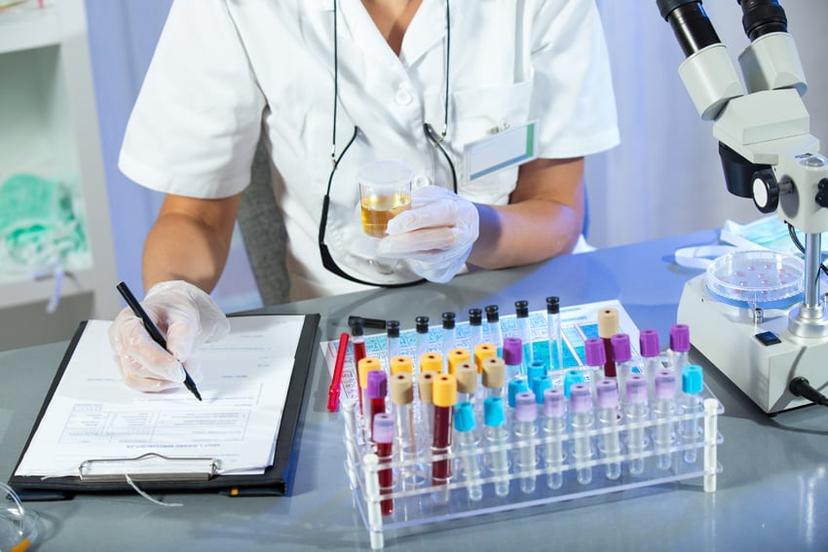
Image: Shutterstock/ClinicalLab-WomanTestTubeSamples-adriaticfoto

SelectScience® spoke to Dr Anne Vibeke Schmedes, a biochemist in the Department of Clinical Immunology and Biochemistry at Vejle Hospital in Denmark, about her work and the techniques and technologies that have established the department as clinical chemistry specialists.

The Department of Clinical Immunology and Biochemistry analyze over four million clinical samples annually, from all over Denmark, including serum, plasma, urine and saliva. The majority of these biochemical analyses are performed by automated robotic systems, however, Dr Schmedes and her colleagues are focusing on quantitation of molecules that are incompatible with large robotic detection systems. Dr Schmedes and colleagues use liquid chromatography mass spectrometry (LC-MS) to analyze these molecules that have poor specificity in immunochemical detection or are not covered by commercially available immunochemical kits. LC-MS has far greater specificity and the team are using this technology to detect and differentiate between substances that are harder to isolate.

LC-MS techniques at Vejle Hospital

The Department of Clinical Immunology and Biochemistry mainly perform routine testing but also analyze samples for clinical research studies. One of the current studies involves measuring the levels of a novel chronic pain treatment in patients. Another study is focused on the detection of catecholamines in urine, using a new methodology that is soon to be published in the Journal of Chromatography. The novel protocol was developed using Kinetex Biphenyl Columns from Phenomenex. Dr Schmedes explains, “I think the biphenyl column is very good, as it has a level of selectivity that I haven’t found in other columns. This is particularly useful for estrogen analysis, as compared to all the other columns I’ve tried, the separation between estradiol and estrogen is very good.” The selectivity and specificity of LC columns is very important but so is the lifetime of the column, as Dr Schmedes remarks, “I can see that the Phenomenex Core-Shell gives you better selectivity but if they could last even longer they would be ideal.”

Future developments

In serum or plasma samples there are many substances that can interfere with detection, so the major advantage of LC-MS is greater specificity. Although the detection of steroid hormones and catecholamines could be performed using immunochemical methods, the selectivity is much lower. Immunochemical analysis could produce the wrong results and present risk to patients, so LC-MS technology will become increasingly used for clinical biochemistry research. The immunochemical detection methods for estrogen are particularly problematic, so the Department of Clinical Immunology and Biochemistry is in the process of replacing them completely with LC-MS.

Do you use Phenomenex columns? Tell us what you think, leave a review today.

Download this free guide to find out all you need to know about HPLC Columns.

Links

Tags

UHPLC and HPLCHigh performance liquid chromatography (HPLC) and ultra high performance liquid chromatography (UHPLC), also known as UPLC, are analytical techniques used to separate, identify and quantitate components of complex mixtures including biological samples such as proteins and lipids as well as chemical mixtures of pesticides, drugs and oils. Both techniques are liquid chromatographic methods but differ by operating pressures (HPLC < 6000 psi < UHPLC ). Components of HPLC and UHPLC systems include columns, detectors, pumps, autosamplers and column heaters. Explore a range of UHPLC and HPLC columns for your specific sample needs including reverse phase, normal phase, ion exchange, HILIC, ion exclusion and size exclusion columns. For more specialized HPLC, explore FPLC, countercurrent LC and simulated moving bed systems. Find the best UHPLC and HPLC equipment in our peer reviewed product directory: compare products, check customer reviews and receive pricing direct from manufacturers.LC-MSLC-MS (liquid chromatography-mass spectrometry) systems and equipment are used for separation and quantitative analysis of complex mixtures, combining liquid chromatography and mass spectrometry. Quantify proteins, contaminants, pesticides or screen for drug metabolites with a high level of sensitivity. LC-MS systems and equipment include reverse phase, normal phase and specialized columns integrated with various MS detectors such as time-of-flight (TOF), quadrupole, orbitrap or ion trap mass analyzers. LC-MS/MS instruments equipped with a qTOF or triple quadrupole analyzer give greater sensitivity and resolving power to your analysis. Find the best LC-MS equipment in our peer-reviewed product directory: compare products, check customer reviews and receive pricing direct from manufacturers.Mass SpectrometryMass spectrometry (MS) is a powerful analytical technique used to identify and quantify molecules based on the mass-to-charge ratio of gas-phase ions. It provides detailed information about the structure, composition, and properties of compounds and is widely used across fields such as environmental monitoring, materials science, drug discovery and development, food and beverage testing, and wider chemical research. Key MS techniques include tandem mass spectrometry (MS/MS), liquid chromatography–mass spectrometry (LS-MS) and inductively coupled plasma (ICP-MS). Choosing from these wide range of techniques and technologies can be a daunting task, so keep up to date with scientific applications, performance expectations, and customer reviews here all in one place. Visit our product directory to receive quotes direct from the manufacturer. ImmunologyImmunological techniques measure and characterize immune responses. Immunology kits and analysis systems often use techniques such as ELISA, radioimmunoassay (RIA) and immunodiffusion assays, Immunohistochemistry, and flow cytometry. Immunologists use equipment such as flow Cytometers, plate readers, plate washers and fluorescent microscopes.Clinical ChemistryBiochemistry (or clinical chemistry) involves the analysis of bodily fluids using chemical tests. Techniques used include HPLC, chromatography, spectroscopy, mass spectrometry, immunochemical, electrophoresis, turbidometric / spectrophotometric assay, MRI and ISE analysis. Tests are often carried out on plasma or serum but urine (urinalysis) and fecal specimens are also processed.Personalized medicinePersonalized medicine refers to the idea of customized healthcare, where medical decisions and treatments are tailored to the individual patient. Molecular diagnostics, companion diagnostics and Next Generation Sequencing (NGS) play a pivotal role in this approach.HPLCHigh-performance liquid chromatography (HPLC) is a technique for separating, identifying, and quantifying components in mixtures. It is widely used in chemical, pharmaceutical, and environmental analysis to ensure purity and identify unknown compounds. Explore the best HPLC systems in our peer-reviewed product directory; compare products, read reviews, and get pricing directly from manufacturers.Biomarker DiscoveryClinical biomarkers refer to substances related to known medical conditions that can be accurately measured <i>in vitro</i>. Biomarkers can be used to diagnose presence of a disease and indicate disease severity. The discovery of new biomarkers is incredibly valuable in the field of diagnostics.