
Elucidating Aging Mechanisms Using Advanced Live Cell Imaging Technology
Development of a Novel Cell Based Assay with the Cell ASIC® ONIX2 Platform
9 Jul 2016
Editorial article

Image: Fluorescent image showing mitochondria (cyan) and cell wall (magenta), courtesy of Dr Maja Bialecka-Fornal
Dr Maja Bialecka-Fornal, a post-doctoral researcher in Dr Susanne Rafelski’s lab at the University of California Irvine, spoke to SelectScience® about her latest research. The lab is focused on understanding the principles of cellular organization and Dr Bialecka-Fornal is interested in how cellular organization is affected by environmental stresses and other stimuli. Currently, Dr Bialecka-Fornal is developing a new assay to study aging in yeast.
In a project supported by the Ellison foundation, Drs Rafelski and Bialecka-Fornal are developing a novel assay to study cell survival in aging. This innovative assay will enable chronological aging to be studied at the single cell level. Assays in current use are able to measure only the mean cell population responses, so this new precise approach will allow specific responses to be measured, which has potential to significantly advance the field of cellular aging research.
Precise Control of Cell Culture Environment
This assay is being developed using MilliporeSigma’s CellASIC® ONIX2 Microfluidic System, which facilitates long-term cell growth with continuous live cell imaging. The enhanced microfluidic environmental controls allow the culture conditions to be flexibly and tightly managed. As Dr Bialecka-Fornal explains, “We use it to directly observe cells that are kept in very well-controlled conditions for many days. To the best of our knowledge, there is no other similar system used in the field of chronological aging.”
Future Perspectives
Following establishment of the basic, chronological aging assay, Dr Bialecka-Fornal plans to supplement with further quantitative measurements. By incorporating measures of cell physiology, morphology and cell-cell interaction the assay could be a useful model for screening the effects of drugs on aging. The molecular pathways that underlie the aging process could also be investigated using the assay to study age-related mutants. Dr Bialecka-Fornal believes that, “once published, the assay we are developing using the CellASIC® ONIX2 system will become a new gold standard in the field.”
Find out more in this video and learn more about the latest technologies in our Cell Based Automation Special Feature.
Do you use the CellASIC® ONIX2 system? Tell us what you think, leave a review.
Related products
Request Quote for All Products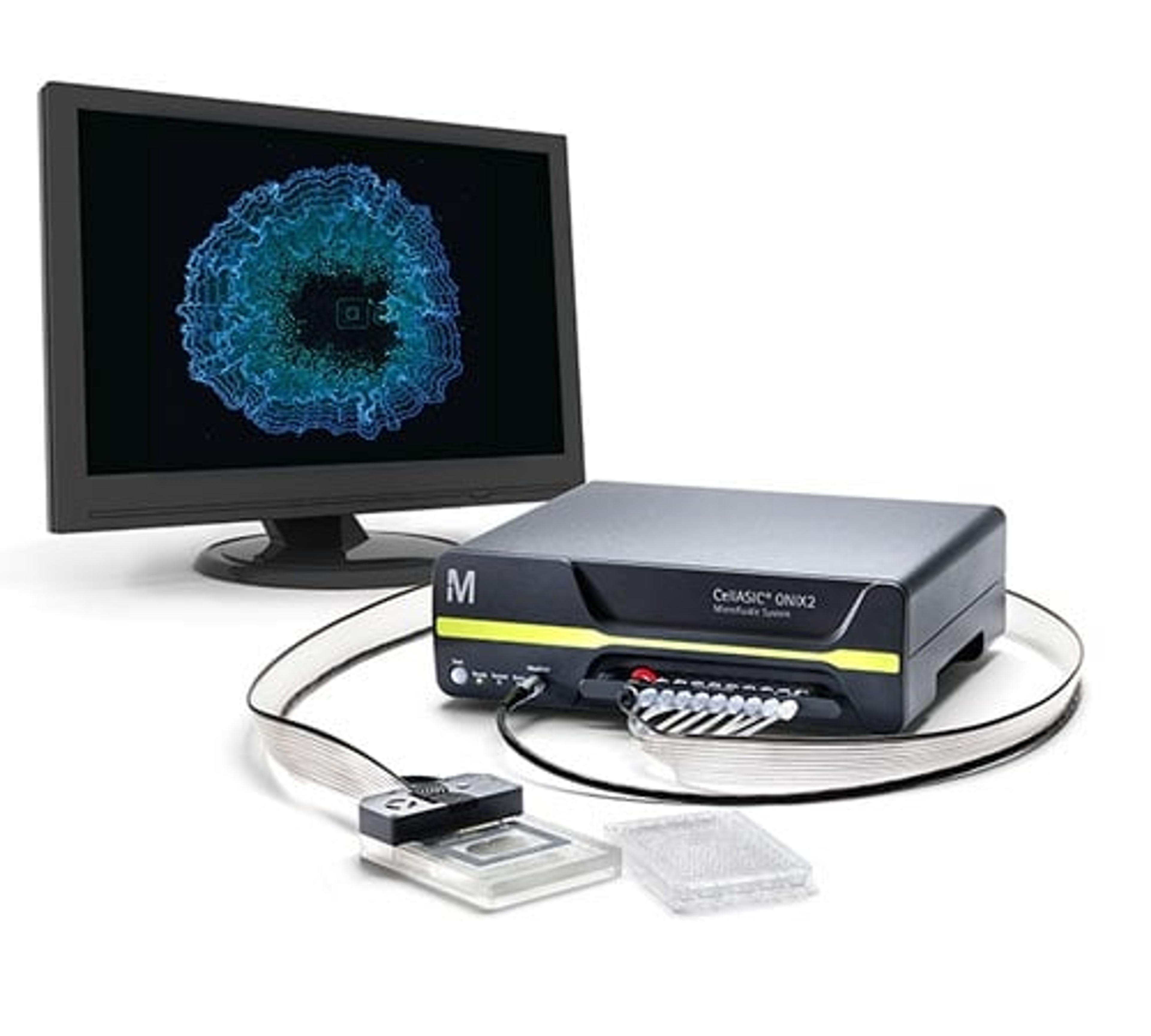
CellASIC® ONIX2 Microfluidic System
MerckPrecision control of your cell culture environment for advanced live cell imaging and microscopy