
ELGA LabWater shares key pillars for combatting PFAS
See how ELGA’s purification and removal technology is keeping PFAS out of laboratories and advancing environmental remediation efforts
21 Nov 2024
Per- and polyfluoroalkyl substances (PFAS) are a group of synthetic chemicals used extensively in products like firefighting foams, food packaging, and non-stick coatings due to their durability and resistance to heat, water, and oil. However, these same properties make PFAS highly persistent in the environment, causing these ‘forever chemicals’ to bioaccumulate over time. Studies show that PFAS are now present in water, soil, and even human blood, prompting urgent attention from scientists, environmentalists, and policymakers.

Antonino Di Bartolo, America’s Business Manager at ELGA LabWater
“Recent analyses have revealed that no living being on Earth is entirely free from PFAS contamination,” says Antonino Di Bartolo, America’s Business Manager at ELGA LabWater. “As we speak right now, if we could test ourselves, we would find a non-healthy level of PFAS in our bodies. Even a newborn baby has PFAS, transmitted from the mother in the womb.”
The ubiquity of PFAS is a problem, not least due to the chemicals’ tendency to accumulate but also because of a growing body of research linking PFAS exposure with various health risks, including cancer, reproductive issues, immune system dysfunction, and developmental problems in infants and children. Given these risks, effective solutions for detecting and removing PFAS are urgently needed.
Tackling PFAS contamination in labs
Recognizing the potential impact of PFAS on laboratory operations and research integrity, ELGA LabWater, a leading provider of laboratory water purification systems, has developed three main supportive solutions to help labs detect and manage PFAS contamination:
1. PFAS removal filters: ELGA’s water purification systems incorporate PFAS removal filters, designed to remove these compounds from lab water supplies. “This ensures that researchers have access to contaminant-free water, which is essential for labs that need to detect PFAS at very low levels, as any contamination can cause false positives or inaccuracies,” says Di Bartolo.
2. PFAS-free laboratory equipment: ELGA supplies a range of PFAS-free laboratory equipment, including water purification systems, pipettes, and other consumables. This prevents additional PFAS from entering the lab, reducing associated health and research risks.
3. PFAS testing and analysis: ELGA aids laboratories in developing and refining PFAS testing methodologies, utilizing techniques like LC-MS/MS and GC-MS/MS. “These tools allow for detection of PFAS down to parts-per-trillion (ppt) levels, a sensitivity crucial for ensuring even trace amounts of PFAS do not go undetected,” Di Bartolo enthuses. “We can help labs detect over 30 PFAS compounds, including PFOA, PFOS, and GenX, in a wide range of sample types: water, soil, air, and biological samples.”
As part of its PFAS testing and analysis services, ELGA’s expert team offers method development and validation support to help laboratories optimize their PFAS detection processes. This includes fine-tuning instrument parameters, developing sample preparation protocols, and validating methods for accuracy and precision. “ELGA also provides comprehensive training on PFAS analysis, covering method development, instrument operation, and data interpretation, ensuring lab personnel have the expertise and confidence needed for accurate PFAS detection,” Di Bartolo adds.
We can help labs detect over 30 PFAS compounds, including PFOA, PFOS, and GenX, in a wide range of sample types: water, soil, air, and biological samples.
Antonino Di Bartolo America’s Business Manager at ELGA LabWater
Destroying PFAS in the environment
ELGA LabWater’s solutions offer a comprehensive approach to managing PFAS contamination in laboratories, helping provide PFAS-free testing conditions critical for environmental monitoring and public health research. However, given the pervasive presence of PFAS worldwide, addressing PFAS contamination requires solutions capable of detecting, removing, and even destroying these harmful substances from the environment.
To meet this need, ELGA LabWater has pioneered PFAS removal and destruction technologies, as well as sophisticated tools for monitoring and testing. These solutions include:
PFAS removal technologies: Advanced systems to extract PFAS from water and soil, preventing further contamination of these essential resources.
PFAS destruction technologies: Cutting-edge technologies that break down PFAS compounds entirely, eliminating their environmental threat.
PFAS monitoring and testing: Monitoring and testing services to detect PFAS in the environment in various matrices.
Di Bartolo emphasizes the importance of advanced testing capabilities for ensuring thorough PFAS removal, “This is our company’s most advanced technology, allowing us to detect trace contaminants across various matrices down to parts-per-trillion levels,” he explains. “This precision is vital – because if you cannot measure it, you cannot control it.”
Addressing the bigger picture
ELGA LabWater’s PFAS management technologies and support services reflect a broader commitment to sustainability led by its parent company, Veolia. “Our strategy focuses on three key areas,” says Di Bartolo. “The first is climate change – reducing our own greenhouse gas emissions and helping customers lower their carbon footprint.”
The second focus area is resource management. Veolia is dedicated to conserving natural resources, minimizing waste, and promoting a circular economy. “Increasingly, we’re focusing on water conservation because of the growing issue of water scarcity, so water preservation is a critical part of Veolia’s sustainability strategy,” Di Bartolo adds.
The third pillar centers on biodiversity and ecosystems. Veolia strives to protect and restore natural habitats, and its PFAS removal and destruction technologies are a prime example of this commitment.
Beyond these core pillars, Di Bartolo emphasizes ELGA LabWater and Veolia’s role as educators and advocates for environmental responsibility, raising awareness of PFAS and promoting sustainable practices in labs, industries, and communities. “We really care about the environment, and as a leader in this field, we see it as our duty to educate our customers on how to be environmentally conscious,” he explains. “We want to demonstrate that protecting the environment is not only our responsibility but is also feasible and cost-effective. You can be climate-conscious and still profitable.”
To conclude, Di Bartolo offers key recommendations for industries and laboratories:
Implement PFAS removal technologies: Incorporate purification systems designed to remove PFAS effectively.
Conduct regular PFAS testing and analysis: Regular testing is crucial to detect contamination levels and monitor PFAS management effectiveness.
Use PFAS-free equipment: Adopting PFAS-free equipment helps prevent contamination and ensures accurate testing results.
“By adopting these strategies and working together, we can significantly reduce PFAS-related risks, protect public health, and work towards a more sustainable future,” Di Bartolo concludes.
Related products
Request Quote for All Products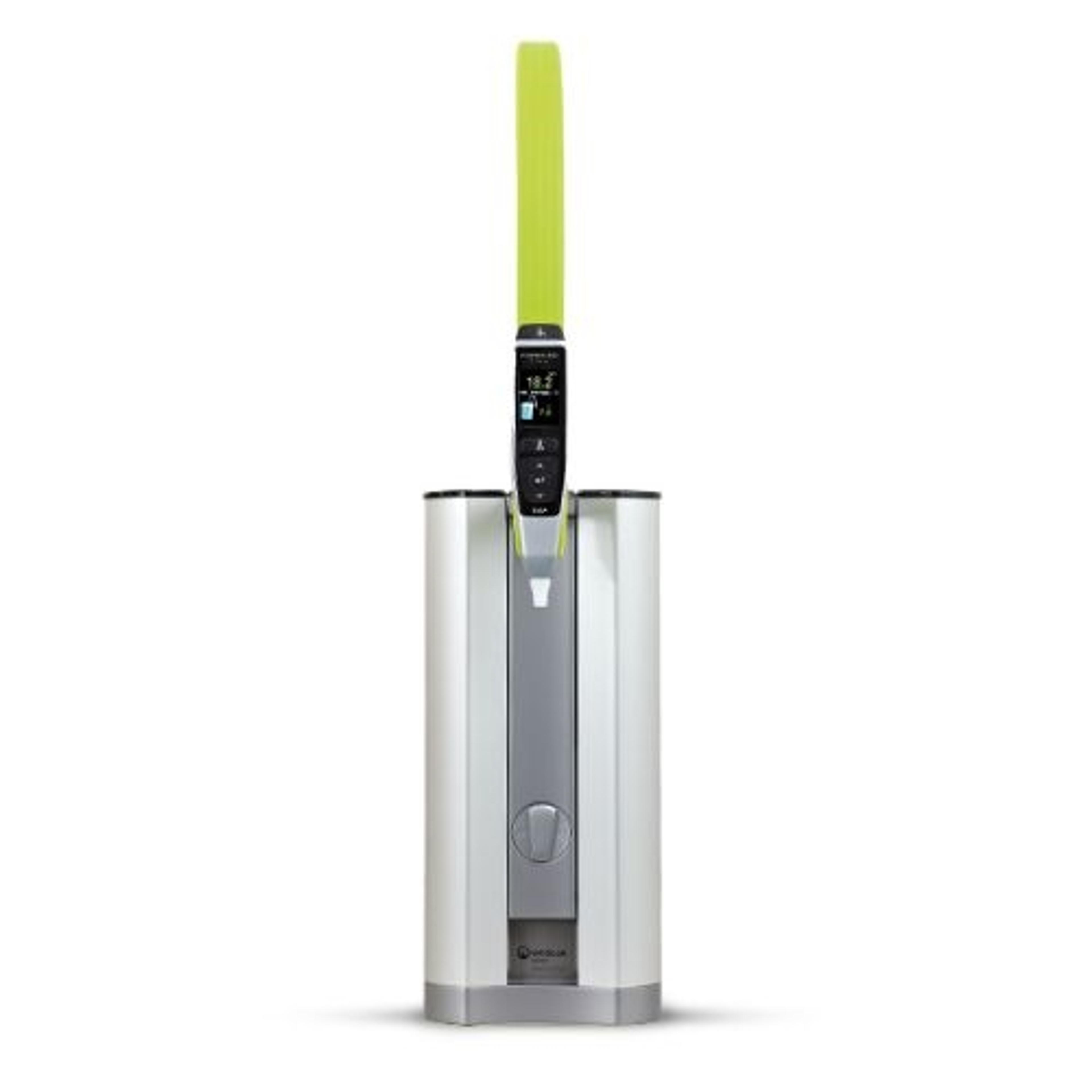

PURELAB® Classic
ELGA LabWaterLow cost ultrapure water (type I) PURELAB Classic water purification systems combine high performance with economy to deliver 18.2MΩ-cm water at a very cost-effective price. You can choose from four models in the range to meet your specific lifescience, analytical and general applications. Each system delivers up to 2 liters a minute.