EKF Diagnostics Publishes “Anemia and Hemoglobin Testing” Guide

Detailed hematology guide available for free download

11 Jan 2016
Alex Waite
Editorial Assistant

Product news

EKF Diagnostics, the global in vitro diagnostics company, announces the publication of its new guide, “Anemia and hemoglobin testing” [1]. Available to download for free from ekfdiagnostics.com, the in-depth hematology guide provides a review of the symptoms and causes of anemia, through to methods for testing hemoglobin and hematocrit, as well as factors that may influence these measurements.

Anemia is the most common blood disorder, affecting around 25% of the global population, and can be caused by poor nutrition or various diseases. It is a condition where the number of red blood cells or the availability of hemoglobin falls below the body’s physiological needs. Consequently, hemoglobin and hematocrit are the main blood tests used to diagnose anemia. In addition, pre-donation hemoglobin testing is an integral part of blood donor health assessment in many countries.

Since anemia reduces an individuals’ wellbeing, physical productivity and work performance, timely treatment can restore personal health and raise national productivity levels by as much as 20% in developing countries, as observed by WHO [2]. Notably, Anemia also contributes to 20% of all maternal deaths [2], meaning that many countries conduct interventions during pregnancy to reduce anemia and its adverse effects.

Hemoglobin and hematocrit can be measured by a variety of methodologies. In particular, point-of-care (POC) testing in hematology has continued to grow in popularity; with hemoglobin measurement now the most commonly used parameter in POC hematology [3].

“As specialists in this area of POC testing, we have published this guide to share our knowledge and demonstrate our commitment to making blood donation and anemia screening easier, more affordable and more accessible than ever before,” said Katja Lemburg, EKF Diagnostics’ Global Product Manager for Hematology. “Our diagnostic analyzers and tests deliver fast and reliable results for hemoglobin and hematocrit that provide both practitioner and patient with the information they need to make clinical or lifestyle decisions in seconds.”

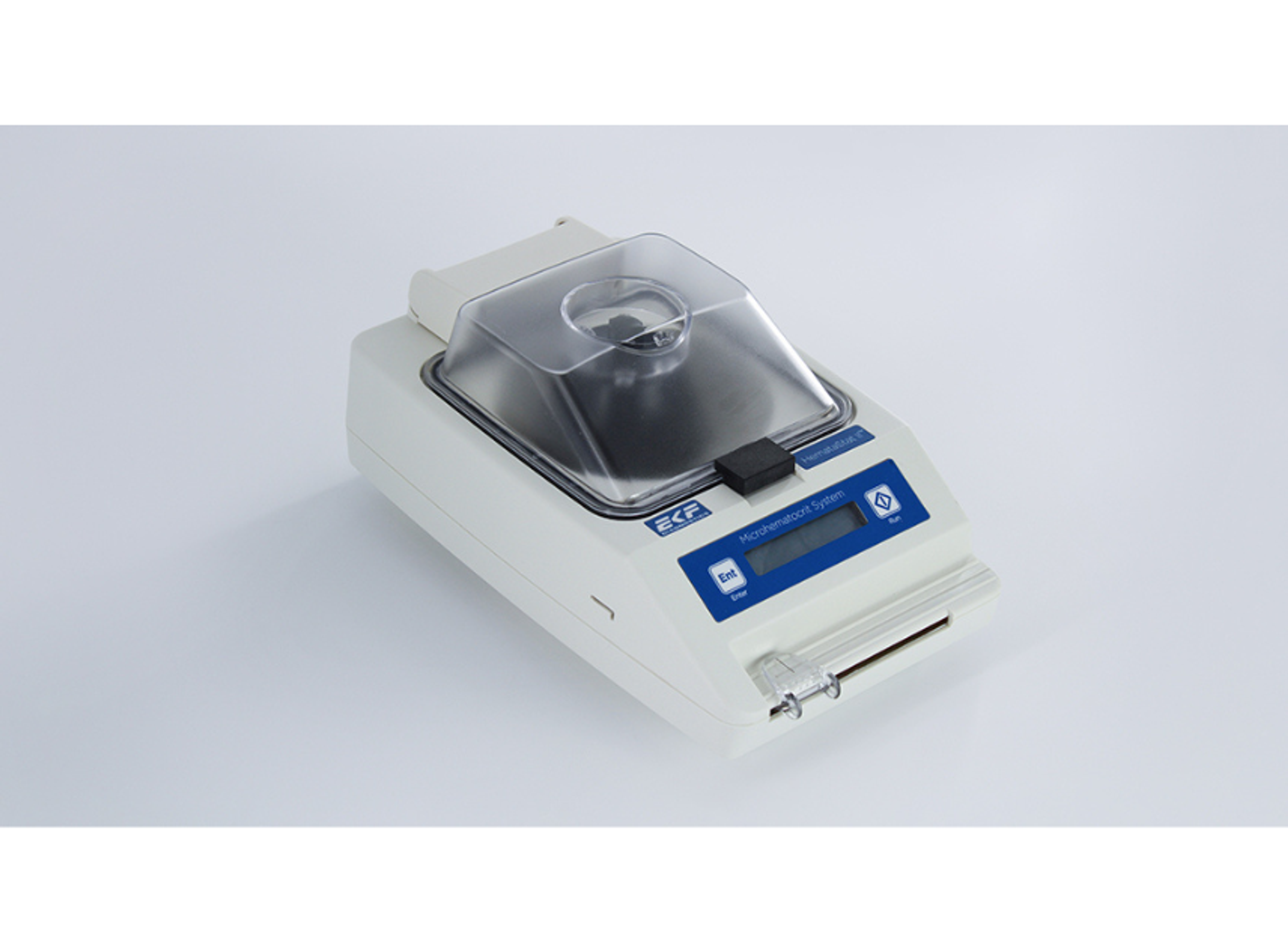
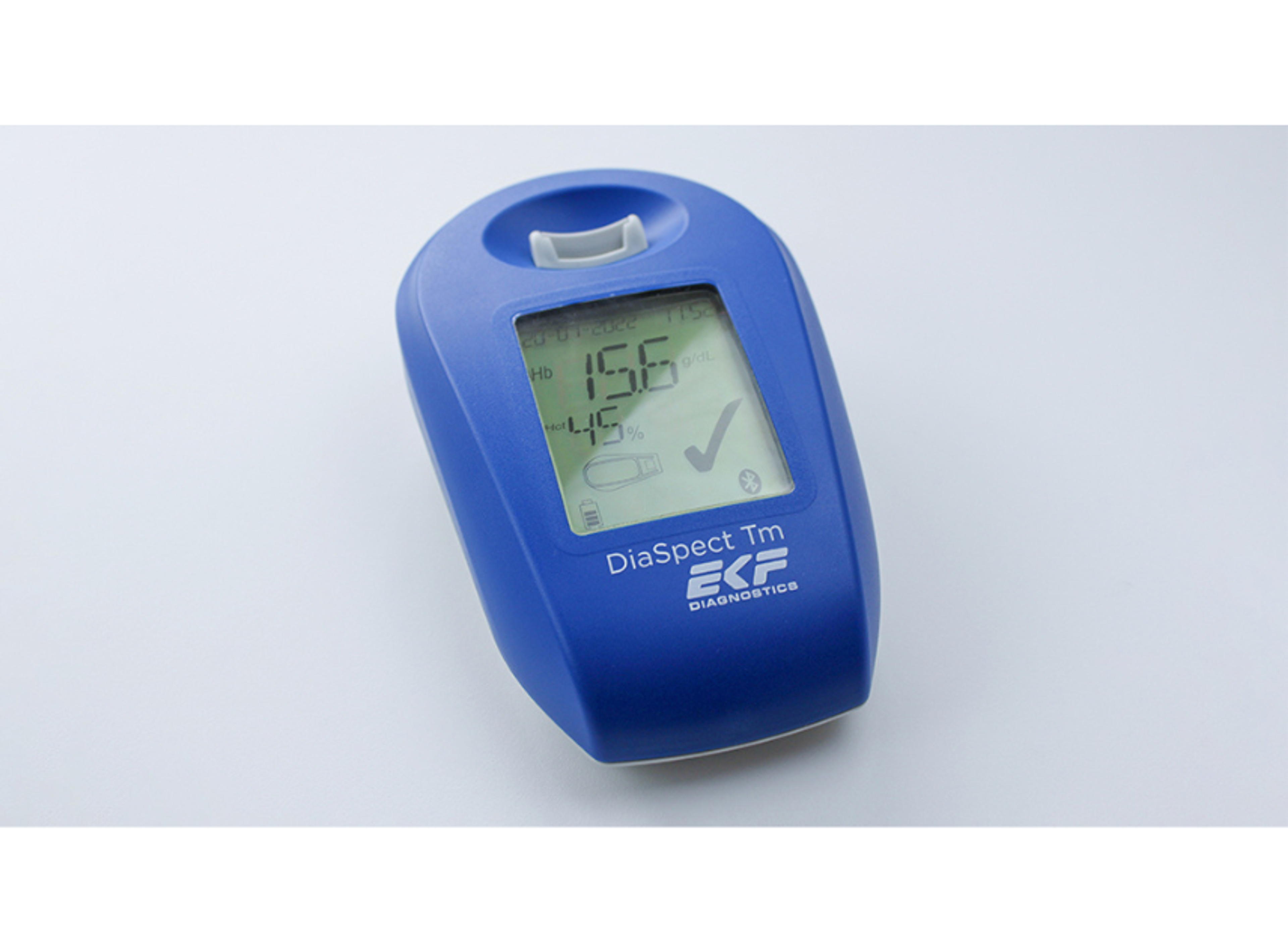
EKF’s range of hemoglobin analyzers includes Hemo Control, which uses the ‘gold standard’ azide methemoglobin method to deliver results from 25 seconds, and DiaSpect Tm, which uses a reagentless cuvette to provide results in just about one second. Its specialist hematocrit analyzer is the UltraCrit Plus which, uniquely, uses ultrasound to measure hematocrit with a high degree of accuracy within 30 seconds. HemataSTAT II is a microhematocrit centrifuge that provides quantitative readings for multiple samples that is perfect for laboratories or even veterinary use.

References:

http://workshop.fluidbook.com/viewer/14091_4ce791664036d9927a1d9ba44bc7a5af_1450197526/

http://www.who.int/nutrition/topics/ida/en/ Access date: 24/07/2015

Where are we at with point-of-care testing in haematology? Briggs C et al., British Journal of Haematology, 2012, 158, 679-690. 

Hemo Control: Hemoglobin and hematocrit testing

EKF Diagnostics

Hemo Control is a point-of-care hemoglobin analyzer designed to provide quantitative, lab-quality hemoglobin results after 25 seconds. It uses the most established photometric azide methemoglobin method, ensuring reliable results with a high precision (CV <2%).
(3)

Links

Tags

Sample PreparationSample preparation can improve the quality and speed of separation techniques. Products to assist sample preparation include filtration equipment, evaporators, membranes and sieves.CentrifugesCentrifuges are used to separate particulates suspended in a liquid via the application of a centrifugal force including cells, macromolecules, nanoparticles and precipitates. Centrifuges come in three sizes: microcentrifuges, benchtop and floor-standing centrifuges, depending on the volume and number of samples that require separation. When choosing a centrifuge, consider its maximum separation power indicated by its relative centrifugal force (RCF) value. Low force centrifuges reach a maximum RCF of 8,000 g, high-force centrifuges can reach maximum RCF values of 80,000 g. For extremely high forces, consider ultracentrifuges (up to 800,000 g). Refrigerated and vacuum centrifuges also known as concentrators are available for more specialized applications. A range of volumes are available for centrifuge tubes and microfuge tubes, depending on sample sizes. Find the best centrifuges in our peer-reviewed product directory: compare products, check customer reviews and receive pricing direct from manufacturers.Sample ManagementSample management systems include sample storage devices such as freezers and plate storers, sample environment enclosures and sample organization, retrieval and sorter systems. Useful system features include high-throughput, automation, robotic arms, automated liquid handling and associated database systems. Accessories in sample management include barcode scanners, heat sealers and tubes.HematologyIn Haematology / Hematology, complete blood cell counts (or full blood counts) are obtained using automated blood count analyzers to enumerate blood cell types.  Hematology also encompasses haemostasis and coagulation, thrombophilia and hemophilia, plasma viscosity and ESR analysis, hemoglobinopathies, cell morphology and haematinic measurement.Cellular PathologyCellular Pathology deals with the microscopic analysis of tissue samples and cells. Sample preparation and processing includes fixation, staining, sectioning and slide mounting, using equipment such microtomes and cryostats. In choosing immunohistochemistry and immunocytochemistry kits, consider chromogens, staining method, antibodies, microscopes and imaging.Robotic WorkstationsRobotic workstations are automated platforms enabling the user to perform high-throughput, multi-application processes, from sample preparation tasks such as PCR set-up, DNA purification and NGS library preparation, to integrated sample prep and analysis workstations. Automation makes processes consistent, fast, precise and fully walk-away. Find the best robotic workstations in our peer-reviewed product directory: compare products, check customer reviews and receive pricing direct from manufacturers.Hematology Point of CarePoint of Care SolutionsPoint of care solutions provide medical diagnostics and treatments at or near the site of patient care. These technologies offer rapid results, helping healthcare providers make quick decisions. From glucose monitors to molecular diagnostics, point of care solutions are transforming healthcare delivery by reducing wait times and improving patient outcomes. Explore the best point of care products in our peer-reviewed product directory, compare options, check reviews, and get pricing directly from manufacturers.Hematology SolutionsHematology solutions involve diagnostic tests and equipment used to analyze blood samples and diagnose blood disorders such as anemia, leukemia, and hemophilia. These tools include automated full blood count analyzers, reagents, and digital morphology systems. Explore hematology solutions in our peer-reviewed product directory; compare products, check reviews, and get pricing directly from manufacturers.In Vitro DiagnosticsIn vitro diagnostics (IVD) involve testing samples outside the body, typically in a laboratory, to diagnose diseases or conditions. IVD technologies include blood tests, molecular assays, and other bodily fluid tests, enabling accurate diagnosis and monitoring of diseases. These tests are essential for guiding treatment decisions in clinical settings. Browse our peer-reviewed product directory to find the best IVD solutions; compare products, check reviews, and get pricing directly from manufacturers.