
Efficient, Sensitive and Robust Chromatin Immunoprecipitation Methods from Chromatrap®
13 Jul 2015
Industry news
Chromatrap®, a business unit of Porvair Sciences, has produced a new 10-page brochure that provides an informative introduction to chromatin immunoprecipitation (ChIP) technology and a detailed comparison of traditional bead based and Chromatrap® solid state ChIP technologies.
Chromatrap® ChIP kits use revolutionary spin columns or microplates which contain discs of an inert, porous polymer to which protein A or G has been covalently attached. This patented format is unique. During an assay, the chromatin/antibody complex is selectively retained by the disc. Flushing with three buffers and an elution step are all that is required to obtain the selectively enriched DNA, making Chromatrap® more efficient in the laboratory. With a fast processing time of under five hours from chromatin loading to qPCR-ready DNA, Chromatrap® significantly reduces the assay time for ChIP, enabling more samples to be analysed during the working day and thereby increasing laboratory throughput and efficiency.
The brochure additionally provides a full description of the features and benefits of the rapidly expanding product range that now includes Chromatrap® qPCR, Chromatrap® 96 HT, Chromatrap® ChIP-seq, Chromatrap® FFPE and Chromatrap® enzymatic shearing kits.
Related products
Request Quote for All Products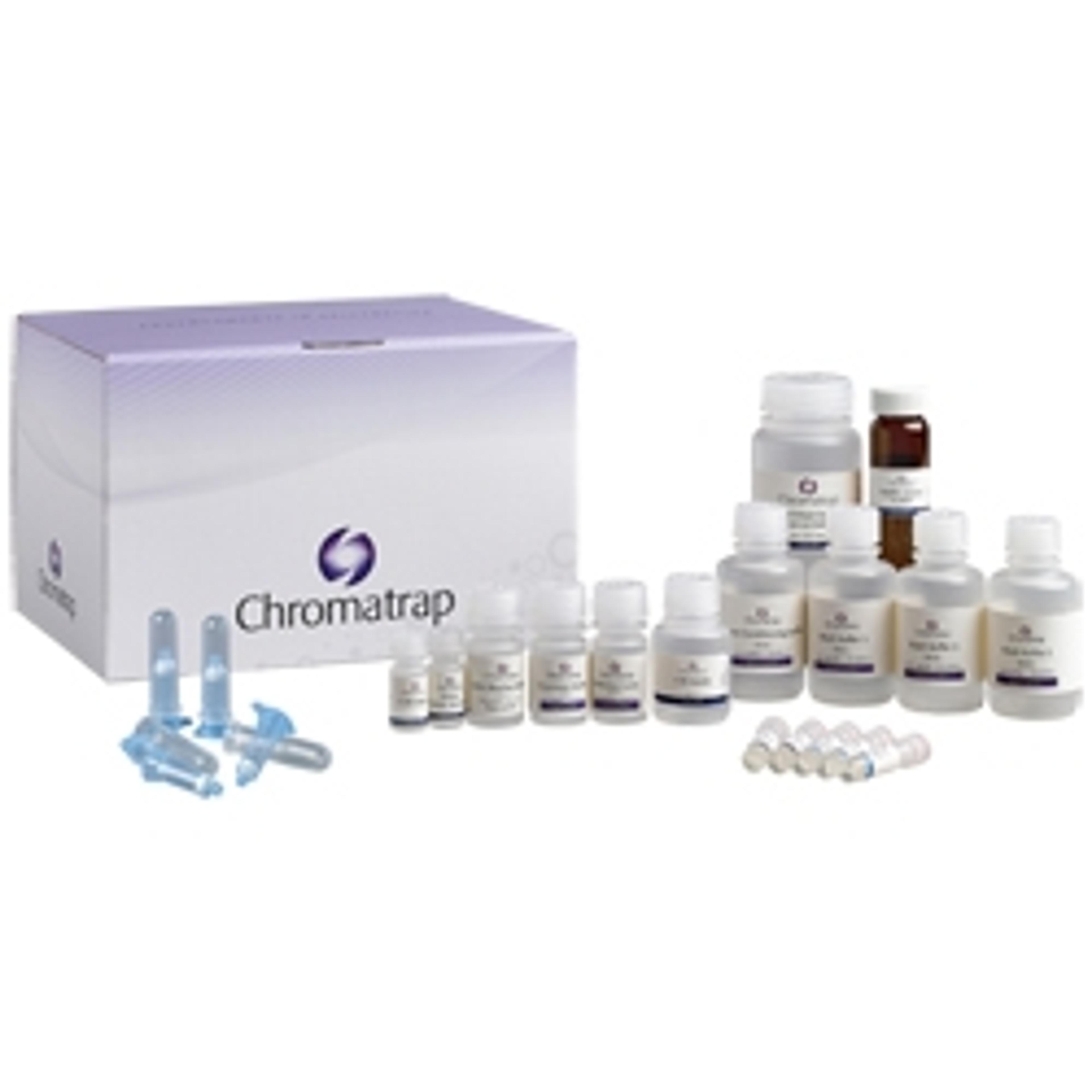
Chromatrap® FFPE ChIP Kit
ChromatrapEpigenetic identification and targeting in clinical FFPE tissues is a crucial step for potential epigenetic therapeutics and personalized medicine therapies. FFPE is a standard method to archive and preserve medical tissue biopsy samples. These archives, kept in many hospitals world-wide, are a huge, rich and untapped sample resource for genetic research. Due to the cross-linking of proteins by formaldehyde, FFPE tissues present a particular challenge for ChIP analysis. In addition, the small size and delicate nature of the tissue, and the difficulty in extracting samples from paraffin, used to provide tissue support after preservation, can damage complex cellular complexes such as chromatin. ChIP assays from these samples have therefore proved time consuming and difficult. Chromatrap® FFPE ChIP kit overcomes these issues and provides the following benefits: Provides greater flexibility and more IPs per sample Works across a range of FFPE samples, human and animal Available in 96-well plate or spin column format Works equally well with high and low abundant marks Provides sufficient DNA to perform library preps for ChIP-seq assays