
ECLIPSE study demonstrates efficacy of Shield blood-based test for colorectal cancer screening
Study shows blood-based cancer screening test detects 83% of people with colorectal cancer with specificity of 90%
21 Mar 2024
Guardant Health
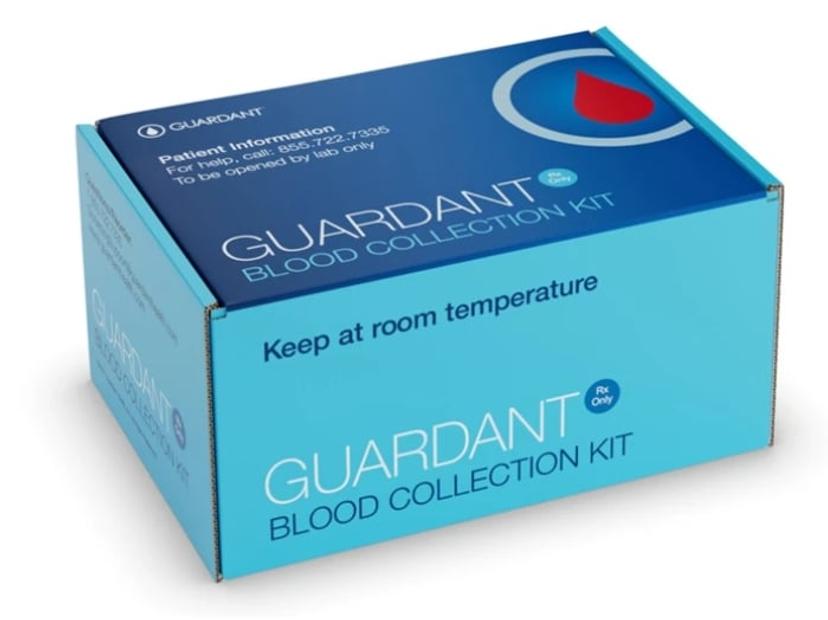
Guardant Health, Inc., a leading precision oncology company, has announced the results from the ECLIPSE study that show the effectiveness of its Shield™ blood test for detecting colorectal cancer (CRC) in average-risk adults.
One of the largest studies of its kind, ECLIPSE (Evaluation of ctDNA LUNAR Assay In an Average Patient Screening Episode) is a 20,000+-patient registrational study to evaluate the performance of Shield compared to a screening colonoscopy. The Shield test detects colorectal cancer signals in the bloodstream from DNA that is shed by tumors, called circulating tumor DNA (ctDNA).
Highlights of the study results show that Shield demonstrated:
- 83% sensitivity in detecting individuals with CRC
- 88% sensitivity in detecting pathology-confirmed Stages I–III
Sensitivity by stage of:
- 65% for pathology-confirmed Stage I; 55% for clinical Stage I
- 100% for Stage II
- 100% for Stage III
- 100% for Stage IV
These results are on par with the performance of other guideline-recommended non-invasive screening modalities, where overall sensitivity in detecting colorectal cancer ranges from 74% to 92%1.
Publication of ECLIPSE follows Guardant Health’s submission of its premarket approval (PMA) application to the US Food and Drug Administration (FDA) for Shield, which included key data points from the study. Since the launch of the lab-developed version of the Shield test in May 2022, it has been used by more than 20,000 people and more than 90% of patients who were prescribed the test in the real-world clinical setting completed it. One recent study showed that CRC screening rates tripled among adults who had declined prior CRC screening when they were offered Shield. The test’s sensitivity in detecting CRC, combined with this real-world adherence, suggests that Shield has the potential to detect more CRCs at a curable stage than traditional screening methods2,3,4,5.
The American Cancer Society estimates that more than 150,000 people will be found to have CRC in 20246 and it is expected to become the leading cause of cancer-related deaths by 2030 in adults aged 20–497. Early detection, however, is crucial. When colon cancer is found at an early stage before it has spread, the five-year relative survival rate is 91%. If the cancer has spread to distant parts of the body, the five-year survival rate is 13%.
References
Chung, D., et al. Clinical Validation of a Cell-Free DNA Blood-Based Test for Colorectal Cancer in an Average Risk Population. Digestive Disease Week 2023; May 6–9, 2023; Chicago, IL.
Bretthauer M.., Løberg M., Wieszczy P., et al.; NordICC Study Group. Effect of colonoscopy screening on risks of colorectal cancer and related death. N Engl J Med. 2022; 387:1547–1556.
Knudsen A.B., Rutter C.M., Peterse E.F.P., et al. Colorectal cancer screening: An updated decision analysis for the U.S. Preventive Services Task Force. Rockville (MD): Agency for Healthcare Research and Quality; 2021a. Report No.: 202s.
Imperiale T.F., Ransohoff D.F., Itzkowitz S.H., et al. Multitarget stool DNA testing for colorectal-cancer screening. N Eng J Med. 2014.
Coronado G.D., Jenkins C.L., Shuster E., et al. Blood-based colorectal cancer screening in an integrated health system: a randomised trial of patient adherence. Gut. Epub ahead of print: 23 January 2024.
American Cancer Society: Colorectal Cancer Key Statistics. www.cancer.org/cancer/colon-rectal-cancer/about/key-statistics.html. Accessed online March 20, 2024.
Colorectal Cancer Alliance. https://colorectalcancer.org/resources-support/community-support/young-onset-support/young-onset-crc-facts. Accessed online March 13, 2024.