Early Detection of Contaminants in Industry
14 Dec 2016
Product news
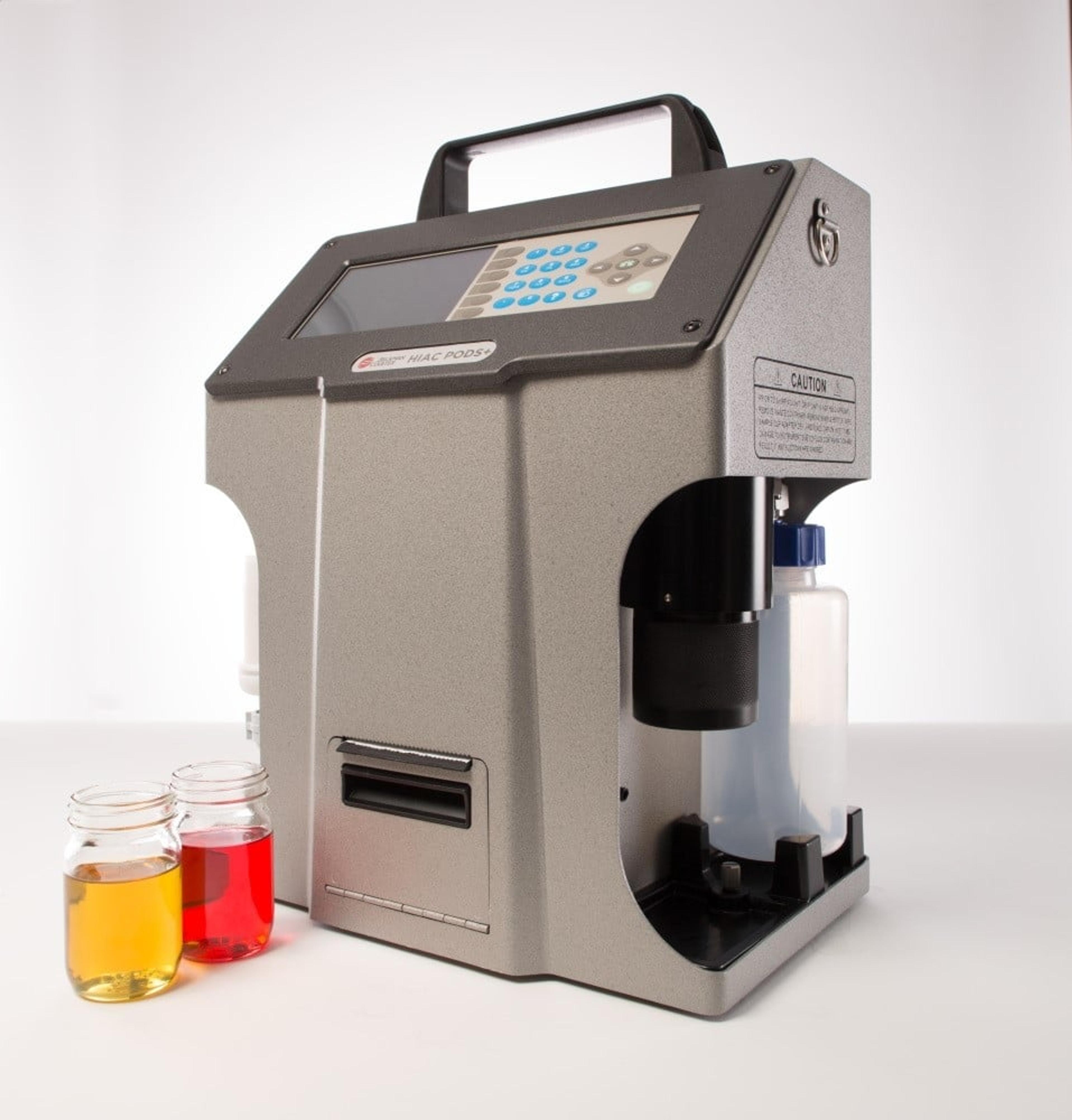
Beckman Coulter Life Sciences is introducing the HIAC PODS+ Liquid Particle Counter, with advanced features for the early detection of minute contaminants. The portable PODS+ delivers fast, lab quality liquid contamination analysis in less than 60 seconds. Its multi-liquid testing capability means it is suitable for heavy industrial environments such as oil and gas exploration, aerospace applications or where hydraulic machinery is in constant use.
Its performance precision helps quality control teams identify and correct problems early, before they affect productivity and cause costly repairs or, potentially, environmental damage. Compact, durable and easy to use with one-button testing, the HIAC PODS+ delivers fast, accurate results from wherever the instrument is located. Its ability to handle low or high viscosity fluids, further reduces routine sampling turnaround time and speeds the delivery of critical data.
“Heavy industrial environments such as those handling fuels, petroleums, water and glycols depend on robust, high throughput performance continuity, while maintaining stringent safety and quality control standards,” explained Joe Dabbs, Marketing Manager for Particle Counting & Characterization, Beckman Coulter Life Sciences. “The fast, accurate analysis provided by the HIAC PODS+ portable liquid particle counter extends the life of high-value equipment, reducing downtime and improving workflow.
“At the same time, the instrument’s ability to detect miniscule particles significantly reduces the risk of damage to the largescale environment from unchecked contamination.”
The HIAC PODS+ provides an early warning system to detect moisture before degradation sets in. Its airtight, pressurizing chamber ensures counting accuracy by compressing bubbles so they are not mistaken for particles. Viscosity measuring capability ranges from 1 to 425 cSt with shop air pressure at 100 psig to 1 to 150 cSt with the internal pump.
Operators using the HIAC PODS+ have greater confidence that they are compliant with the increasingly stringent global quality control standards. As well as supporting user-defined tests for ISO 4406, NAS 1638 and SAE standards, it can also report data to ASTM, GOST, DEF, STAN and NAVAIR standards.
The instrument is easy to move from one site to another, running on a military-grade, six-hour battery and delivering continuous, instant reports including maintenance information. Customized sampling recipes further help to speed up sample processing turnaround times.