
Don Whitley Scientific Launches New Workstation for Seahorse Analyzers
18 Nov 2014
Product news
Don Whitley Scientific has announced the launch of the Whitley i2 Instrument Workstation. This product has been developed in response to a rising number of enquiries from scientists who desire to use Seahorse Extracellular Flux (XF) Analyzers* in hypoxic conditions and were dissatisfied with the solutions available. Rather than adapting an existing chamber for this purpose, Don Whitley Scientific developed a new workstation specifically to suit the precise requirements of Seahorse Bioscience.
Steve Robertson, Sales Director at Don Whitley Scientific, explained: “Extensive research and careful consideration has gone into the development of the i2, which has resulted in a modular system that includes a number of novel and unique features. This workstation can be used as a stand-alone unit or connected to a Whitley Hypoxystation via the new Whitley Transfer Tunnel, enabling preparation of cell lines under hypoxic conditions and their transfer directly into the i2 without exposure to air.”
Another unique feature is the integral incubator, which enables you to precondition cellware and incubate plates and media at 37°C under the same atmospheric conditions as the XF Analyzer.
The i2 maintains an internal temperature no higher than 28°C, excludes carbon dioxide, and provides precise oxygen control.
This workstation, the latest in a long line of well-regarded modified atmosphere workstations from Don Whitley Scientific, is equipped with a generous working area in which to conduct preparatory work and is supplied complete with data logging, removable front, bespoke trolley, internal mains sockets, and a wireless footswitch to control the patented oval ports.
The 12 liter airlock, with a cycle time of just 60 seconds, accommodates up to 44 × 96 well plates or 84 × T25 tissue culture flasks plus numerous other flasks, pipettes and laboratory consumables.
The combination of a Whitley i2 Instrument Workstation and Seahorse XF Analyzer permits simultaneous, real-time analysis of mitochondrial respiration and glycolysis in mammalian cells under precisely controlled hypoxic conditions.
* Not presently suitable for the recently announced Seahorse Bioscience XF-p
Related products
Request Quote for All Products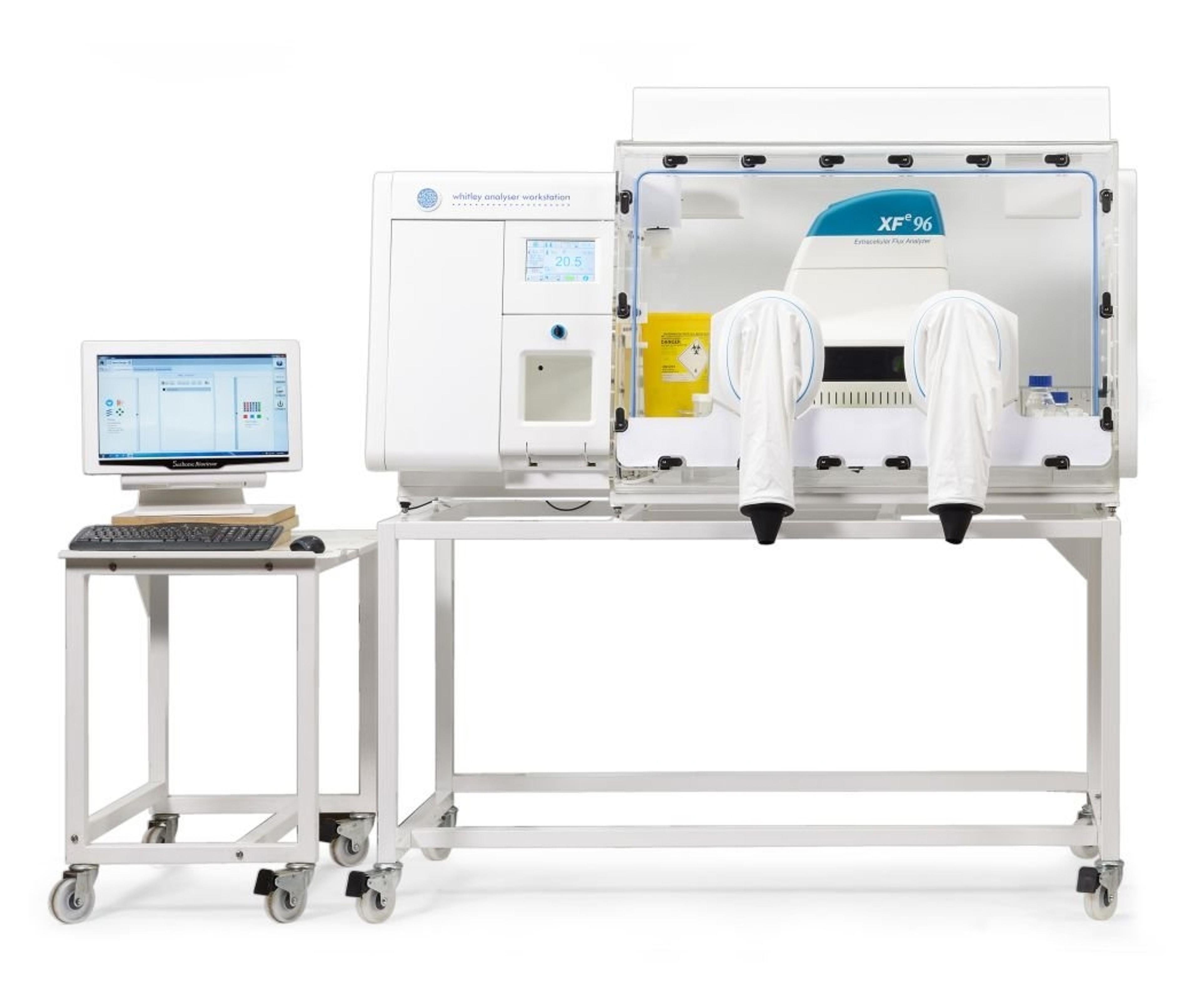
Whitley i2 Instrument Workstation
Don Whitley ScientificBuilt with specific environmental parameters to house Seahorse Extracellular Flux Analyzers.