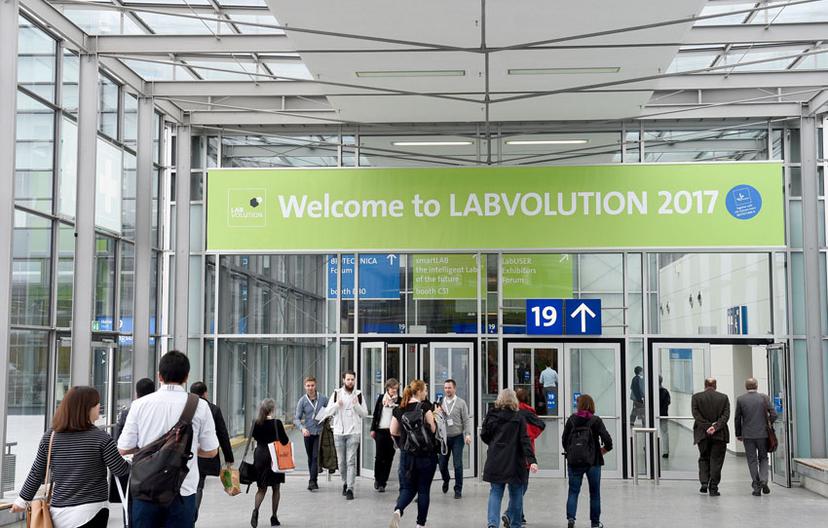
Discover SelectScience’s Highlights from Labvolution 2017

Fascinating video interviews with leading scientists, a tantalising glimpse into the future for labs and the Scientists' Choice Awards

5 Jun 2017

Emily Adam
Publishing / Media

Editorial article

© 2016 Deutsche Messe AG - All Rights reserved

LABVOLUTION 2017, held in Hannover, Germany, showcased the latest in lab equipment and workflow optimization from across the world. The show provided a dynamic atmosphere for visiting students, including a careers area and innovative enterprises pavilion, which enabled startups to make direct contact with user industries.

Video Highlights

SelectScience® was invited to film a number of video interviews during the show, with leading scientists and companies from across Europe.

Prof. Timo Strünker, Group Leader, WWU Münster

These included:

Scientists' Choice Awards

SelectScience was delighted to present Eppendorf with two coveted Scientists’ Choice Awards, for customer service and Best General Laboratory Product of 2016, during the show. The award for Best New General Laboratory Product of 2016 went to the Eppendorf Centrifuge 5920 R. The award was accepted by Peter Schreiner, Global Product Manager, Centrifugation, who was delighted to receive it on behalf of the Eppendorf team. Watch the exclusive interview filmed with Mr Schreiner following the ceremony for more details.

Peter Schreiner, Global Product Manager, Centrifugation (right) accepts the award for Best General Lab Product of 2016 from SelectScience Editor-in-Chief, Kerry Parker.

Showcasing the future at smartLAB

Taking center stage in the trade hall was smartLAB, the intelligent lab of future. Throughout the three days of LABVOLUTION, the organizers of smartLAB offered visiting scientists a glimpse into the future, with 13 partners showcasing products with a common goal: to establish why laboratory technologies are 10 years behind in terms of digitalization, and to increase time management efficiency.

A highlight of the smartLAB were data glasses, with organizers hoping that, in time, these glasses will be used in laboratories to enable scientists to interact with protocols and teams working on similar projects worldwide.
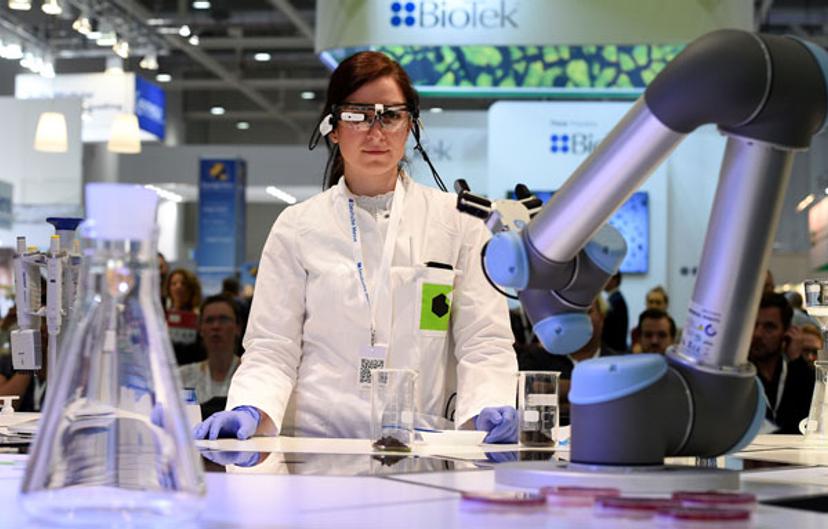
© 2016 Deutsche Messe AG - All Rights reserved

The next LABVOLUTION will be held from May 21 to 28, 2019 in Hannover, Germany. Catch up on all show related news on the LABVOLUTION 2017 Feature Page.

Links

Tags

ElectrophoresisElectrophoresis equipment is used to separate mixtures of protein, DNA or RNA, based on their electric charge, size and other physical characteristics, by passing them through a medium such as a polyacrylamide gel, an agarose gel or a capillary tube. Electrophoresis equipment includes horizontal and vertical gel electrophoresis chambers, isoelectric focusing systems, 2D electrophoresis and capillary electrophoresis instruments. Precast gels with a gradient can be used or gels can be hand cast. Samples are run alongside ladders or markers to identify the approximate size of a molecule. Separated proteins and nucleic acids in the gel can be stained or probed with fluorescent markers and then imaged and detected using gel documentation instruments, transilluminators, densitometers and scanners. Find the best electrophoresis equipment in our peer-reviewed product directory: compare products, check customer reviews and receive pricing direct from manufacturers.UHPLC and HPLCHigh performance liquid chromatography (HPLC) and ultra high performance liquid chromatography (UHPLC), also known as UPLC, are analytical techniques used to separate, identify and quantitate components of complex mixtures including biological samples such as proteins and lipids as well as chemical mixtures of pesticides, drugs and oils. Both techniques are liquid chromatographic methods but differ by operating pressures (HPLC < 6000 psi < UHPLC ). Components of HPLC and UHPLC systems include columns, detectors, pumps, autosamplers and column heaters. Explore a range of UHPLC and HPLC columns for your specific sample needs including reverse phase, normal phase, ion exchange, HILIC, ion exclusion and size exclusion columns. For more specialized HPLC, explore FPLC, countercurrent LC and simulated moving bed systems. Find the best UHPLC and HPLC equipment in our peer reviewed product directory: compare products, check customer reviews and receive pricing direct from manufacturers.Mass SpectrometryMass spectrometry (MS) is a powerful analytical technique used to identify and quantify molecules based on the mass-to-charge ratio of gas-phase ions. It provides detailed information about the structure, composition, and properties of compounds and is widely used across fields such as environmental monitoring, materials science, drug discovery and development, food and beverage testing, and wider chemical research. Key MS techniques include tandem mass spectrometry (MS/MS), liquid chromatography–mass spectrometry (LS-MS) and inductively coupled plasma (ICP-MS). Choosing from these wide range of techniques and technologies can be a daunting task, so keep up to date with scientific applications, performance expectations, and customer reviews here all in one place. Visit our product directory to receive quotes direct from the manufacturer. Western BlottingWestern blotting equipment is used to transfer and identify specific proteins within a sample, reveal protein modifications, as well as give a semi-quantitative estimation of their concentration. Western blotting equipment includes all apparatus necessary to transfer proteins from gel to membrane and subsequent processing steps. Protein transfer can be performed by electroblotting with wet, semi-dry and dry transfer systems onto nitrocellulose and PVDF membranes. Blocking, washing and labeling of membranes follows, involving buffers, blocking reagents, blotting / incubation trays, labeling reagents, immunoblotting assays, antibodies and conjugates. Automated equipment for these steps is available to accelerate your lab workflow. Finally, detection and imaging of proteins can be conducted using gel documentation and imaging systems. Find the best western blotting equipment in our peer-reviewed product directory: compare products, check customer reviews and receive pricing direct from manufacturers.Cell Adhesion AssaysCell adhesion assays are used to quantitate attachment and analyze the molecular mechanisms for extracellular matrix adhesion, cell migration and sensitivity to inhibitors. Find the best cell adhesion assay equipment in our peer-reviewed product directory: compare products, check customer reviews and receive pricing direct from manufacturers.Cell / Tissue CultureCell culture or tissue culture is used to study the biology of cells or tissues and to isolate cellular products in an environment which can be manipulated and well defined. Accurately control your culture environment with bioreactors or culture incubators, bind your cells to a surface or together with an extracellular matrix. Distinguish cell types with differential media or proliferate cells with certain characteristics using selective media. Enrich your media with supplements such as growth factors, sera and vitamins. Find the best cell and tissue culture products, kits and equipment in our peer-reviewed product directory: compare products, check customer reviews and receive pricing direct from manufacturers.Genome AnalysisGenomics, the study of genomes, includes functional genomics, evolutionary genomics and comparative genomics. There are many genomic technologies such as DNA sequencing of whole genomes, computational biology and bioinformatics. DNA and nucleic acids must be isolated and concentrated from cells for analysis with kits, automated analyzers and software. Other useful technologies for studying genomics include PCR, microarrays and electrophoresis.ELISAEnzyme-linked immunosorbent assays (ELISA), also known as enzyme immunoassays (EIA), are used for the detection and quantification of proteins, peptides and antibodies in a sample. ELISA often comes in kit format, with pre-selected antibody pairs to detect specific proteins or biomarkers of diseases such as diabetes and obesity, or cardiovascular and neurological disorders. Detection is made possible with chemiluminescent, fluorescent or colorimetric substrates and detection instruments such as microplate / ELISA readers. Other kits available include: Enzyme-linked immunospot (ELISPOT) assays for the quantification of protein-producing cells and chemiluminescent immunoassays (CLIA) kits. Find the best ELISA kits and products in our peer-reviewed product directory: compare products, check customer reviews and receive pricing direct from manufacturers.PCR and Thermal CyclingPolymerase chain reaction (PCR) kits and thermal cyclers are used for the in vitro amplification of DNA permitting subsequent analysis and experimental procedures. Explore a range of high-quality polymerase, primers and nucleotides or simplify your workflow with a PCR mastermix. Find reverse transcription PCR (RT-PCR) and cDNA synthesis kits for RNA products and libraries. Quantitatively measure the amplification of DNA with real-time PCR (qPCR) and droplet digital PCR (ddPCR) kits and systems, and discover automated PCR setup solutions to increase throughput. Alternative DNA amplification methods also include recombinase polymerase amplification (RPA) kits. Find the best PCR kits and thermal cyclers and purification equipment in our peer-reviewed product directory: compare products, check customer reviews and receive pricing direct from manufacturers.Cell Lines Stem Cells and Primary CellsPrimary cell cultures, established cell lines and stem cells are vital for <i>in vitro</i> and <i>ex vivo</i> experimentation. High-quality cells, optimized for your applications, alongside optimized cell substrates, growth medium and supplements, are critical for experimental success. Explore a range of cells suitable for your applications, including isogenic cell lines, competent cells, induced pluripotent stem cell (iPSC)-derived cell lines, fungal/bacterial/mammalian cell lines, stem cells and cancer cell lines. Find the best cells for your research in our peer-reviewed product directory: compare products, check customer reviews and receive pricing direct from manufacturers.Microplate Readers / DetectorsMicroplate readers are used to automate the detection and analysis of labeled or label-free components in microplates during assays or live-cell monitoring. Microplate readers are generally distinguished by their mode of detection. Types include absorbance, luminescence, fluorescence intensity, fluorescence polarization, TRF / FRET and multimode microplate readers. Microplate readers deliver a high throughput of samples by reading multiple wells simultaneously, with the 96-well format the most commonly used. As a result, microplate readers are often used in the drug discovery, bioassays, research and pharmaceutical industries for screening applications. Microplate loading can also be automated, with robotic microplate stackers to increase throughput. Find the best microplate readers in our peer-reviewed product directory: compare products, check customer reviews and receive pricing direct from manufacturers.Flow Cytometry / Cell CountingFlow cytometers are used to count, sort and examine multiple characteristics of cells. Other cell analysis equipment includes image cytometers, cell counters, fluorescence-activated cell sorters (FACS), magnetic-activated cell sorters (MACS), and a range of flow cytometry assay kits. Flow cytometers can reveal information on cell viability, cell proliferation, apoptosis and cell cycle progression, as well as identify cell populations and intracellular or cell-surface molecules. Additionally, some flow cytometers, known as FACS, have an additional sorting function after analysis. Cell counters and image cytometers count live and dead cell populations and can also conduct cell proliferation assays. Find the best flow cytometers, cell counters and cell sorters in our peer-reviewed product directory: compare products, check customer reviews and receive pricing direct from manufacturers.Microarray AnalysisMicroarrays, also known as biochips, are used for the detection and analysis of multiple genes, proteins, antibodies, or biomarkers on a single microchip. This can reveal information on protein or gene expression, single nucleotide polymorphism (SNP), copy number variation (CNV), epigenetics and patient health in clinical diagnostic tests. Discover a range of microarray scanners and prefabricated antibody, protein, RNA and DNA microarrays for your analysis or consider creating your own custom microarrays with a microarray printer. Find the best microarray products in our peer-reviewed product directory: compare products, check customer reviews and receive pricing direct from manufacturers.Cell-Based AssaysCell-based assays are used to monitor the presence, quantity and activities of a desired cellular analyte including drug molecules or biomarkers. This can reveal information on cell health (apoptosis, cytotoxicity, viability and proliferation assays), cell metabolism, cell migration and cell signaling mechanisms. Find the best cell-based assay products, kits and equipment with our peer reviewed product directory: compare products, check customer reviews and receiving pricing direct from manufacturers.DNA / RNA Extraction and PurificationPurified DNA and RNA are required for numerous downstream molecular biology applications. Consequently, the importance of high-quality DNA/RNA extraction and purification equipment cannot be underestimated. Many purification kits are available and are typically optimized for nucleic acid type and source, including plasmid DNA, genomic DNA, mRNA, RNA and viral nucleic acid purification kits. Automated extraction and purification of nucleic acids can be implemented with magnetic bead separator instruments or high-throughput purification workstations. Find the best DNA/RNA extraction and purification equipment in our peer-reviewed product directory: compare products, check customer reviews and receive pricing direct from manufacturers.