
Digital Rotational Viscometers for First Measurements
New to Viscosity Measurement
10 Jul 2016
Product news
Be sure to use a digital rotational viscometer if you are measuring viscosity for the first time. There are several reasons for this choice. Easy test set up and execution, within minutes, is possible because the instrument has built-in intelligence to convert the torque measurement into a viscosity value recorded in scientific units of centipoise. These time savings make the investment worthwhile.
Viscosity is measured by immersing a Brookfield-type spindle into a beaker or container with the sample material. One or more rotational speeds are selected and the torque needed to rotate the spindle at those speeds is measured by the instrument. Conversion to viscosity in centipoise units happens automatically and the operator records the results.
One important point to note about viscosity measurement for most materials is that different results are obtained at each rotational speed. Viscosity will decrease in value as rotational speed increases. This property is referred to as “shear thinning behavior” or “pseudoplasticity” to use a more technical term. The degree of pseudoplastic behavior is oftentimes calculated by measuring viscosity at two different speeds, 5 and 50 rpm for example, and dividing the lower speed viscosity by the higher speed viscosity.
Visit the website to find out more.
Related products
Request Quote for All Products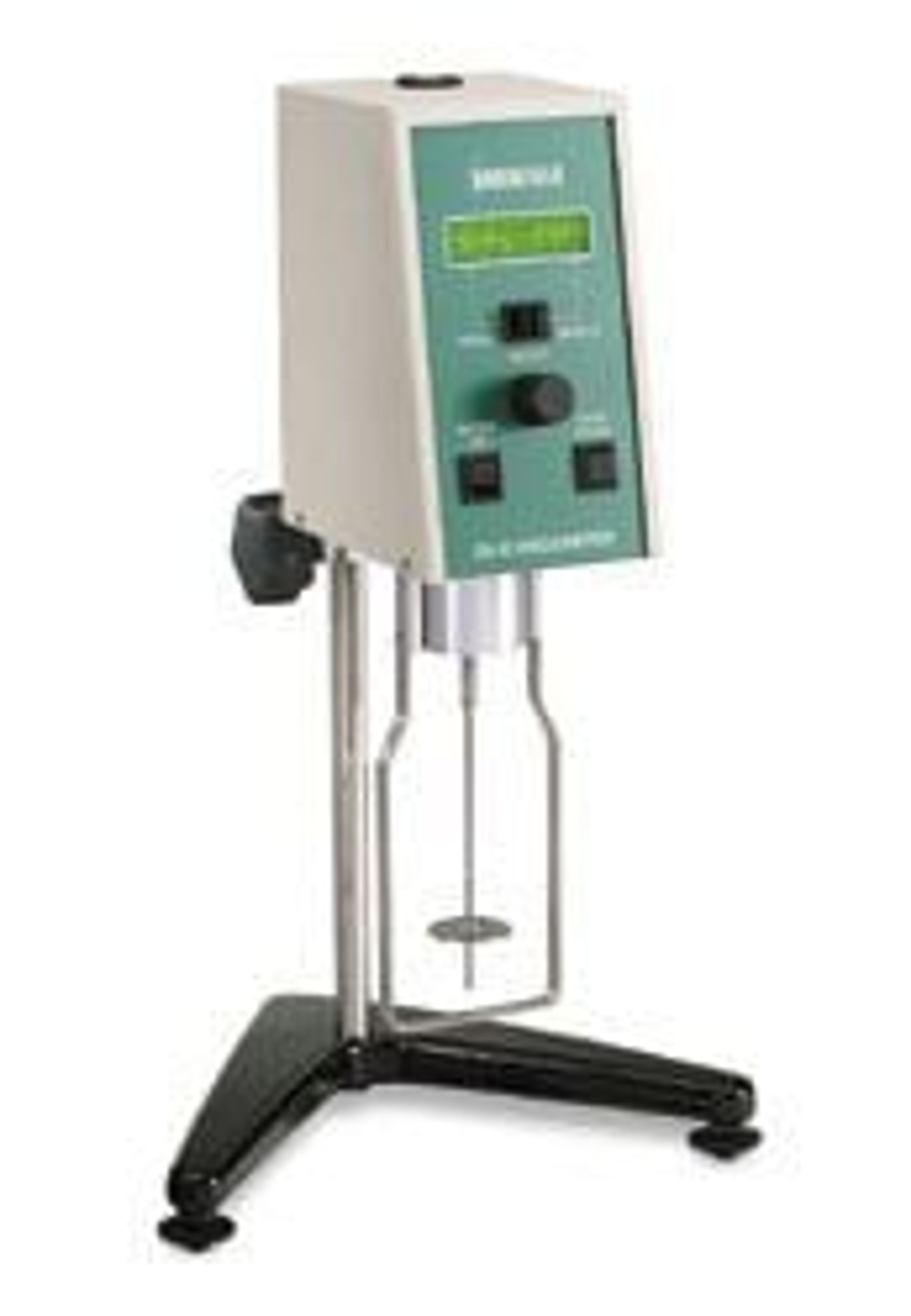
DV-E™ Viscometer
AMETEK BrookfieldThe DV-E combines economy and ease of operation with traditional Brookfield excellence. The Brookfield DV-E has set a world standard for value in viscosity measurement. Simplified controls allow operators to change test parameters quickly with the push of a switch and turn of a knob. The digital display ensures easy and accurate readout of test results for simultaneous measurement of viscosity and torque. Quality of manufacture guarantees reliable performance and long life. DV-E™ Viscometer Features and Benefits: Low cost and easy to use Direct display in: cP or mPa·s % Torque, Spindle, and Speed Torque measurement accuracy: 1% of full scale range Repeatability: 0.2% of full scale range Compatible with all Brookfield accessories NIST traceable viscosity standards available 18 speeds for greater range capability (0.3 to 100 rpm)