
Developing Biosensors to Tackle the Scourge of Ciguatera-Contaminated Fish in Tahiti & Beyond
Meet the scientist working to address the critical need for more robust and standardized methods for the identification of marine toxins globally
18 Jun 2019
Editorial article
Hélène Martin-Yken is a scientist based on the island of Tahiti, part of the French Polynesia, where she investigates critical marine toxins and their effect on human health. She has a particular interest in ciguatera, more commonly known as ciguatera fish poisoning, a disease induced by highly potent non-bacterial neurotoxins that accumulate in marine life. From collecting samples in the diverse waters of the South Pacific, to analyzing them in the lab, she talks us through how her research is helping to combat this global endemic.
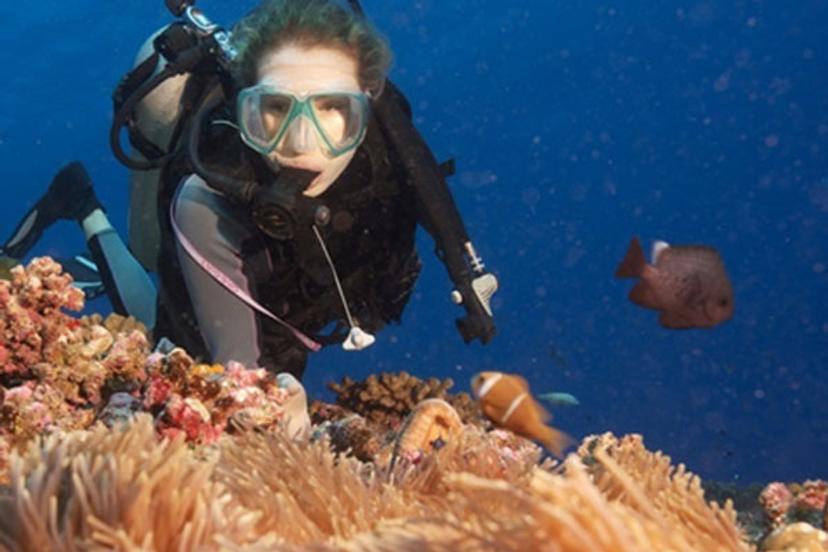
SS: So Hélène, as a scientist from Toulouse what takes you all the way to Tahiti?
HMY: Before recently moving to Tahiti, I worked in Toulouse at the Laboratory of Biological Systems and Chemical Engineering for several years. My main research focus was, and still is, yeast and fungal biology – within which I have a particular interest in the cellular response to stress. Many of these micro-organisms occupy very specific niches in the natural environment but have a remarkable ability to adapt their survival strategies to changes in the surroundings. For example, they are able to acclimatize to fluctuations in oxygen and nutrients availability, pH, temperature, reactive oxygen species, etc.
These diverse and dynamic changes are largely uncharacterized and could have substantial implications on human health – for those pathogenic species that we know about, as well as those yet to be discovered. I moved to Tahiti specifically to investigate ciguatera: Tahiti is a hotspot for these marine toxins, and the island experiences regular outbreaks as a result. The population is understandably concerned about the disease since there is no remedy available, but this concern has begun to extend globally – with ciguatera disease reaching temperate regions such as the North Atlantic and the Mediterranean Sea. This has been potentiated by global warming, tourism, and an increased interest from western consumers in tropical fish.
I am now working for the Laboratory of Marine Biotoxins, at the Institut Louis Malardé, on a project funded by the French Polynesia Government. With my experience in the field, I am working to develop biosensors for these toxins to help to develop a quick and simple way of detecting these toxins in contaminated samples – which is not currently possible. Despite being discovered more than 30 years ago, there is a critical need for more robust and standardized identification methods of ciguatoxins worldwide.
SS: What is ciguatera exactly – how does it affect human health?
HMY: Ciguatoxins are marine toxins, responsible for inducing ciguatera food poisoning. Ciguatoxin-1 is the most common non-bacterial toxin in the world – found in marine flora and fauna, such as algae, coral and seaweed. The toxin is largely produced by a symbiotic protozoan unicellular organism, Gamberdiscus polynesiensis, from the Gamberdiscus species.
The toxins bioaccumulate in fish muscle tissue, and this effect is magnified the higher up the food chain you go. The disease is transmitted to humans through consumption of carnivorous fish and can result in prolonged neurological toxicosis due to the excitatory effect on voltage-gated sodium channels in the brain and in peripheral nervous tissue. The lipophilic encapsulation of these toxins enables persistence at the sodium channel that extends the duration of symptoms across several days, weeks, or even months, without relief. What’s more, these toxins cannot be destroyed by cooking.
In the most severe cases, individuals can experience cardiac arrhythmias, loss of sympathetic vascular control (leading to changes in blood pressure) and various gastrointestinal sequelae. Whilst it’s rarely fatal, the symptoms can be life-inhibiting and there is currently no treatment available. Patients only have access to supportive care until symptoms subside.
SS: What can you tell us about the project so far? What have been your major findings?
HMY: As I mentioned earlier, there’s no easy way to tell if the toxin has contaminated a sample; the fish do not show signs or symptoms nor does the flavor, color, or odor change. One of the major findings of the work so far, however, has been the discovery of a cellular signaling pathway in yeast cells that responds to ciguatoxins: a dose-dependent activation of the calcineurin signaling pathway is observed. This was not known before and constitutes a good starting point for the development of biosensors, especially since Saccharomyces cerevisiae yeast cells demonstrate a high degree of molecular conservation with higher order eukaryotes. The strong biological similarities that yeast cells share with humans means that they are an ideal tool for this type of research
Central to this work has been the use of the FastPrep-24TM 5G technology from MP Biomedicals, which I have used for several years now. Our group has used this technology to effectively break down yeast cells, separating the cell walls from the cytosol to measure enzymatic activity or determine biochemical composition.
Going forward, I hope to develop an easy-to-use and efficient biosensor to help people distinguish between contaminated fish that should be avoided, and fish suitable for consumption. I would also like to produce a test to help determine whether an algal bloom is toxic or not, so that we can try to minimize marine ingestion of these toxins in the first place.
Related products
Request Quote for All Products
FastPrep-24™ 5G
MP BiomedicalsThe FastPrep-24™ 5G Instrument is quite simply the most advanced sample preparation system ever! The only high-speed benchtop homogenizer featuring microprocessor-controlled, Hi-Def Touch Screen Programming makes the 5G the ultimate in ease, speed and performance for sample preparation applications where it is necessary to grind, lyse, or homogenize difficult and routine samples, allowing easy and reproducible isolation of stable RNA, active proteins and full-length genomic DNA. Applications include but are not limited to: biological tissues, fluids and excretions cell cultures environmental sample other inorganic solid matrices. The FastPrep-24™ 5G Instrument uses a unique, optimized motion to disrupt cells through the multidirectional, simultaneous beating of specialized Lysing Matrix beads on the sample material. Samples and buffers are added to Lysing Matrix Tubes containing specialized Lysing Matrix beads, supplied ready-to-use, certified nuclease-free and in a variety of sample type specific compositions. The sample tubes remain securely sealed during the processing and the single use design eliminates cross-contamination. Program parameters are easily set using the touch screen user interface, or choose from many Recommended Programs stored on the 5G's onboard computer. With a simple touch of the "run" button, in less than a minute your samples are completely lysed, super fast, every time! The highest power settings available ensure that DNA, RNA and proteins, even from difficult samples, are quickly liberated into the protective buffer, thus preserving their biological function. FastPrep-24™ 5G Exclusive Features Powerful - Highest speed range available, ideal for a wide range of applications and protects your sample Optimized - Cycle and pause programmable for true walk-away operation Convenient - >70 Recommended Programs for easy optimizations Intuitive - Interactive user-friendly interface and touchscreen Flexible - Optional sample holders allow processing from 2 - 50 mL tubes, under ambient or cryogenic conditions Smart - Integrated USB Port allows for software updates to be installed, and run history data to be downloaded to a laptop Safe - Electromechanical dome latch automatically secures processing chamber, with a simple finger touch Complete - Lysing Matrix Tubes and Purification Kits from One Source