DeNovix Inc Recognised for Their Donation of Equipment to Delaware Technology Park STAR Campus

18 Oct 2016

Lois Manton-O'Byrne, PhD
Executive Editor

Product news

Delaware Technology Park celebrated the opening of its new 10,000 square-foot laboratory incubator located on University of Delaware’s STAR Campus. A wide range of regional leaders representing government, academia and private industry attended the celebratory event. The new space, called DTP@STAR, is home to twelve promising science-based entrepreneurial companies.

DeNovix Inc. was acknowledged for laboratory equipment donated to DTP@STAR’s shared services portfolio. Mike Bowman, President of the Delaware Technology Park, and one of leaders that drove the incubator from its inception stated, “As a world-class supplier of speciality instruments, DeNovix is a welcome collaborator for DTP@STAR tenants. Access to state-of-the-art instrumentation enables young companies to grow and scale more quickly.” Bowman thanked DeNovix during his opening remarks of the ribbon cutting ceremony.

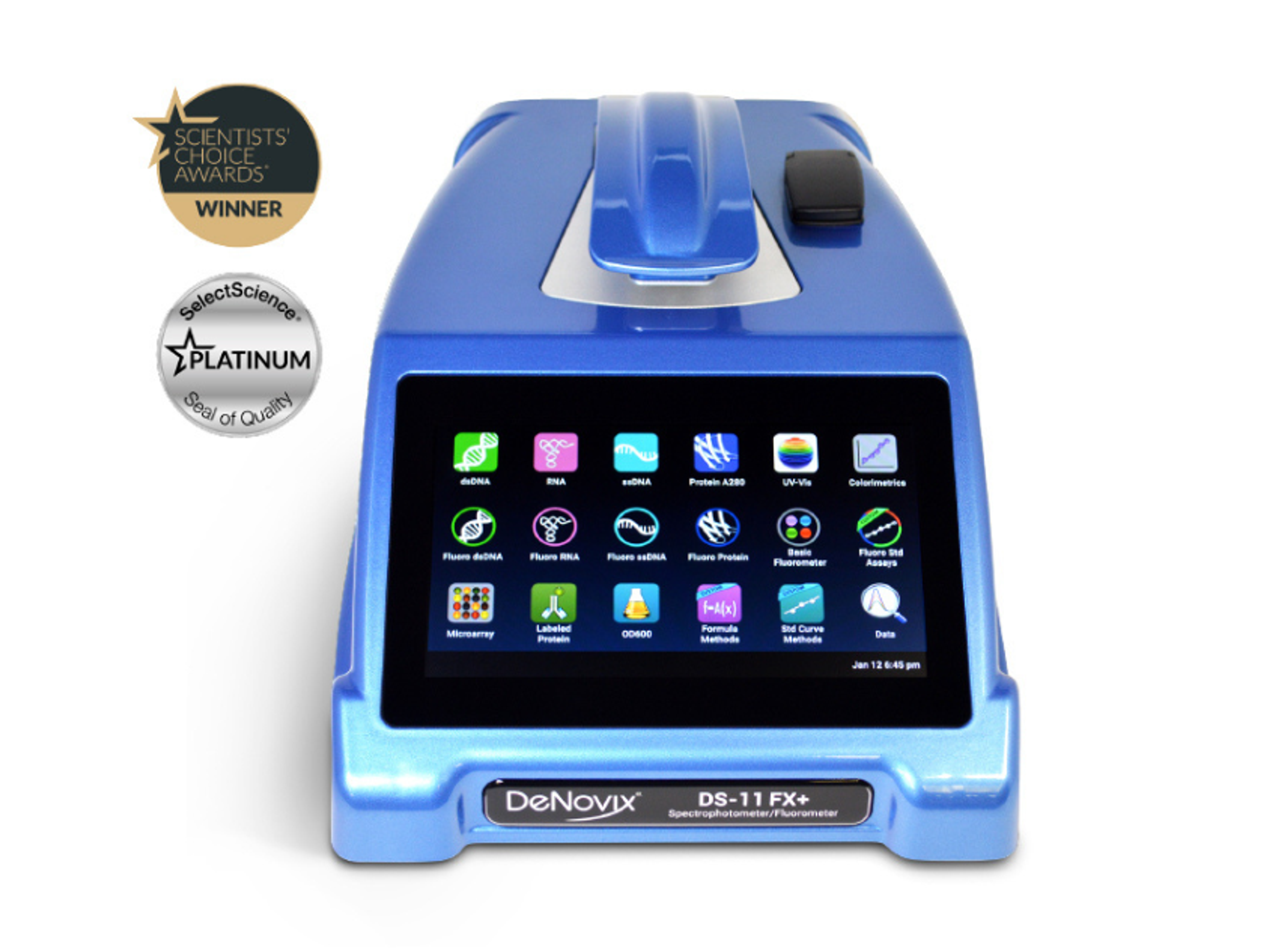
“The DeNovix DS-11 FX+ is ideal for installation in a research facility like DTP@STAR. Start-up companies frequently make tough budget choices and often have to use equipment that isn’t fit for their specific needs or that isn’t the latest technology,” said Fred Kielhorn, CEO of DeNovix. “We didn’t want our fellow Delaware-based companies to have to compromise anything about their research and technology commercialization efforts. Our instrument is easy to learn, extremely sensitive and highly flexible. Since DNA, RNA and protein quantification are core to so many life science workflows, the DS-11 FX+ will help these companies for years to come.”

The well-attended event featured remarks from U.S. Assistant Secretary of Commerce for Economic Development Jay Williams, U.S. Senator Christopher Coons, Congressman John Carney, Delaware Governor Jack Markell and University of Delaware President Dennis Assanis. During a facility tour, the officials visited the shared services laboratory where the DeNovix instrument is installed. Senator Coons and Congressman Carney had the opportunity to experience a hands-on demonstration of the DS-11 FX+ from Kielhorn. Both Congressmen commented positively about the compact size and the smart-phone-like user experience.

The patented DeNovix DS-11 FX+ combines absorbance and fluorescence technologies to deliver the most flexible and complete system available for nucleic acid and protein quantification. DeNovix SmartPath® Technology enables rapid and accurate 1 µL UV-Vis quantification over an industry-leading dynamic range of 0.75 ng/µL dsDNA to 37500 ng/µL. The addition of fluorescence also enables researchers to measure picogram concentrations of sample with increased specificity in one compact instrument.

The DS-11 FX Series features full Wi-Fi, USB, and Ethernet connectivity allowing users to easily export data via email, a USB drive, to network drives or network printers, or print cryotube labels with an optional printer. Measurements are made using DeNovix’ highly rated, custom Android™ operating system and a high-resolution, glove-compatible touch screen. Intuitive EasyApps® software featuring pre-configured and custom applications make the DS-11 Series easy to use as well as powerful and flexible.

DS-11 Series Spectrophotometer / Fluorometer

DeNovix

DeNovix takes spectrophotometry to a whole new level of performance with the DS-11 Series. This easy-to-use, compact spectrophotometer delivers full spectrum UV-Vis analysis and fluorescence capability, making it ideal for rapid nucleic acid and protein quality control.

(498)

Links

Tags

Fluorescence SpectroscopyFluorometers and spectrofluorometers (also called fluorescence spectrometers) are used to measure the intensity and wavelength of fluorescent light emitted from a sample after excitation by illumination. Spectrofluorometers utilize monochromators to select the desired wavelengths, whereas filter fluorometers employ a set of filters. Spectrofluorometers for measuring steady-state fluorescence and lifetime fluorescence (or time-resolved fluorescence) are available, as well as fluorescence microscopes and microplate readers. Find the best fluorescence spectroscopy products in our peer-reviewed product directory: compare products, check customer reviews and receive pricing direct from manufacturers.Spectroscopy LampsMonochromators, filters and spectroscopy lamps are available for specific applications of spectroscopy instruments. Available spectroscopy lamps include xenon, hollow cathode, ultraviolet, tungsten, halogen, mercury and deuterium.UV-Visible SpectroscopyUltraviolet-visible (UV-Vis) spectrophotometers are used to measure the interaction of UV and visible light with a sample, including transmission, reflectance & absorbance. The two major instrument classes are single-beam or double-beam spectrophotometers. More specialized equipment includes colorimeters, spectroradiometers and refractometers. Portable and microvolume spectrophotometers are also available. For the modular spectroscopy lab, explore a range of light sources for combination with a spectrograph/spectrometer and optics. Find the best UV-Vis spectroscopy products in our peer-reviewed product directory: compare products, check customer reviews and receive pricing direct from manufacturers.DNA / RNA Extraction and PurificationPurified DNA and RNA are required for numerous downstream molecular biology applications. Consequently, the importance of high-quality DNA/RNA extraction and purification equipment cannot be underestimated. Many purification kits are available and are typically optimized for nucleic acid type and source, including plasmid DNA, genomic DNA, mRNA, RNA and viral nucleic acid purification kits. Automated extraction and purification of nucleic acids can be implemented with magnetic bead separator instruments or high-throughput purification workstations. Find the best DNA/RNA extraction and purification equipment in our peer-reviewed product directory: compare products, check customer reviews and receive pricing direct from manufacturers.Protein PurificationProtein purification is a vital step in drug discovery, therapeutics, biotech and life science research. The purification process typically involves subcellular or membrane protein extraction with cell lysis kits, separation of proteins from cell debris by filtration or spin columns, and the isolation of proteins of interest from other proteins and impurities with affinity purification (including fusion protein tags and antibody binding proteins A, G and L), immunoprecipitation or chromatographic methods, such as ion exchange, size exclusion and immobilized metal affinity chromatography. All purification methods come in multiple formats for your laboratory needs, including agarose or magnetic beads, resins, columns and filter plates. Find the best protein purification equipment in our peer-reviewed product directory: compare products, check customer reviews and receive pricing direct from manufacturers.DNA / RNA QuantificationDetection and quantification of nucleic acids is important in molecular biology, cloning, expression, forensics and clinical diagnostics. Nucleic acids can be detected by labeling with colorimetric, fluorescent or radio labels and using in situ hybridization kits to identify specific sequences. Multiple nucleic acids can be detected and quantified at once using RNA / DNA detection beads or RNA / DNA microarrays. Find the best DNA / RNA Quantification products in our peer-reviewed product directory: compare products, check customer reviews and receive pricing direct from manufacturers.LabelingFluorescence Based AssayFluorescence based assays are widely used in life science research and high-throughput screening to measure a broad range of cellular activities.DNA QuantificationDNA quantification is the process of measuring the amount of DNA in a sample. It is vital in genomics, molecular biology, and biotechnology, helping to ensure accurate experiments and data analysis. Explore DNA quantification tools in our peer-reviewed product directory; compare products, check reviews, and get pricing directly from manufacturers.Assay DevelopmentThe process of proving an assay to be sensitive with respect to the target is known as assay development. The assay should be able to characterize novel compounds and measure the potency of these compounds against a validated biological target.Protein Quantification