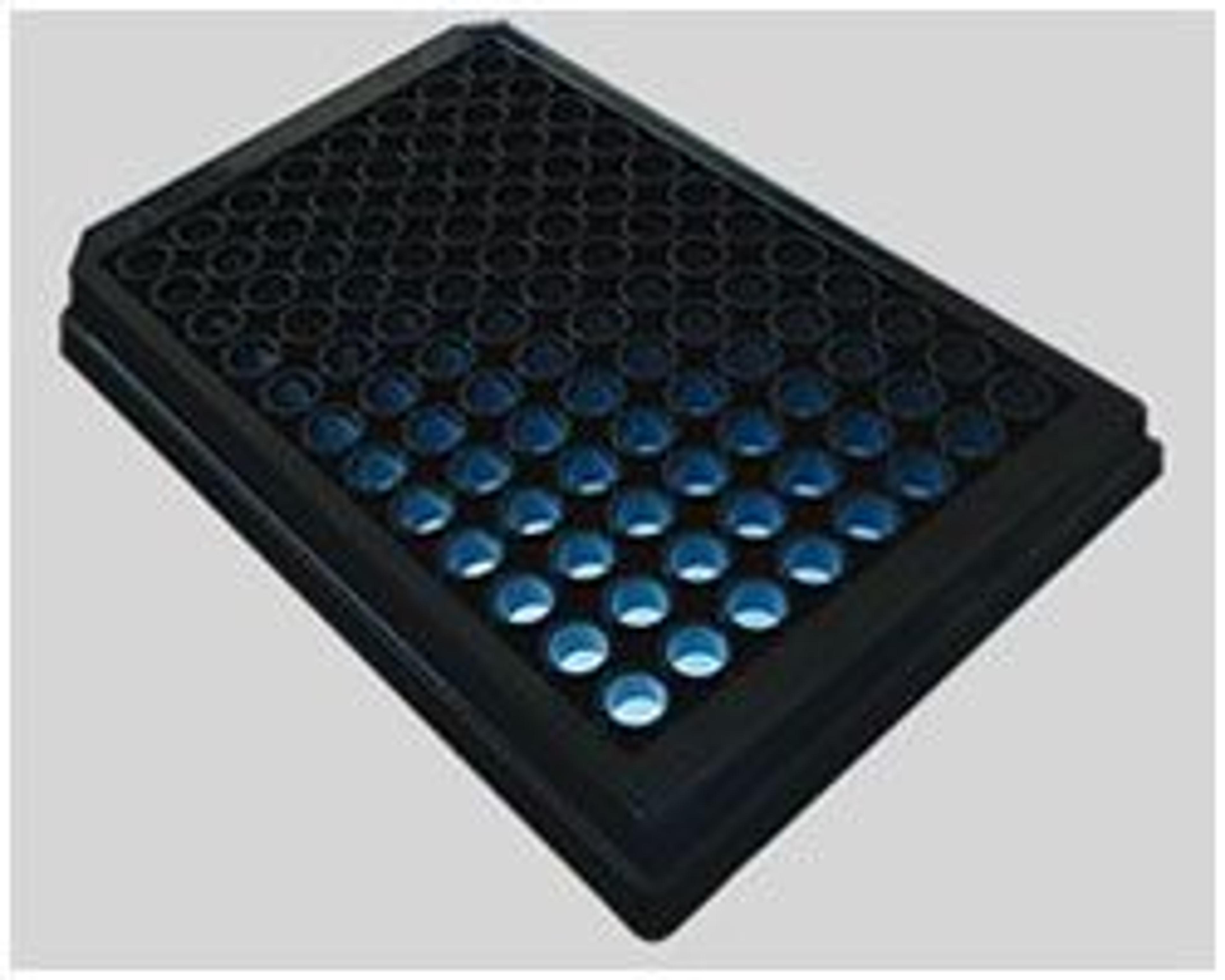
CYTOO's Motility Plates to Study Cell Migration to be Launched at American Society for Cell Biology (ASCB)

3 Dec 2012

Product news

CYTOO S.A., a life science systems & tools company that offers disruptive solutions for cell-based assays and High Content Screening (HCS), will launch the CYTOOplates Motility, based on CYTOO’s 2D+ Cell Culture Platform with its adhesive micropatterns, at the ASCB 2012 Annual meeting in San Francisco, USA.

After sponsoring last year’s “World Cell Race”, showcased at ASCB 2011 with huge success, CYTOO returns to ASCB 2012 to launch a new product to study cell migration for screening applications in both oncology and drug discovery.

“The objective of the first World Cell Race was to perform a large-scale comparison of cell motility across many different adherent cell types under standardized conditions. Many contestants and laboratories over the world proposed their cells as competitors, and this collaborative competition1 demonstrated how fun and serious science can be mixed”, commented Alexandra Fuchs, COO of CYTOO.

“We were delighted to participate and design a product to make this race a success. After the World Cell Race, the success of our CYTOOchips Motility was undeniable, as they provide a perfect tool for studying cell migration, showing characteristics closer to those found in vivo². We will celebrate the first anniversary of the WCR with the launch of our CYTOOplates Motility in a standard microplate format.”

"CYTOOplates Motility feature adhesive tracks of 4 different widths from 2.5 to 20 μm allowing a wide range of applications including single vs collective cell migration, and cell pairing ”, explained Constantin Nelep, Sr. Product Manager of CYTOO. “We have also seen our Motility products used in other application areas, such as directional neurite outgrowth assays.”

During ASCB 2012 meeting, CYTOO will also present the company’s 2D+ Cell Culture Platform that was launched in July. Based on the use of adhesive micropatterns to guide cell architecture and behavior in culture, this technology contrasts with traditional 2D culture where cells spread and move in an uncontrolled manner, introducing a considerable but unnoticed variability in cell function. By defining the 2D topology of cell adhesion, 2D+ Technology enables the fine control of the spreading and 3D shape of cultured cells in single- or multi-cellular configurations, resulting in control of cell contractility, cell polarity, organelle positioning, or cell division axis.

Control your Cells with CYTOOplates™

CYTOO Inc.

CYTOOplates are optical grade, glass-bottom microplates in 96 or 384-well format with black-side upper structures for fluorescence applications offering reduced background and minimum scattered light. Each well holds an array of over 4,000 (96-well) or 1,000 (384-well) identical micropatterns. CYTOOplates are compatible with your High Content Screening equipment.

(0)

Links

Tags

Cell Adhesion AssaysCell adhesion assays are used to quantitate attachment and analyze the molecular mechanisms for extracellular matrix adhesion, cell migration and sensitivity to inhibitors. Find the best cell adhesion assay equipment in our peer-reviewed product directory: compare products, check customer reviews and receive pricing direct from manufacturers.Cell / Tissue CultureCell culture or tissue culture is used to study the biology of cells or tissues and to isolate cellular products in an environment which can be manipulated and well defined. Accurately control your culture environment with bioreactors or culture incubators, bind your cells to a surface or together with an extracellular matrix. Distinguish cell types with differential media or proliferate cells with certain characteristics using selective media. Enrich your media with supplements such as growth factors, sera and vitamins. Find the best cell and tissue culture products, kits and equipment in our peer-reviewed product directory: compare products, check customer reviews and receive pricing direct from manufacturers.High-Throughput ScreeningHigh-throughput screening (HTS) is an automated drug discovery technique for identification of active compounds against a compound library. Use HTS readers and integrated assay preparation / analysis workstations to screen your compounds. Identify active compounds against various HTS libraries, including membranes, proteins and peptides and HTS cell lines. Find the best high-throughput screening products in our peer-reviewed product directory: compare products, check customer reviews and receive pricing direct from manufacturers.ADME-ToxicologyADME-toxicology (ADME-Tox) studies are used in pharmacology and pharmacokinetics to assess the activity/toxicity of drugs <i>in vivo</i> or <i>in vitro</i>. Find bioassays for absorption, distribution, metabolism, and excretion of drug molecules including cytotoxicity, transporter/permeability, metabolism and activity assays as well as hepatocytes and cell lines for ADME. Find the best ADME-toxicology products in our peer-reviewed product directory: compare products, check customer reviews and receive pricing direct from manufacturers.Cell-Based AssaysCell-based assays are used to monitor the presence, quantity and activities of a desired cellular analyte including drug molecules or biomarkers. This can reveal information on cell health (apoptosis, cytotoxicity, viability and proliferation assays), cell metabolism, cell migration and cell signaling mechanisms. Find the best cell-based assay products, kits and equipment with our peer reviewed product directory: compare products, check customer reviews and receiving pricing direct from manufacturers.Protein CrystallographyProtein crystallization is the process of crystallizing purified proteins for 3D structure analysis by x-ray crystallography. The main methods of protein crystallization include sitting drop, hanging drop and microbatch. It is important to control parameters such as pH, temperature and concentration. Following crystallization, detectors and software are used for data collection and analysis.Cancer CellsCancer cells are abnormal cells that divide uncontrollably, leading to the formation of tumors and the spread of cancer. Studying cancer cells is crucial for developing new treatments and understanding tumor biology. Explore cancer cell research products in our peer-reviewed product directory; compare products, check reviews, and get pricing directly from manufacturers.ASCBCell GrowthCell growth refers to the process by which cells increase in size and number. It is essential for tissue development, wound healing, and cancer research. Understanding and controlling cell growth is a fundamental part of cell biology and regenerative medicine. Browse our peer-reviewed product directory to find the best tools for studying cell growth, compare products, check reviews, and get pricing directly from manufacturers.Cell MigrationCell BiologyCell biology studies the structure, function, and behavior of cells. Understanding cellular processes is essential for research in areas such as cancer biology, stem cell research, and neurobiology. Techniques like flow cytometry, microscopy, and cell culture enable researchers to explore cellular mechanisms in detail. Browse our peer-reviewed product directory to find the best cell biology tools and equipment, compare products, check customer reviews, and get pricing directly from manufacturers.