
Corning launches HepGo™ assay-ready 3D liver spheroid kits
Corning expands cell culture portfolio with 3D liver models that better recapitulate in vivo behavior and deliver a more physiologically relevant model for improved drug safety and efficacy screening
27 May 2021
Product news
Corning Incorporated has announced the launch of its HepGo™ Assay-ready 3D liver spheroid kit, the first plug-and-play solution to include 96 pre-plated primary human hepatocyte (PHH) spheroids in a single-spheroid microplate (one uniform spheroid per well) and HepGo Hepatocyte companion cell culture media.
3D human PHH liver spheroid preclinical models are emerging as more physiologically and pathologically relevant than 2D models, as they more accurately reflect in vivo activity. Models that closely resemble the complexities of the human body are vital to improve preclinical testing of new drug candidates. Leveraging Corning's expertise in 3D cell culture and liver biology, this product can deliver robust and consistent results for immediate end-user applications.
The kit provides a convenient way for customers to use 3D PHH liver spheroids for various applications, including hepatotoxicity assays. The pre-plated nature of this kit supports imaging-based assays or biochemical assays that can be performed on the same plate, requiring no transfer of the 3D spheroids. This streamlines the process by minimizing manual steps and reducing potential error. Users can spend less time and money on creating, growing, and handling spheroids to focus on testing, imaging, and generating reliable, accurate, reproducible data.
"At Corning, we work to identify areas in need of new and updated solutions that eliminate manual steps, reduce costs, increase efficiencies, and deliver more predictive results to help advance critical areas of research," said Kim Titus, director of business operations, Corning Life Sciences. "With our new 3D liver kits, we aim to provide a convenient solution that can be used for applications like liver toxicity screening and provide a solution for scientists that eliminates some of the time-consuming preparation required to run complex experiments."
Corning continues to expand and enhance its robust 3D cell culture portfolio to help researchers create more in vivo-like environments, build relevant models, and break down barriers to the adoption of 3D cell culture. Corning is dedicated to supporting innovations that advance the science of 3D cell culture and continues to develop novel tools, such as PHH liver spheroids, for research in liver diseases and drug safety assessments.
Do you use products from Corning in your lab? Write a review today for your chance to win a $400 Amazon.com Gift Card>>
Related products
Request Quote for All Products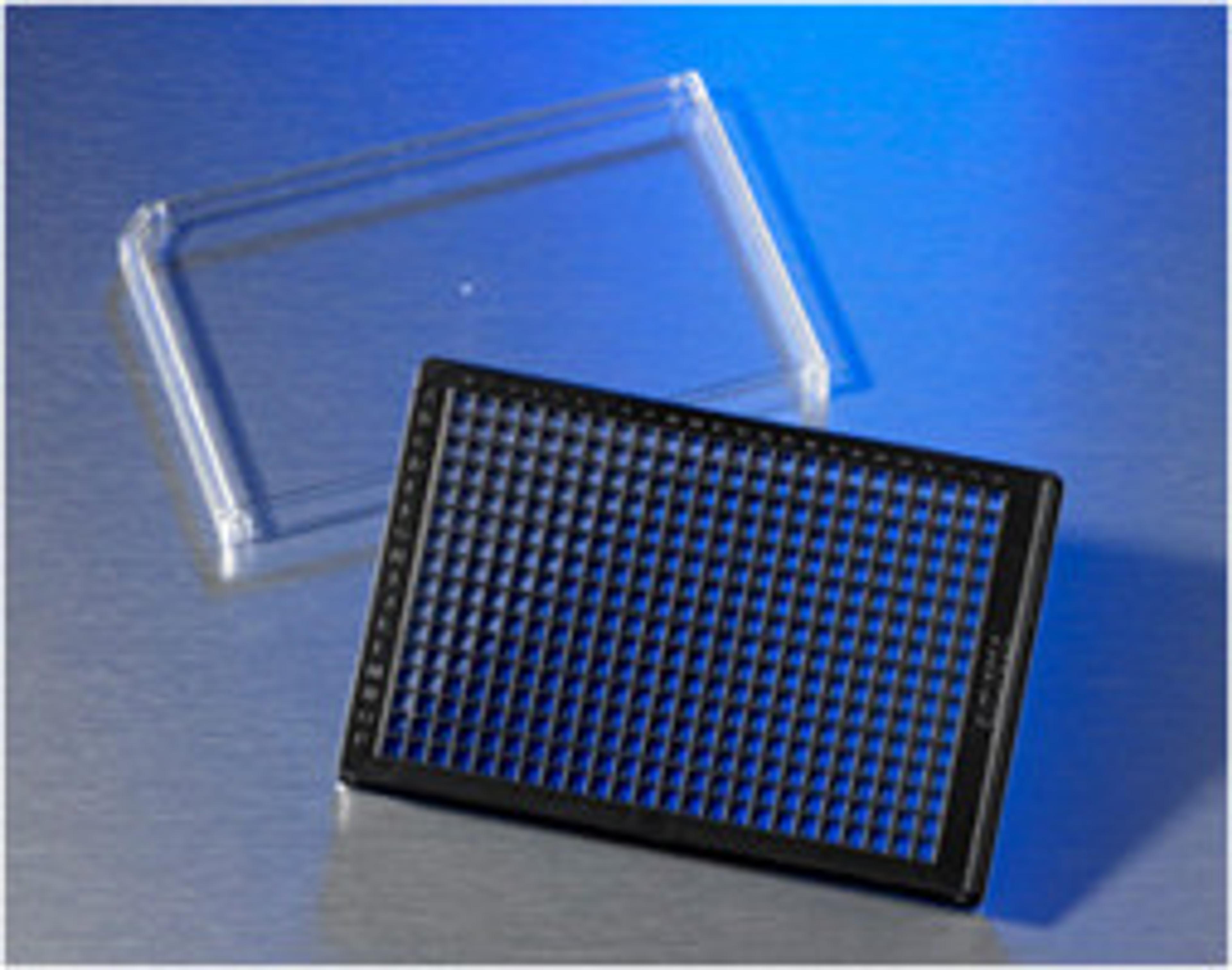
Corning® 384-well Black/Clear Round Bottom Ultra-Low Attachment Spheroid Microplate, Bulk Packed 10 per Bag, with Lid, Sterile
Corning Life SciencesUltra-Low Attachment microplates feature a covalently bound hydrogel layer that effectively inhibits cellular attachment Surface minimizes protein absorption, enzyme activation and cellular activation Surface is noncytotoxic, biologically inert and nondegradable Sterilized by gamma irradiation Black wall microplates have low background fluorescence, minimal light scatter and reduced crosstalk Opaque walls to prevent well-to-well crosstalk Can be used for both top and bottom reading instruments Bulk packed 10 per bag Novel well geometry aids formation of spheroids in center of well Optically clear round bottom with black opaque microplate body