Corning launches Corning MicroDEN automated system for generating dendritic cells

Automated system designed to increase efficiency in cell therapy research

9 Oct 2019

Charlie Carter
Life Sciences Editor

Product news

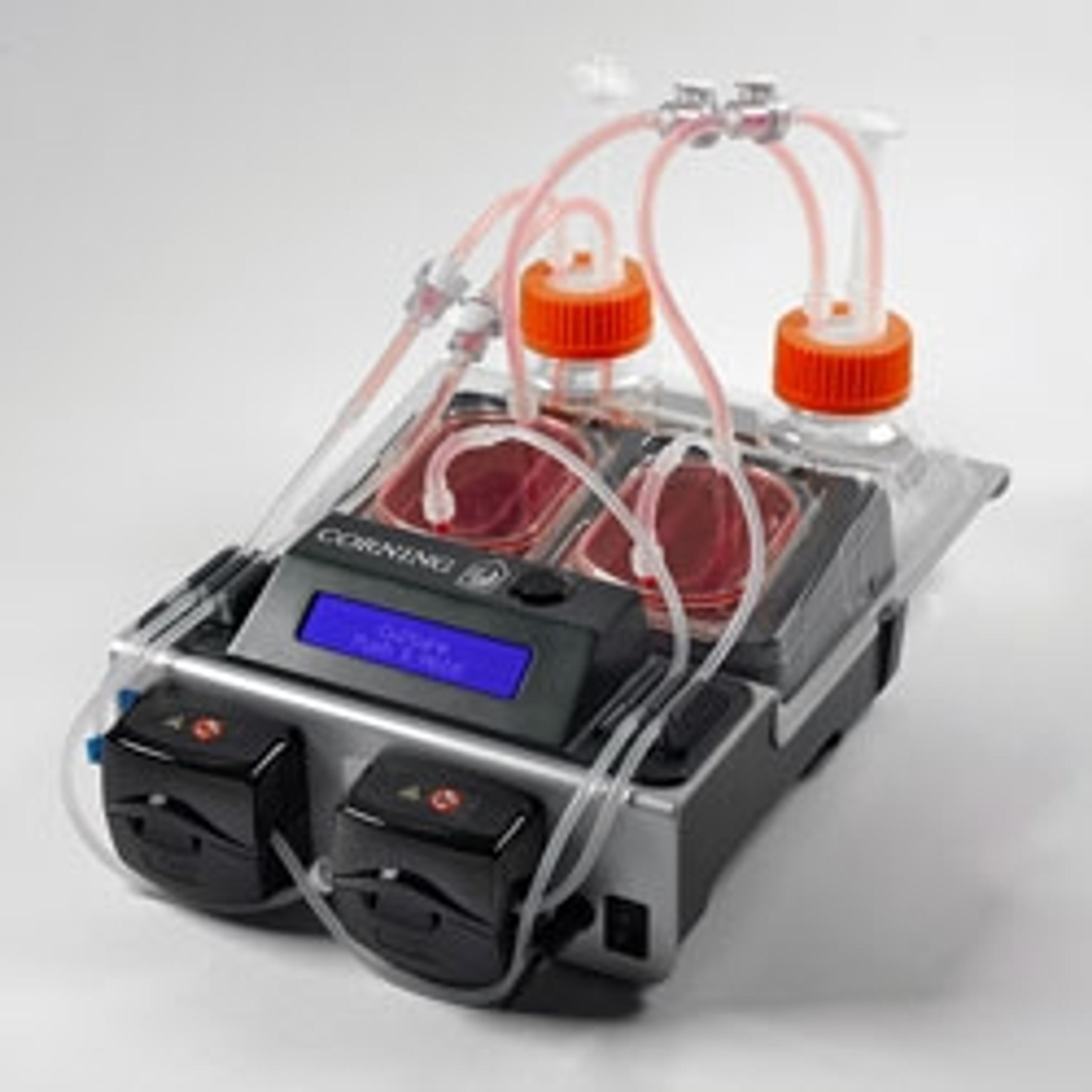
Corning Incorporated has launched Corning® MicroDEN, an automated perfusion cell culture system that provides a more efficient process for the differentiation of monocytes into dendritic cells than current manual methods.

The Corning® MicroDEN system enables the wide use of dendritic cells in cell and gene therapy for basic and applied research in immunology and immune-oncology. Developed by Flaskworks, a Boston-based start-up company specializing in technologies for therapeutic cell production, the Corning MicroDEN system is now available from Corning.

The rise of personalized immunotherapies has increased demand for dendritic cells. However, the current process for generating these cells is cumbersome, error-prone, and time intensive. Dendritic cells are key elements in immunology and immunotherapy research in oncology and infectious diseases as well as autoimmune diseases and transplant rejection. The Corning MicroDEN system streamlines the process by minimizing the manual steps, resulting in more consistent yields, a reduced risk of contamination, and more efficient therapy research.

The Corning MicroDEN system is composed of the MicroDEN unit manufactured by Flaskworks, and closed-system consumables manufactured by Corning, such as tissue culture-treated polystyrene flasks, storage bottles, and tubing. The Corning MicroDEN system is jointly branded with Flaskworks and will be marketed, sold, and supported globally by Corning.

“MicroDEN leverages Corning’s strength in cell culture technology and is a strong strategic fit, addressing key emerging needs in cell therapy research and development,” said Keith Olson, vice president, business operations and technology, Corning Life Sciences. “Using MicroDEN for dendritic cell production provides a streamlined approach differentiated from the current manual processes, saving time for our customers.”

“With the growing applications and importance of dendritic cells in immune-therapy research, it is critical that this system be available to investigators globally. Corning's leadership in cell culture and its global footprint make it an ideal partner for Flaskworks' innovative MicroDEN platform,” said Dr. Shashi Murthy, Flaskworks’ founder and Chief Technology Officer.

Do you use Corning products in your lab? Write a review today for your chance to win a $400 Amazon gift card>>
Links

Tags

Cell / Tissue CultureCell culture or tissue culture is used to study the biology of cells or tissues and to isolate cellular products in an environment which can be manipulated and well defined. Accurately control your culture environment with bioreactors or culture incubators, bind your cells to a surface or together with an extracellular matrix. Distinguish cell types with differential media or proliferate cells with certain characteristics using selective media. Enrich your media with supplements such as growth factors, sera and vitamins. Find the best cell and tissue culture products, kits and equipment in our peer-reviewed product directory: compare products, check customer reviews and receive pricing direct from manufacturers.Cell Lines Stem Cells and Primary CellsPrimary cell cultures, established cell lines and stem cells are vital for <i>in vitro</i> and <i>ex vivo</i> experimentation. High-quality cells, optimized for your applications, alongside optimized cell substrates, growth medium and supplements, are critical for experimental success. Explore a range of cells suitable for your applications, including isogenic cell lines, competent cells, induced pluripotent stem cell (iPSC)-derived cell lines, fungal/bacterial/mammalian cell lines, stem cells and cancer cell lines. Find the best cells for your research in our peer-reviewed product directory: compare products, check customer reviews and receive pricing direct from manufacturers.ImmunologyImmunological techniques measure and characterize immune responses. Immunology kits and analysis systems often use techniques such as ELISA, radioimmunoassay (RIA) and immunodiffusion assays, Immunohistochemistry, and flow cytometry. Immunologists use equipment such as flow Cytometers, plate readers, plate washers and fluorescent microscopes.Cellular PathologyCellular Pathology deals with the microscopic analysis of tissue samples and cells. Sample preparation and processing includes fixation, staining, sectioning and slide mounting, using equipment such microtomes and cryostats. In choosing immunohistochemistry and immunocytochemistry kits, consider chromogens, staining method, antibodies, microscopes and imaging.NeuroscienceNeuroscience research investigates the neurological mechanisms underlying behavior, neurodegenerative diseases, and other brain conditions. Learn about the innovative technologies for bioimaging, electrophysiology, cell culture, chromatography and other techniques used in this field.AutomationAutomation in laboratories and manufacturing processes enhances efficiency, precision, and scalability by reducing the need for manual intervention. It plays a critical role in improving productivity, minimizing human error, and accelerating workflows in fields like diagnostics, drug development, and industrial testing. Automation technologies include robotic systems, automated liquid handlers, and process control systems that streamline complex tasks and ensure consistent, reproducible results. Explore our peer-reviewed product directory to discover the best automation solutions, compare options, read user reviews, and get prices directly from manufacturers.Cell TherapyCell therapy involves using living cells to treat diseases, often by replacing damaged cells or stimulating regeneration. Stem cell therapy and CAR-T cell therapy are examples of cutting-edge treatments in regenerative medicine and cancer immunotherapy. Browse our peer-reviewed product directory to find the best cell therapy tools, compare products, check reviews, and get pricing directly from manufacturers.Cancer ResearchCancer research aims to understand the mechanisms of cancer development and progression to improve prevention, diagnosis, and treatment. From molecular biology to clinical trials, research spans a wide range of disciplines, including immunotherapy, targeted therapies, and drug discovery. Explore the best cancer research products in our peer-reviewed product directory; compare products, check reviews, and get pricing directly from manufacturers.NeuronsNeurons are the fundamental units of the brain and nervous system, involved in transmitting information. Understanding neuron function is critical in neurobiology, neuroscience, and neurodegenerative disease research. Explore neuron research tools in our peer-reviewed product directory; compare products, check reviews, and get pricing directly from manufacturers.ImmunotherapyImmunotherapy is a treatment approach that utilizes the body�s immune system to fight diseases, especially cancer. It includes therapies such as monoclonal antibodies, checkpoint inhibitors, and CAR-T cell therapy. Immunotherapy is a rapidly growing area of research in oncology and autoimmune diseases. Browse our peer-reviewed product directory to find the best immunotherapy tools, compare products, check reviews, and get pricing directly from manufacturers.Infectious DiseasesInfectious diseases are caused by pathogens such as bacteria, viruses, and fungi. Effective detection, prevention, and treatment are crucial to control outbreaks and improve public health. Diagnostic tools, vaccines, and antimicrobial treatments are essential components of managing these diseases. Research into emerging pathogens and resistance patterns continues to evolve. Browse our peer-reviewed product directory to find the best diagnostic tools, prevention solutions, and treatment options; compare products, read customer reviews, and get pricing directly from manufacturers.