Columbia University Researchers Interrogate Primary Cells using the IonFlux System

12 Jun 2011
bridget bridget
Laboratory Director

Product news

Fluxion Biosciences, Inc. announced today that the laboratory of Charles Emala, M.D. at Columbia University has demonstrated, for the first time, the effective use of ensemble recording to measure ion channel currents from human primary cells. The use of primary cells in conjunction with automated electrophysiology is essential to achieving higher physiological relevance for ion channel assays.

“This is an essential step forward for the validation of IonFlux technology” “The IonFlux platform has enabled us to obtain an impressive amount of high quality data in a short period of time,” said Dr. Charles Emala, M.D., Professor of Anesthesiology and Vice Chair for Research at Columbia University Medical Center. “Our laboratory is focused on understanding the physiology of airway smooth muscle cells as a key component for a number of diseases including asthma and allergic response. Since the GABAerginc system is an important factor in asthma and other disease states, direct ion channel current measurements are an important technique for our laboratory; progress using manual patch clamp recording is slow due to variable success rates, high labor content, and a long learning curve.

Once we validated assays to look at endogenously expressed ion channel currents in both immortalized and native primary cells, the IonFlux 16 system provided a solution for obtaining data at a high experimental throughput. It is simple to operate. While other automated electrophysiology systems are available, they are priced well beyond the budget of an individual research lab.”

The flexibility, ease of use, and scalability of the IonFlux 16 system facilitates a wide range of patch clamp experiments, including the characterization of changes in ion channel activity. The system fully automates the patch clamp process and compound perfusion, eliminating the technical skill and time associated with the manual patch clamp technique.

“This is an essential step forward for the validation of IonFlux technology,” said Steven Smith, Ph.D., Technical Director at Fluxion Biosciences. “Throughout life science and drug discovery research, there is a concerted move toward more physiologically relevant assays: recombinant cell based experiments are being replaced with experiments based on stem cell derived or, ideally, primary cell systems. For automated electrophysiology systems, primary cell recording was previously thought to be very difficult, if not impossible. The results emerging from the Emala lab have turned that perception on its head by demonstrating robust recordings and high success rates can be obtained on the IonFlux system from both primary cells of human origin and immortalized primary cells in culture that endogenously express native levels of ion channel proteins.”

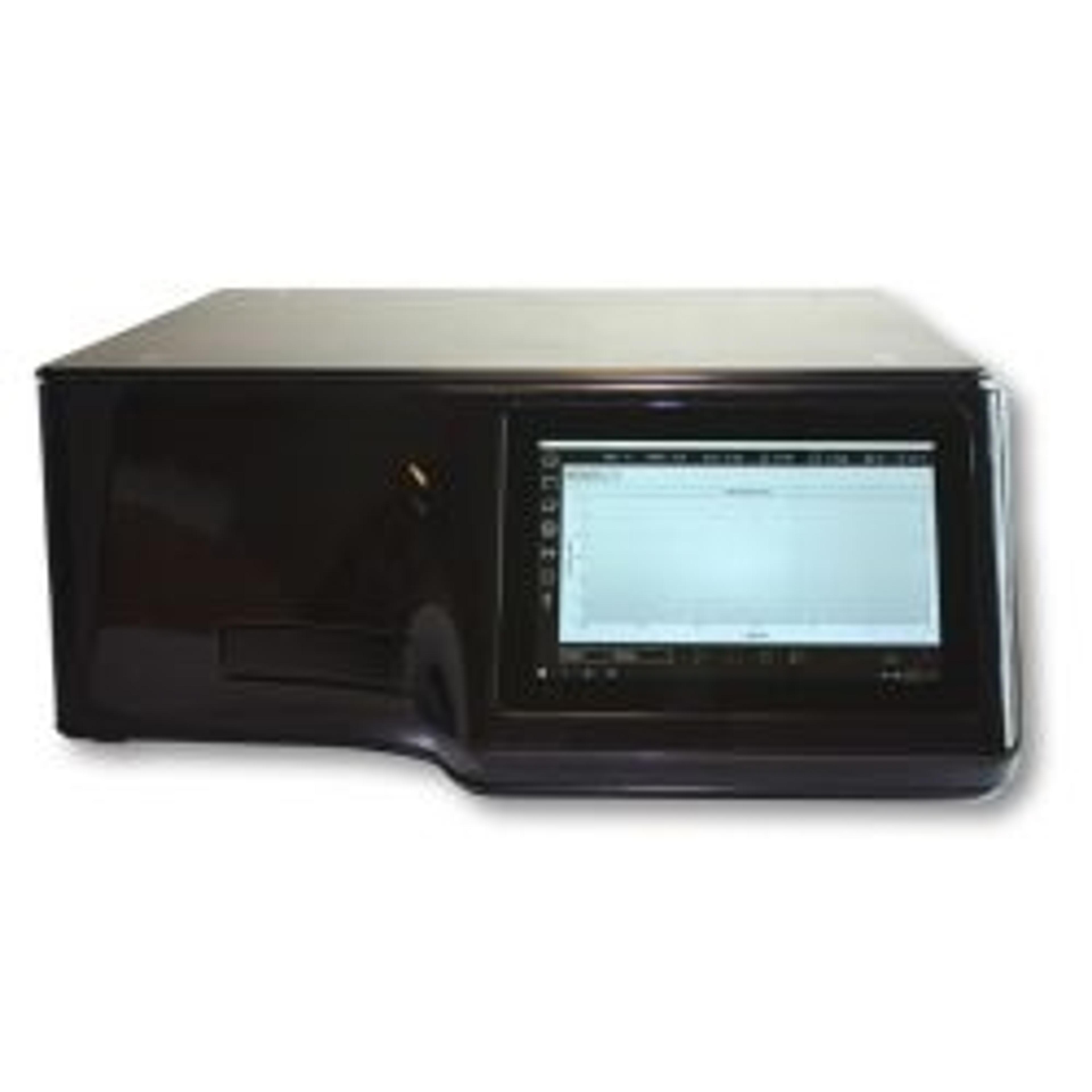
The IonFlux 16 system utilizes Fluxion’s innovative Well Plate Microfluidic™ technology to automate the patch clamp process. The system includes 16 amplifiers and performs 16 voltage-clamp recordings in parallel. It provides fast perfusion of up to 8 compounds per cell ensemble for a total of 128 data points per 96-well plate. The IonFlux HT system is also available for higher throughput studies and features 64 amplifiers. The use of ensemble recording improves consistency and success rates, enabling the systematic study of ion channel kinetics and compound pharmacology. These studies were previously impractical for a wide range of investigators due to the large amount of specialized training required and relatively low throughput of the manual patch clamp technique; comparable automated patch clamp instruments have a prohibitive cost for the individual research lab. For more information about the IonFlux automated electrophysiology system, please visit Fluxion’s website at the company article page.

Links

Tags

Cell / Tissue CultureCell culture or tissue culture is used to study the biology of cells or tissues and to isolate cellular products in an environment which can be manipulated and well defined. Accurately control your culture environment with bioreactors or culture incubators, bind your cells to a surface or together with an extracellular matrix. Distinguish cell types with differential media or proliferate cells with certain characteristics using selective media. Enrich your media with supplements such as growth factors, sera and vitamins. Find the best cell and tissue culture products, kits and equipment in our peer-reviewed product directory: compare products, check customer reviews and receive pricing direct from manufacturers.High-Throughput ScreeningHigh-throughput screening (HTS) is an automated drug discovery technique for identification of active compounds against a compound library. Use HTS readers and integrated assay preparation / analysis workstations to screen your compounds. Identify active compounds against various HTS libraries, including membranes, proteins and peptides and HTS cell lines. Find the best high-throughput screening products in our peer-reviewed product directory: compare products, check customer reviews and receive pricing direct from manufacturers.Cell Lines Stem Cells and Primary CellsPrimary cell cultures, established cell lines and stem cells are vital for <i>in vitro</i> and <i>ex vivo</i> experimentation. High-quality cells, optimized for your applications, alongside optimized cell substrates, growth medium and supplements, are critical for experimental success. Explore a range of cells suitable for your applications, including isogenic cell lines, competent cells, induced pluripotent stem cell (iPSC)-derived cell lines, fungal/bacterial/mammalian cell lines, stem cells and cancer cell lines. Find the best cells for your research in our peer-reviewed product directory: compare products, check customer reviews and receive pricing direct from manufacturers.Assay AssemblyAssay Assembly is technique used in drug discovery to develop assays to test the cytotoxicity, genotoxicity, or other activities of a compound on a cell. Assay assembly requires chip assembly, a delivery system and a detection and analysis method. Beneficial features of assay kits or automated systems include high-throughput, high speed and sensitivity and low signal to noise ratio.Medicinal ChemistryMedicinal chemistry is a broad discipline encompassing the design, identification, synthesis and development of chemicals in drug discovery. It includes a number of techniques covering structural biology, synthetic chemistry and molecular biology. Technologies used in medicinal chemistry include ADME, lab-on-a-chip, high content screening and assay assembly.Cell-Based AssaysCell-based assays are used to monitor the presence, quantity and activities of a desired cellular analyte including drug molecules or biomarkers. This can reveal information on cell health (apoptosis, cytotoxicity, viability and proliferation assays), cell metabolism, cell migration and cell signaling mechanisms. Find the best cell-based assay products, kits and equipment with our peer reviewed product directory: compare products, check customer reviews and receiving pricing direct from manufacturers.High-Content ScreeningHigh-content screening (HCS), also known as high-content analysis (HCA), is a high-throughput technique used in drug discovery to identify substances that alter the phenotype of cells. HCS uses fluorescent microscopic imaging and automated image analysis to investigate cellular events such as apoptosis, cell viability, GPCR activation, oxide production, neurite outgrowth, and cell signaling. Find the best fluorescent labeling reagents, cellular assays, and high-content imaging systems in our peer-reviewed product directory: compare products, check customer reviews and receive pricing direct from manufacturers.BiomarkersBiomarkers are biological markers which can be measured and evaluated to indicate a biological state. The use of biomarkers in research and diagnosis can indicate a normal or disease state or drug response of cells / tissues. Biomarkers include genetic markers, cell surface markers such as antigens, antibodies or receptors and secreted molecules such as cytokines. An assay system is required for identification of biomarkers. :Biopharmaceutical AdvancesBiopharmaceutical advances follow the development of pharmaceuticals derived from biotechnology, also known as biotechnology medicines. Biopharmaceuticals may be produced from cell lines, plants, or microbial cells. Important considerations of biopharmaceutical use include application, cost, production process and purification.Robotic InstrumentsRobotic instruments can be used for high-throughput automation of many lab processes. Such processes use instruments for assays like cell based assays and ELISA, for sample preparation like shakers, centrifuges and incubators, and for analysis such as sequencing and western blot analyzers. Useful features of robotic instruments include speed, reproducibility, barcode readers, software and automation.Robotic WorkstationsRobotic workstations are automated platforms enabling the user to perform high-throughput, multi-application processes, from sample preparation tasks such as PCR set-up, DNA purification and NGS library preparation, to integrated sample prep and analysis workstations. Automation makes processes consistent, fast, precise and fully walk-away. Find the best robotic workstations in our peer-reviewed product directory: compare products, check customer reviews and receive pricing direct from manufacturers.ElectrophysiologyElectrophysiology is the study of biological voltage changes, from a single ion channel through to a whole organ scale. Voltages can be measured using patch clamping, automated workstations, electrophysiology rigs or cell based assays. Specific cell lines, manipulators and microinjectors are also available for electrophysiology research.
Columbia University Researchers Interrogate Primary Cells using the IonFlux System