Collaboration brings clarity: Understanding SARS-CoV-2-host interactions

We speak with Dr. Ed Emmott, founder of The Emmott Lab & COVID-19 Mass Spec Coalition member, about his latest research into the disease

5 Oct 2020

Cameron Smith-Craig
Cameron Smith-Craig
Pharma and Applied Sciences Editor

Editorial article

Dr. Ed Emmott, founder of The Emmott lab, Department of Biochemistry and Systems Biology, University of Liverpool

As the race for an effective SARS-CoV-2 vaccine continues to attract attention both from the public and the pharmaceutical industry, it is important to recognize concurrent research efforts in further understanding viral-host interactions, as these could uncover new targets for therapeutics.

Dr. Ed Emmott is a researcher working at the University of Liverpool who aims to use the latest analytical technologies available to uncover how RNA viruses replicate and interact with the host cell. He set up ‘The Emmott Lab’ back in 2019 after pursuing the idea of combining his extensive experience in virology, stemming from a Ph.D. studying the coronaviruses, and his accumulated in-depth understanding of proteomics. The lab now forms an integral part of the university’s Centre for Proteome Research within the Department of Biochemistry and Systems Biology.

Since the creation of the lab, Emmott primarily worked on positive-sense RNA viruses, a grouping that shares features such as a genome which functions as an mRNA molecule that can be directly translated, and the deployment of protease enzymes during replication. More recently, Emmott has been interested not only in looking at the function of these proteases and their role in replication, but also in discerning whether they are “moonlighting in some other role,” such as shutting down the translation of host cell proteins or cleaving proteins involved in recognizing foreign viruses or non-self messages to inhibit the immune response. To support this work, the lab has also been developing single-cell proteomic methods and starting to apply this to virus research.

Collaboration during calamity

The COVID-19 pandemic has forced many in the scientific community to converge like never before, especially those who have a background working with the coronaviruses. Emmott is no exception to this, in fact he and his lab are helping to lead the charge as part of the COVID-19 Mass Spec Coalition (1). Emmott explains how the coalition was established as a “means to apply the expertise of the international mass spectrometry community to study the virus.” He tells SelectScience: “Our labs were empty. Our machines were lying unused. And the technology could be being put to use both in a translational sense to study patient responses, potentially learning new markers to stratify illness, but also in a basic biological sense to understand more about the virus.” Mass spectrometry has already played a crucial part in understanding SARS-CoV-2 infection, producing studies to elucidate the interactome or the phosphoproteome of affected cells.
 ALT TEXT
Coronavirus rendering ©Donato Fiorentino, 123rf.com

Uncovering new targets means new therapeutic approaches

The Emmott Lab has recently published new research under preprint, titled ‘Characterisation of protease activity during SARS-CoV-2 infection identifies novel viral cleavage sites and cellular targets for drug repurposing’ (2). In this study, Emmott and his collaborators were able to expand on previous research identifying some of the proteases SARS-CoV-2 produces as targets for drug inhibition. As Emmott explains, here the focus of the study was to “try to understand what are the proteolytic cleavage events happening during infection and can we try to attribute these to viral or cellular proteases and work out which proteins are being cleaved.” Ultimately the aim is to clarify questions such as: “Which cellular proteins are being cleaved? Are these being cleaved in a way that benefits the virus? And is this something that we can make use of, potentially by drugging these proteins with pre-existing pharmaceuticals?” Emmott explains that the research was able to produce a shortlist of 14 protein substrates of the SARS-CoV-2 main and papain-like proteases and that, through a siRNA knockdown and inhibitor studies, they were able to produce a significant inhibitory effect on viral replication. The potential implications of these findings are not just apparent in understanding the mechanisms of proteolysis during viral infection, they could also provide new drug targets and ultimately new treatment strategies for the COVID-19 disease.

Miniaturizing high-containment experiments at lab capacity

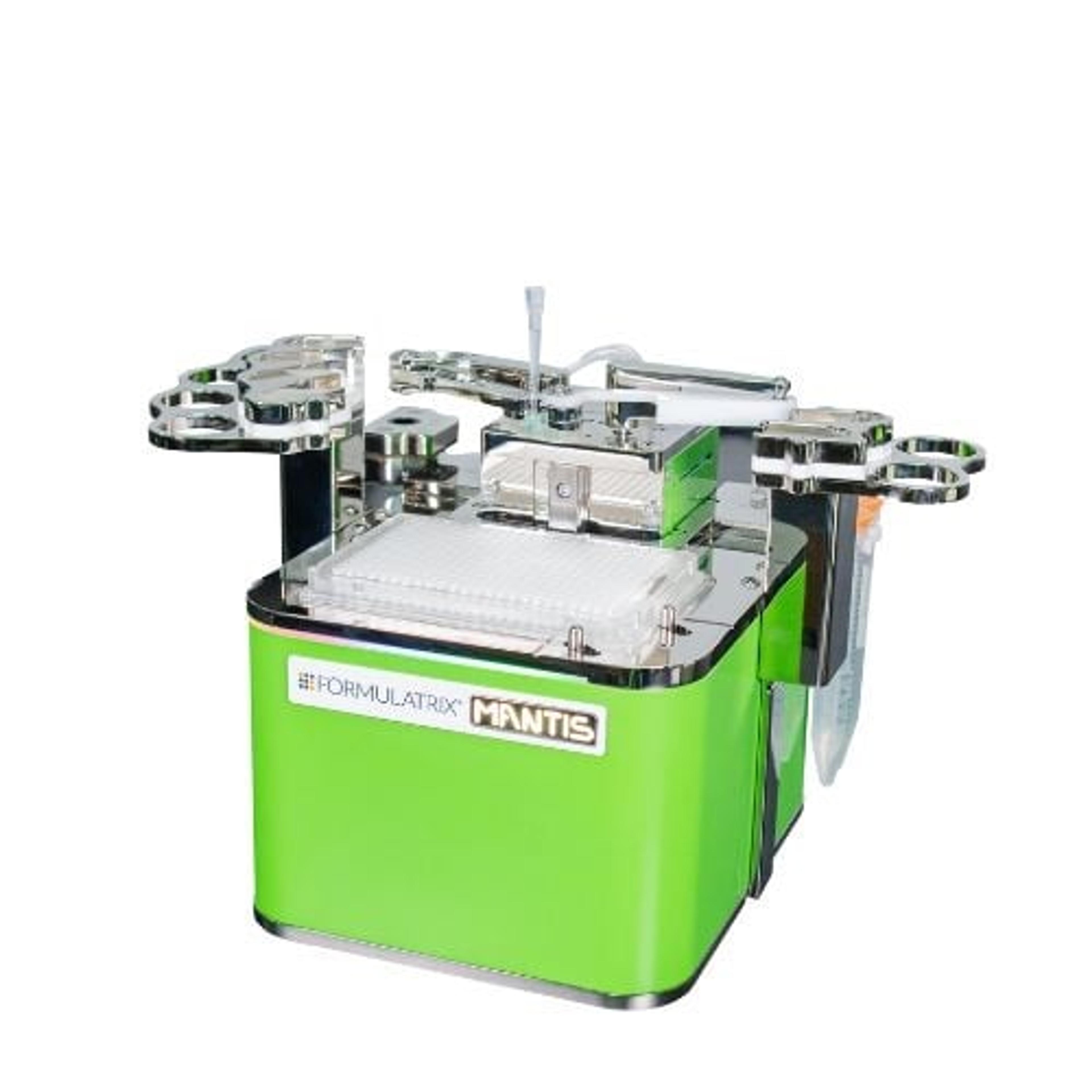
The MANTIS® Microfluidic Liquid Handler from Formulatrix

In order to perform its viral research, The Emmott lab heavily relies on automation and often high-throughput processing to meet the required number of experimental replicates. Their work is routinely done in plate-based formats using magnetic cleanup and multi-channel pipettors. However, for some projects, they do have to go to an even smaller scale. Emmott notes how the adoption of one particular system, the MANTIS® Microfluidic Liquid Handler from Formulatrix, has particularly benefited the lab’s work on SARS-CoV-2. He explains: “The MANTIS allows us to keep our sample volumes low, particularly when samples are very limited. This could be from working with previous patient samples or trying to minimize precious high-containment space and resources. Normally, you try to miniaturize sample processing to save reagent costs, and certainly that's nice, however in this case we actually get better data by miniaturizing as this lets us minimize loss of our limited material during handling. It's really a very good investment for our very low-input studies.”

Looking to the future

Emmott has been studying the coronaviruses throughout his career in viral research, but with the surge in investment, he has seen the basic science for SARS-CoV-2 progress rapidly. He believes high-throughput methods, such as mass spectrometry, can play a big role in this. However, with the host-pathogen interactions, Emmott admits, “there's still a lot to learn about the immune response to the virus. It's hugely important for discerning whether patients are responding well or not. Really, we need to understand that, especially in high-risk groups. It is going be particularly important for parts of the population who are less likely to respond well to a vaccine, for example, the elderly.”

Looking a little further ahead, Emmott sees cause for hope: “I'm optimistic that by the end of the year, we will have a vaccine licensed that will show some benefit against SARS-CoV-2, that people can start receiving early next year. I don't think it will be a perfect vaccine, it may only reduce very severe disease to a level where you feel ill for a few days. So, I think even with a vaccine that may be sufficient to allow life to return to a more normal setting, there will still be research ongoing to understand SARS-CoV-2 for years.”

Do you use Formulatrix products in your lab? Write a review today for your chance to win a $400 Amazon gift card>>

References

Struwe, W., Emmott, E., Bailey, M., et al. The COVID-19 MS Coalition—accelerating diagnostics, prognostics, and treatment. The Lancet; 395(10239):1761-1762 (2020). 

Meyer, B., Chiaravalli, J., Brownridge, P., et al. Characterisation of protease activity during SARS-CoV-2 infection identifies novel viral cleavage sites and cellular targets for drug repurposing. bioRxiv. https://www.biorxiv.org/content/10.1101/2020.09.16.297945v1 (2020). 

MANTIS® Liquid Dispenser

FORMULATRIX®, Inc.

The MANTIS automated liquid dispenser excels at accurate, low-volume dispensing in a wide variety of scientific workflows. The system is an easy and affordable solution to quickly increase the reproducibility and quality of your research as well as the throughput and efficiency of your laboratory. 

(24)

Links

Tags

AntibodiesAntibodies are used in techniques such as confocal and fluorescence microscopy, flow cytometry, ELISA, ELISPOT, immunohistochemistry, western blotting and immunopreciptation. Select specific antigen reactivity, high specific affinity, low non-specific binding, monoclonal or polyclonal, primary or secondary antibodies and associated conjugates such as an enzyme or dye for visualization.MicrobiologyMicrobiology is the study of microorganisms including protists, prokaryotes, fungi, and, often, viruses. Microorganisms are a useful research tool as genetic vectors and, in immunology, for antibiotic susceptibility testing, cellular biology and genetics. Microorganisms commonly grow readily in incubators with microbial culture media; this can contain chromogenic supplements to differentiate between cell lines. Estimate your culture’s density of microorganisms with colony counters, or screen and select colonies for desirable clones with automated colony pickers. Additionally, equipment is available to monitor environments for the presence of microbes and identify with microbial identification instruments. Find the best microbiology products in our peer-reviewed product directory: compare products, check customer reviews and receive pricing direct from manufacturers.ImmunologyImmunological techniques measure and characterize immune responses. Immunology kits and analysis systems often use techniques such as ELISA, radioimmunoassay (RIA) and immunodiffusion assays, Immunohistochemistry, and flow cytometry. Immunologists use equipment such as flow Cytometers, plate readers, plate washers and fluorescent microscopes.Cell-Based AssaysCell-based assays are used to monitor the presence, quantity and activities of a desired cellular analyte including drug molecules or biomarkers. This can reveal information on cell health (apoptosis, cytotoxicity, viability and proliferation assays), cell metabolism, cell migration and cell signaling mechanisms. Find the best cell-based assay products, kits and equipment with our peer reviewed product directory: compare products, check customer reviews and receiving pricing direct from manufacturers.BiomarkersBiomarkers are biological markers which can be measured and evaluated to indicate a biological state. The use of biomarkers in research and diagnosis can indicate a normal or disease state or drug response of cells / tissues. Biomarkers include genetic markers, cell surface markers such as antigens, antibodies or receptors and secreted molecules such as cytokines. An assay system is required for identification of biomarkers. :Clinical MicrobiologyMicrobiology is the study of microorganisms including protists, prokaryotes, fungi, and, often, viruses. Microorganisms are a useful research tool as genetic vectors and, in immunology, for antibiotic susceptibility testing, cellular biology and genetics. Microorganisms commonly grow readily in incubators with microbial culture media; this can contain chromogenic supplements to differentiate between cell lines. Estimate your culture’s density of microorganisms with colony counters, or screen and select colonies for desirable clones with automated colony pickers. Additionally, equipment is available to monitor environments for the presence of microbes and identify with microbial identification instruments. Find the best microbiology products in our peer-reviewed product directory: compare products, check customer reviews and receive pricing direct from manufacturers.DNA / RNA QuantificationDetection and quantification of nucleic acids is important in molecular biology, cloning, expression, forensics and clinical diagnostics. Nucleic acids can be detected by labeling with colorimetric, fluorescent or radio labels and using in situ hybridization kits to identify specific sequences. Multiple nucleic acids can be detected and quantified at once using RNA / DNA detection beads or RNA / DNA microarrays. Find the best DNA / RNA Quantification products in our peer-reviewed product directory: compare products, check customer reviews and receive pricing direct from manufacturers.Respiratory InfectionsRespiratory infections are caused by pathogens such as bacteria, viruses, and fungi, leading to diseases like pneumonia, tuberculosis, and COVID-19. It is important to identify respiratory infections quickly in patients to ensure appropriate treatment and care, and to prevent sepsis. Browse our peer-reviewed product directory to find the best tools for respiratory infection detection, compare products, check reviews, and get pricing directly from manufacturers.RNARNA is a nucleic acid that plays a key role in gene expression and protein synthesis. It serves as a messenger between DNA and ribosomes, carrying genetic instructions to produce proteins. Advances in RNA-based therapies, such as mRNA vaccines and gene editing, have revolutionized treatment strategies for genetic disorders and infectious diseases. Explore RNA research tools and therapies in our peer-reviewed product directory; compare products, check customer reviews, and get pricing directly from manufacturers.VirusesViruses are microscopic pathogens that require a host cell to replicate. Understanding their structure, replication cycle, and impact on the immune system is crucial in developing effective treatments, vaccines, and diagnostic methods. Research continues to focus on emerging viral diseases and antiviral drug discovery. Explore solutions for virus research, detection, and treatment in our peer-reviewed product directory; compare products, check customer reviews, and get pricing directly from manufacturers.Vaccine DevelopmentVaccine development focuses on creating immunizations to protect against infectious diseases. The process involves identifying antigens, developing and testing vaccine efficacy, and ensuring safety through preclinical testing and multiple clinical trial phases. Scientists use various approaches, including weakened or inactivated viruses, protein subunits, or mRNA. Advanced platforms and rapid diagnostic tools aid in vaccine research and testing. Explore vaccine development solutions in our peer-reviewed product directory; compare products, read reviews, and get pricing directly from manufacturers. Liquid HandlingLiquid handling involves the precise transfer, mixing, and dispensing of liquids in laboratory settings. It is essential for accurate and consistent results in biological, chemical, and pharmaceutical research. Automated liquid handling systems improve efficiency and reduce human error in sample preparation and analysis. Explore liquid handling tools in our peer-reviewed product directory; compare products, read customer reviews, and get pricing directly from manufacturers.CoronavirusCoronaviruses are a large family of viruses that can cause illnesses ranging from the common cold to more severe diseases like COVID-19. Research into the biology, transmission, and treatment of coronaviruses has become a global priority, particularly since the emergence of SARS-CoV-2. Understanding the virus�s structure and behavior is essential for developing vaccines, diagnostics, and antiviral treatments. Explore our peer-reviewed product directory to discover the latest research tools, diagnostic tests, vaccines, and treatments for coronavirus, compare products, read reviews, and receive pricing directly from manufacturers.Covid-19COVID-19, caused by the SARS-CoV-2 virus, has led to a global health crisis with profound impacts on societies and economies. Research into diagnostics, vaccines, treatments, and understanding viral mechanisms continues to evolve. The pandemic has accelerated innovations in healthcare and biopharmaceuticals, including novel vaccine platforms and rapid testing technologies. Browse our peer-reviewed product directory to find top COVID-19 testing kits, research tools, vaccines, and treatments, compare products, read reviews, and receive direct pricing from manufacturers.Infectious DiseasesInfectious diseases are caused by pathogens such as bacteria, viruses, and fungi. Effective detection, prevention, and treatment are crucial to control outbreaks and improve public health. Diagnostic tools, vaccines, and antimicrobial treatments are essential components of managing these diseases. Research into emerging pathogens and resistance patterns continues to evolve. Browse our peer-reviewed product directory to find the best diagnostic tools, prevention solutions, and treatment options; compare products, read customer reviews, and get pricing directly from manufacturers.