
CN Bio FDA collaboration expanded to investigate lung-on-a-chip model for inhaled drug evaluation applications
Extension aims to evaluate CN Bio’s PhysioMimix lung-on-a-chip platform in addition to deepening existing research collaboration for liver studies
4 May 2021
Industry news
CN Bio, a leading developer of single- and multi-organ-on-chip microphysiological systems (MPS) that improve the accuracy and efficiency of drug discovery, has announced the U.S. Food and Drug Administration (FDA) has extended their research collaboration, for a further three years. The scope of the research carried out with the FDA’s Center for Drug Evaluation and Research (CDER) has now been broadened to include the exploration of CN Bio’s lung-on-a-chip using the PhysioMimix™ MPS platform, to appraise the system’s use for the evaluation of inhaled drug products and assessing additional applications for CN Bio’s liver model.
The extension follows the success of CN Bio and the FDA’s initial 4-year agreement, culminating in a co-publication that demonstrated the advanced performance of the Company’s liver-on-a-chip MPS; the first co-authored, peer-reviewed article between a microphysiological system provider and a regulator. With a plan to follow a similar process, the extended collaboration will involve studying lung microphysiological systems to obtain physiological relevant parameters for inhaled drug products. The performance of the lung microphysiological systems will be compared to traditional techniques.
Successful development and regulatory assessment of novel and generic pulmonary therapeutics can be enhanced by drug development tools that provide reliable measurements of key parameters, such as drug absorption, metabolism and permeability in the lungs. Using MPS, complex human-relevant 3D lung models can include accurate physiological micro-architecture; co-culture of lung-specific cell types, and incorporation of innate immune cells. In doing so, researchers can create an organotypic air-liquid interface, with more utility than current approaches, for evaluating the effects of environmental toxins, consumer products, and the safety and efficacy of new inhaled medicines.
Dr David Hughes, CEO, CN Bio, said: “This expanded collaborative project with the world’s leading regulator, the FDA, sends a reinforcing message to the pharmaceutical sector supporting the use of organ-on-a-chip microphysiological systems. The data from our previous study fortifies the growing body of evidence demonstrating the utility of CN Bio’s platforms and encouraging the adoption of MPS into drug discovery and development workflows. Following the co-publication, we have seen a significant increase in customer interest surrounding our liver MPS, and expect similarly exciting outcomes for this upcoming lung project.”
Do you use CN Bio products in your lab? Write a review today for your chance to win a $400 Amazon Gift Card>>
Related products
Request Quote for All Products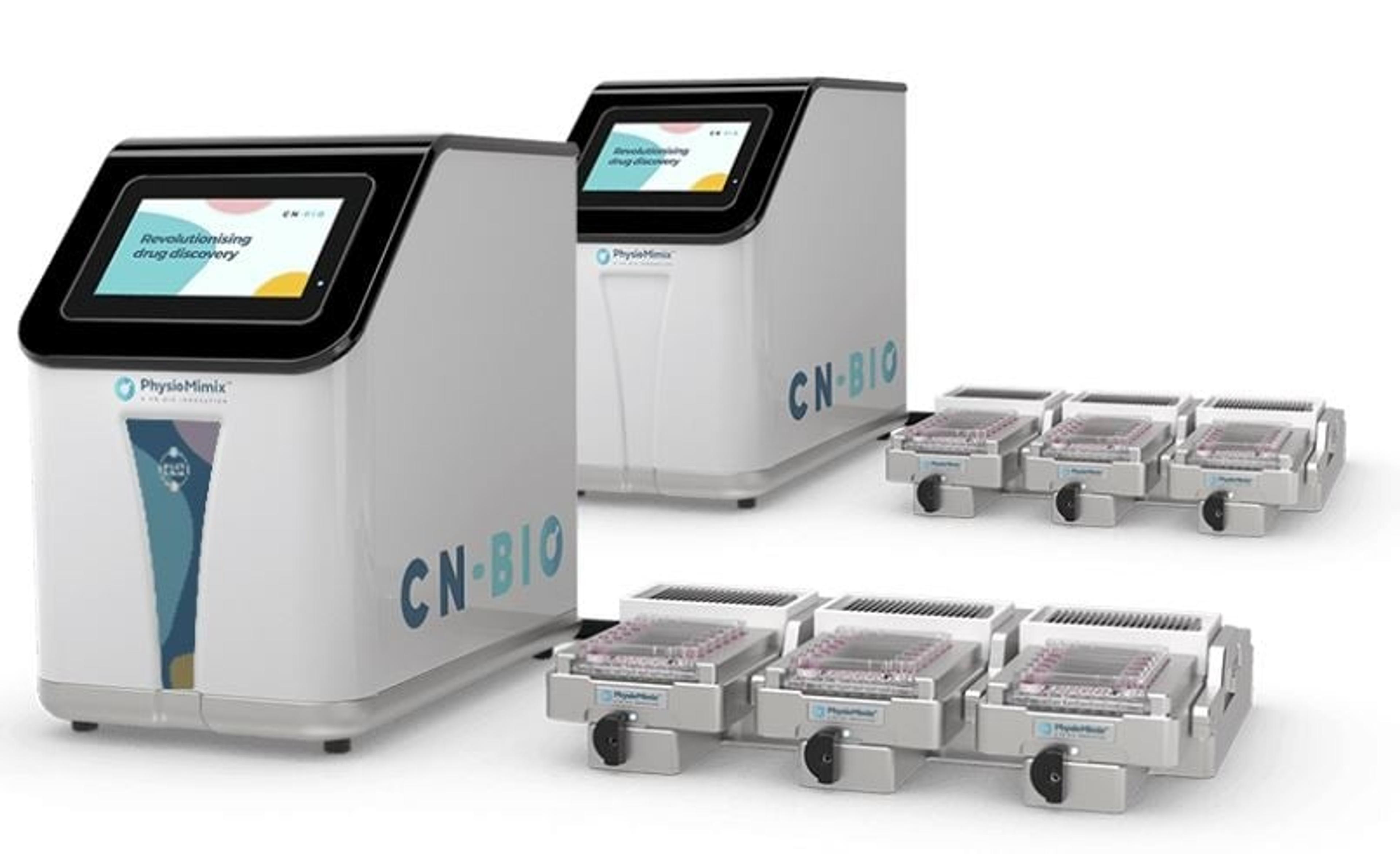
The PhysioMimix™ OOC Range of Single and Multi-organ Microphysiological Systems (MPS) by CN Bio
CN BioPhysioMimix™ microphysiological systems generate in vitro microtissues that mimic the structure and function of human tissues and organs. Through the simulation of human biological conditions, they bridge the gap between traditional cell culture and human studies, reliably predicting drug effects to facilitate the accelerated development of safe and efficacious therapeutics.