CN Bio extends microphysiological system portfolio with PhysioMimix single-organ higher throughput system

The PhysioMimix HT system has been designed to increase productivity, cost-effectiveness and data robustness

27 Feb 2023

Lawrence Howes
Editorial Assistant

Product news

CN Bio, an organ-on-a-chip (OOC) company that designs and manufactures single-and multi-organ microphysiological systems (MPS), has announced the commercial launch of the PhysioMimix Single-organ Higher Throughput (HT) System. The company’s first HT system has been designed to overcome adoption barriers currently limiting the use of predictive human liver models within drug discovery workflows, to enable use within earlier stages where larger-scale comparative studies that investigate the efficacy, disposition or safety of lead candidate drugs are required.

The PhysioMimix HT System provides users with a scalable solution, combining a significantly reduced cost-per-chip with increased run capacity. Launching alongside the system is a new multi-chip consumable plate, the Liver-48 plate, which faithfully miniaturizes the well-characterized and validated human liver model by CN Bio, for applications that include predicting drug-induced liver injury or determining drug metabolism/hepatic clearance, and the modeling of various prevalent liver diseases such as non-alcoholic steatohepatitis (NASH).

Allowing 48 liver chip assays within one laboratory-standard SBS footprint, the plate supports the incorporation of replicates, controls and seven-point dose-response curves to improve data robustness and reproducibility. Multiple Liver-48 plates can be run simultaneously to provide a total capacity of 144 chips per HT System, with potential to expand this further in response to consumer demand. Together, the new technology enables the benefits of human-relevant OOC insights to be realized earlier in drug discovery, facilitating more confident decision making and the potential recovery of overlooked therapeutic candidates.

In support of new approach methodologies (NAMs) such as MPS, section 3209 of the FDA Modernization Act 2.0 removes the mandatory requirement for animal testing of developmental drugs for toxicity where enhanced performance is proven using in vitro alternatives. The potential of MPS technology is further reinforced by the FDA’s decision to expand its collaborative research following several successful projects with CN Bio, most recently to investigate the company’s Gut/Liver model for human drug bioavailability studies.

Want the latest science news straight to your inbox? Become a SelectScience member for free today>>

Multi-chip Liver-12 (MPS-LC12) Plates by CN Bio

CN Bio

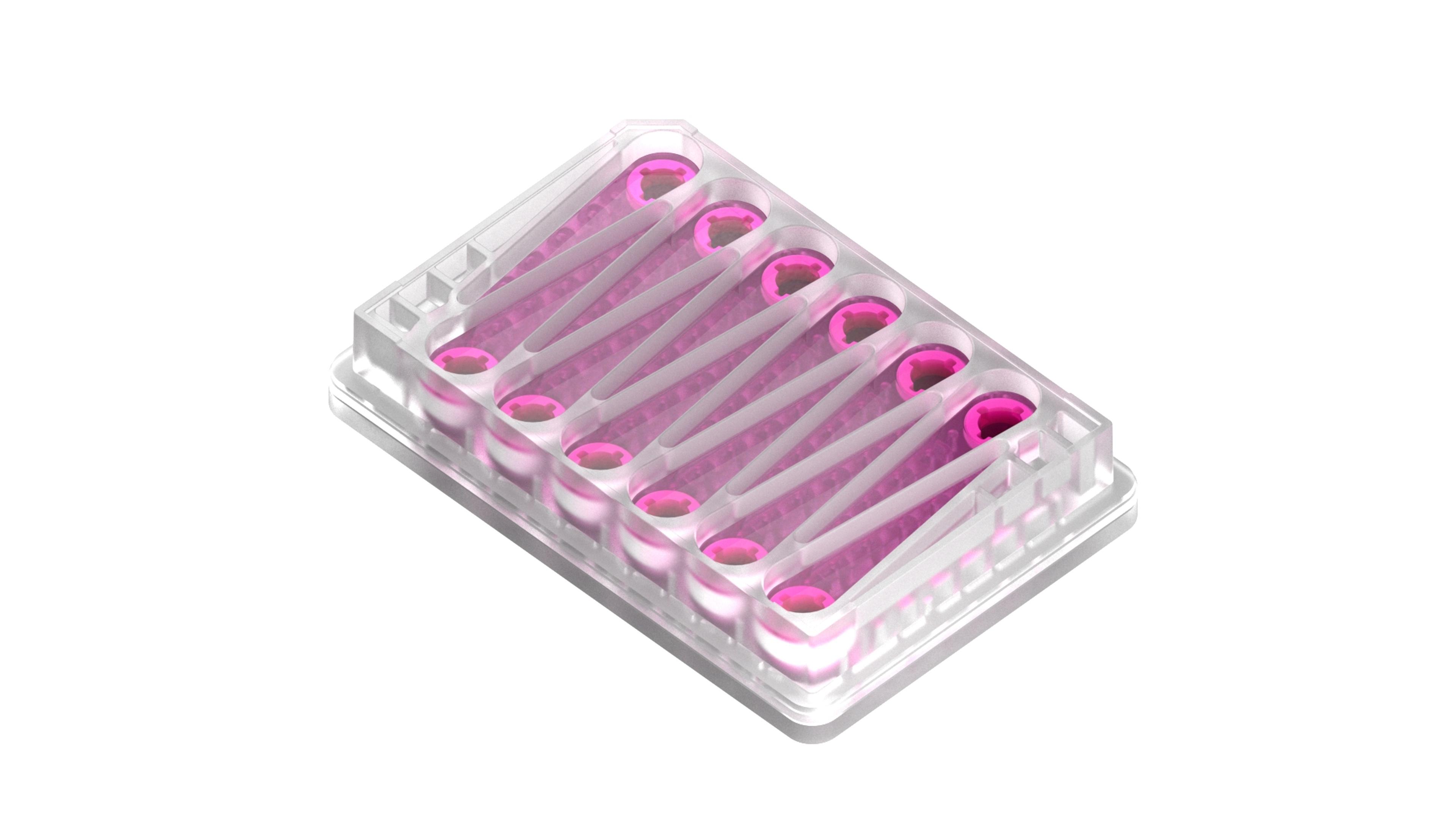
Multi-chip Liver-12 consumable plates from CN Bio enable the advanced culture of 12 human 3D liver microtissues under perfusion/plate. Each microtissue recapitulates the functionality and microarchitecture of the human liver to accurately predict drug responses.

(0)

Links

Tags

ADME-ToxicologyADME-toxicology (ADME-Tox) studies are used in pharmacology and pharmacokinetics to assess the activity/toxicity of drugs <i>in vivo</i> or <i>in vitro</i>. Find bioassays for absorption, distribution, metabolism, and excretion of drug molecules including cytotoxicity, transporter/permeability, metabolism and activity assays as well as hepatocytes and cell lines for ADME. Find the best ADME-toxicology products in our peer-reviewed product directory: compare products, check customer reviews and receive pricing direct from manufacturers.Cellular PathologyCellular Pathology deals with the microscopic analysis of tissue samples and cells. Sample preparation and processing includes fixation, staining, sectioning and slide mounting, using equipment such microtomes and cryostats. In choosing immunohistochemistry and immunocytochemistry kits, consider chromogens, staining method, antibodies, microscopes and imaging.Drug DeliveryDrug Delivery refers to dosage form, route of administration, formulations, technologies, and systems for transporting a pharmaceutical compound in the body as needed to safely achieve its desired therapeutic effect. Drug delivery is often approached via the biopharmaceutical or small molecule drug's formulation, but it may also involve medical devices or drug-device combination products. Considerations include instrumentation, software and services. SLASThe Society for Laboratory Automation and Screening (SLAS) is an organization focused on laboratory automation, high-throughput screening, and biotechnology innovation. SLAS promotes scientific advancements through conferences, publications, and industry collaborations. Drug TestingIt is essential to test the efficacy and toxicity of drugs at every stage of their development to ensure that a pharmaceutical product is fit for purpose and safe for use before reaching the stage of mass production and distribution.Drug DiscoveryDrug discovery is the process of identifying potential new medications, involving stages such as target identification, compound screening, and preclinical development. It relies on cutting-edge technologies like high-throughput screening, artificial intelligence, and molecular modeling to accelerate the identification of drug candidates. Drug discovery plays a pivotal role in developing new therapies for diseases ranging from cancer to rare genetic disorders. Browse our peer-reviewed product directory to find the latest drug discovery technologies, compare options, check customer feedback, and get pricing directly from manufacturers.ToxicityToxicity is defined as the degree to which a substance can harm humans or animals. It is essential to study the toxicity of pharmaceutical products during the development process so that optimum dosage can be established for the administration of the drug.Drug DevelopmentDrug development refers to the process of bringing a new drug to market.