
Cisbio to Launch GPCR Internalization Assays and More at SBS 2010
5 Apr 2010Product news
Cisbio Bioassays will be launching GPCR internalization assays, as well as multimode cell lines validated on all HTRF® and Tag-lite® assays (binding assays, dimer assays, second messengers, phospho-ERK and internalization). Two tutorials about Tag-lite® and GPCR pharmacology with the Tag-lite® technological platform will also be available.
Tutorial 1:
Time: Tuesday, April 13, 8:00 am - 8:45 am
Title: Tag-lite®: an advanced multimode cell-based platform to study GPCR biology
Speakers: François Degorce, Marketing Director, & Stéphane Martinez, Tag-lite® Specialist, Cisbio Bioassays, Bagnols-sur-Cèze, France
Tutorial 2:
Time: Wednesday, April 14, 1:30 pm - 2:15 pm
Title: Addressing GPCR pharmacology with the Tag-lite® technological platform
Speaker: Dr. Xavier Leroy, Project Leader, Actelion Pharmaceuticals Ltd., Allschwil, Switzerland
For more details visit booth 711.
Related products
Request Quote for All Products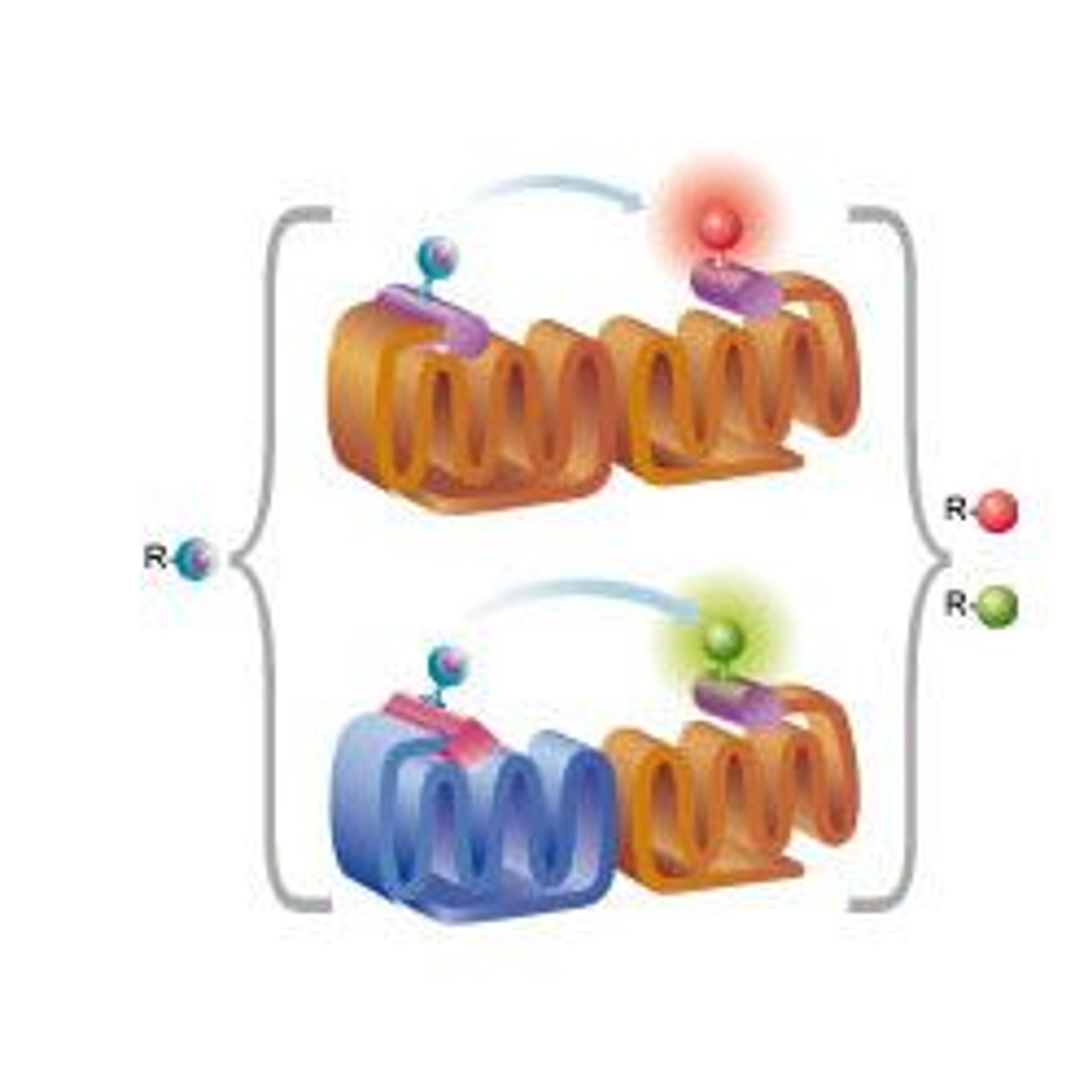
GPCR dimer assays with Tag-lite® technology
Cisbio BioassaysG-Protein Coupled Receptors (GPCRs) are common drug targets. Previously, most studies were based on the monomeric model, but this perception of GPCRs is now evolving towards homodimeric , heterodimeric and oligomeric models. To facilitate research into GPCR dimers, CisBio Bioassays has applied the Tag-lite® technology to GPCR interaction assays. Based on HTRF® technology, plasmids have been designed to express either the SNAP-Tag or the CLIP-Tag at the N-terminus of GPCRs, allowing the labelling of two GPCRs (identical or different) with two different fluorescent probes. Through the TR-FRET signal, interaction between two GPCRs can be investigated. Applications: • Receptor deorphanization: a GPCR could be deorphanized by a drug through the characterization of a GPCR heterodimeric complex. • New GPCR targets: to identify heterodimer specific drugs or bivalent drugs on homodimers. Tag-lite plasmids are available for many targets: Adenosine A1, A3 Adrenergic Alpha1A, Beta2 Anaphylatoxin C5aAngiotensin AT1, AT2Bombesin BB2, BRS3Bradykinin B1, B2Cannabinoid CB1 Chemokine CCR1, CCR2, CCR3, CCR4, CCR5, CCR6, CX3CR1, CXCR1, CXCR2, CXCR3, CXCR4, CXCR5, CXCR6, CXCR7 Cholecystokinin CCK1, CCK2Corticotropin-Releasing Factor CRF1 Dopamine D1, D2, D2L Endothelin ETA, ETBGalanin GAL2 Ghrelin GHSR1, A Glucagon GIPR, GLP1, GLP2Growth-releasing hormone GHRHRHistamine H1, H2 Leukotriene/lipoxin CysLT1, CysLT2Lysophosphatidic acid receptor EDG4Melanocortin MC2, MC3, MC4, MC5Metabotropic glutamate mGluR5Muscarinic M3Neuropeptide FF NPFFR1 Neuropeptide Y Y1, Y2, Y5Neurotensin NTS1N-formylpeptide FPR2 Opioid Delta opioid, Kappa opioid, Mu opioid Orexin OX1, OX2 Parathyroid PTH1 Prolactin-releasing peptide PRRP Serotonin 5HT1A, 5HT2A, 5HT2B, 5HT2C Tachykinin NK1, NK2 Vasoactive Intestinal Peptide PAC1, VPAC1, VPAC2 Vasopressin/Oxytocin V1a, V2 Please contact CisBio for more information on other GPCRs.

GPCR ligand binding with Tag-lite technology
Cisbio BioassaysCisbio Bioassays offer a comprehensive cellular platform to develop HTRF® ligand binding assays.Features: • Single technology and cellular platform for all GPCR assays • Unique non-radioactive ligand binding assays • Miniaturization down to < 10µl • Peptidic and non-peptidic fluorescent ligands • High Specific Binding • Low Non-Specific Binding with HTRF technology Tag-lite fluorescent ligands available for (Feb10): Vasopressin/Oxytocin V2 Dopamine D2 Vasopressin/Oxytocin V1a Vasoactive Intestinal Peptide VPAC1 Opioid Delta opioid, Kappa opioid, Mu opioid Melanocortin MC3, MC4, MC5 Angiotensin AT1, AT2 Tachykinin NK1 Tachykinin NK2 Adrenergic Alpha1A Adrenergic Beta2 Chemokine CXCR4 Cholecystokinin CCK1, CCK2 GABA GABA-B Histamine H1 Bradykinin B1 Bradykinin B2 Glucagon GIPR Bombesin BB2 Ghrelin GHSR1 A Vasoactive Intestinal Peptide PAC1 Endothelin ETA, ETB Please contact Cisbio for more information on other GPCR's

Tag-lite® cell-lines and reagents, a multimodal environment streamlined for GPCR studies
Cisbio BioassaysTag-lite® cell-lines and reagents, a multimodal environment streamlined for GPCR studies. Cellular trans-membrane receptors are high potential therapeutic targets in pharmacological research, among them G-Protein Coupled Receptors (GPCRs). To reach a better physiological understanding, their study is deepening and is now focusing on structural assessments (ligand binding, dimerisation) and also on multiple signal pathway assays (second messengers, effectors within the pathways). Cisbio Bioassays introduces Tag-lite, a unique cellular platform. Based on the HTRF® technology, Tag-lite addresses the whole GPCR signalling network (from structural studies to functional assays). The Tag-lite cell lines are validated with our HTRF reagents and kits for the following applications: • Receptor-ligand binding assays with Tag-lite fluorescent ligands • Receptor homodimerisation assays with Tag-lite toolbox reagents • Functional assays • Second messenger accumulation assays with cAMP or IP-One® HTRF kits. • Phospho-ERK assays with Cellul’erk® for each cell line.