ChromoTek Introduces Chromobody Plasmids for Real-Time Monitoring of Key Intracellular Target Molecules in vivo

12 Mar 2013

Product news

ChromoTek GmbH offers nanobody based real time assays to visualize and measure the action of candidate drugs or other substances of interest on important regulatory processes in living cells. Presently, four Chromobody® plasmids are available for analyzing the cell cycle, apoptosis, DNA methylation and cytoskeleton dynamics.

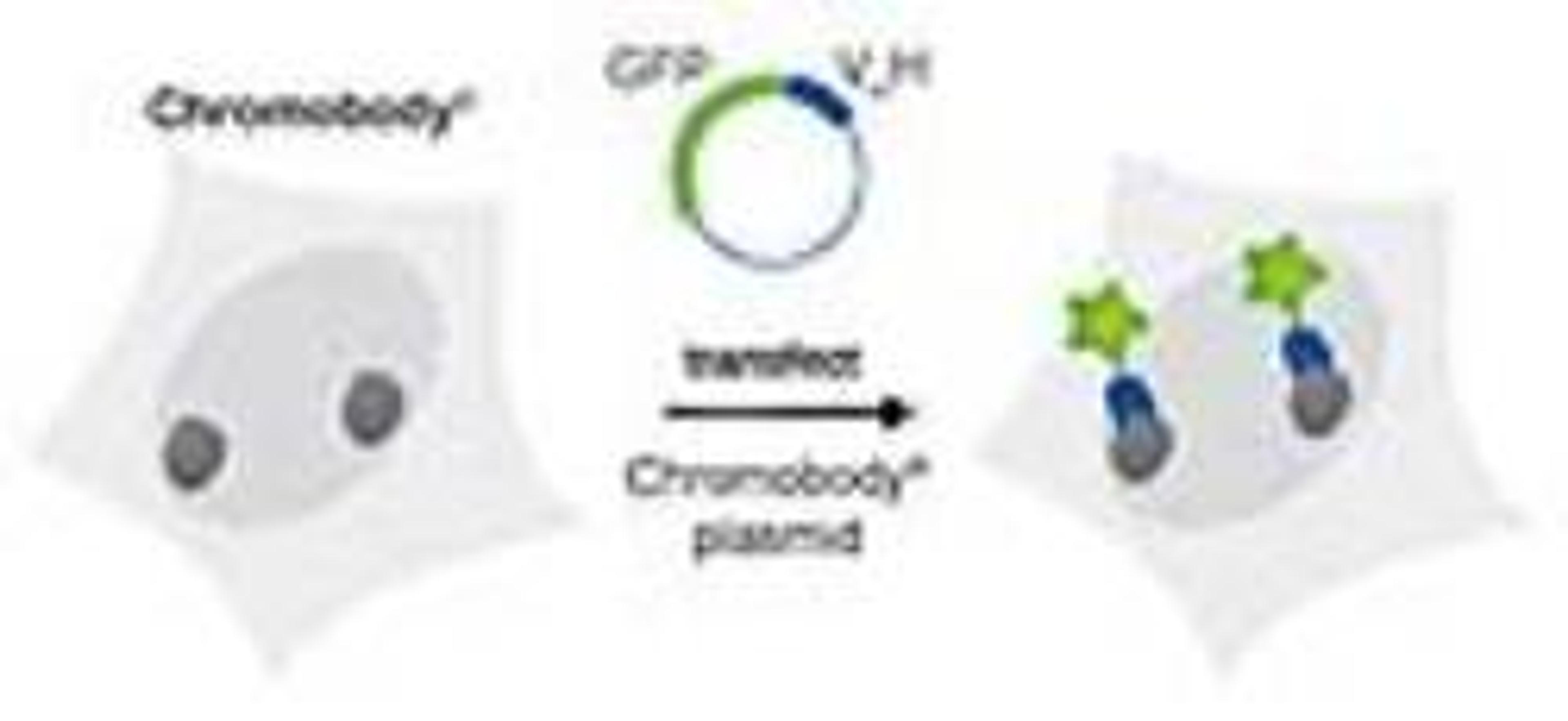
A major advantage of the new Chromobody® plasmids compared to Chromobody® cell lines already on the market is that researchers can now monitor cellular pathways in their own cells or cell lines simply by carrying out a transfection. Unlike conventional end point assays, the Chromobody® plasmids allow to follow the fate of endogeneous target proteins over time like in a movie. As the fluorescently labeled intracellular antibodies expressed from these plasmids do not interfere with the activity of their targets, they are extremely useful for high content screening.

The new product format is equally suitable for academic researchers who want to decipher cellular pathways and to biotech/pharma researchers who seek to enhance their drug discovery and high throughput screening capabilities. “We are glad to be able to offer our customers a new product format that gives them greater flexibility both in basic cell biology research and in drug discovery and validation processes” states Marion Jung, Managing Director of ChromoTek.

Customers who would like to try the Chromobody® technology for their own applications can now choose between three options: they can license a cell line, order assay-ready frozen instant cells via ChromoTek or via CCS (Cell Culture Service, now part of Evotec AG) or purchase a Chromobody® plasmid.

Chromobodies®

Chromotek GmbH

Chromobodies® - Your perfect reagents for cellular research including High-Content Analysis. Chromobodies are fluorescent nanoprobes suitable for real time analyses of endogenous cellular structures and processes in live cells. Chromobodies® are a novel species of extremely small intracellular antibodies. They are based on the antigen binding domain (VHH) derived from heavy chain antibodies of camelids genetically fused to a fluorescent protein (e.g.TagGFP or TagRFP from Evrogen). As opposed to conventional antibodies, these innovative fluorescent nanoprobes are suitable for real time analyses and can visualize endogenous cellular structures and processes in live cells. All Chromobody® binding domains are carefully selected to not interfere with endogenous protein function and offer the unique possibility to trace native proteins in living cells. Hereby, the understanding of cellular processes in response to external stimuli, which is a major challenge in early drug discovery, compound screening and target validation, can be analyzed thoroughly. Use our Chromobody technology to explore: • Cell cycle dynamics (Cell Cycle Chromobody) • DNA methylation (Dnmt1 Chromobody) • Nuclear integrity (Lamin Chromobody) • Actin cytoskleton (Actin Chromobody) Chromobodies® are available as stable cell lines or as Chromobody® plasmid.

(0)

Links

Tags

Cell Lines Stem Cells and Primary CellsPrimary cell cultures, established cell lines and stem cells are vital for <i>in vitro</i> and <i>ex vivo</i> experimentation. High-quality cells, optimized for your applications, alongside optimized cell substrates, growth medium and supplements, are critical for experimental success. Explore a range of cells suitable for your applications, including isogenic cell lines, competent cells, induced pluripotent stem cell (iPSC)-derived cell lines, fungal/bacterial/mammalian cell lines, stem cells and cancer cell lines. Find the best cells for your research in our peer-reviewed product directory: compare products, check customer reviews and receive pricing direct from manufacturers.Cell-Based AssaysCell-based assays are used to monitor the presence, quantity and activities of a desired cellular analyte including drug molecules or biomarkers. This can reveal information on cell health (apoptosis, cytotoxicity, viability and proliferation assays), cell metabolism, cell migration and cell signaling mechanisms. Find the best cell-based assay products, kits and equipment with our peer reviewed product directory: compare products, check customer reviews and receiving pricing direct from manufacturers.High-Content ScreeningHigh-content screening (HCS), also known as high-content analysis (HCA), is a high-throughput technique used in drug discovery to identify substances that alter the phenotype of cells. HCS uses fluorescent microscopic imaging and automated image analysis to investigate cellular events such as apoptosis, cell viability, GPCR activation, oxide production, neurite outgrowth, and cell signaling. Find the best fluorescent labeling reagents, cellular assays, and high-content imaging systems in our peer-reviewed product directory: compare products, check customer reviews and receive pricing direct from manufacturers.Gene Expression and Molecular CloningMolecular cloning is a set of techniques that utilizes vectors to transfer recombinant DNA into host cells and is an essential tool for investigating the expression of genes and proteins in bacterial or mammalian cells. A variety of vectors optimized for gene cloning and expression in a range of host organisms are available, alongside competent cells for genetic replication. Here, you can explore a range of molecular tools, high-quality genomic and cDNA libraries, premade clones, transformation and transfection reagents and mutagenesis or gene expression detection assays and expression arrays. Find the best gene expression and molecular cloning products in our peer-reviewed product directory: compare products, check customer reviews and receive pricing direct from manufacturers.DNA MethylationCytoskeletonApoptosisApoptosis, or programmed cell death, is a vital process for healthy tissues and is key to our understanding of disease mechanisms like cancer and neurodegeneration. Research tools enable apoptosis detection, quantification, and analysis. Browse products for apoptosis research in our peer-reviewed product directory.Cell AnalysisThe analysis of cells allows researchers to understand the factors which contribute to cell health and function. These influencing processes can then be predicted and altered, leading to the development of medication and disease treatments.