Challenges in Next Gen Sequencing and How to Overcome Them
Contract researchers and cancer biologists, Robert B. Harris, Ph.D., Thomas Reynolds, and Gregory A. Meyers, owners and founders of NEXT Molecular Analytics, have joined the DNA sequencing revolution. To keep up their research momentum, they consider a next big step — automation
27 Oct 2018
Editorial article
In 2001, the Human Genome Project reached a momentous milestone: after working on it for 15 years, scientists published, for the very first time, the DNA sequence of one human genome. Today, scientists can sequence roughly 45 human genomes in a single day. The field of DNA sequencing has come a long way. As it gets better and faster, researchers are setting out to tackle some technical hurdles — namely, challenging samples and human errors — that curb their current pace.
The exponential acceleration in our capacity to sequence 3.2 billion human base pairs has transformed our approach to therapeutics, particularly for cancer. SelectScience interviews Dr. Robert B. Harris, the chief scientific officer at NEXT Molecular Analytics, an experienced scientist who has embraced the fast-evolving DNA sequencing movement. The goals of NEXT Molecular Analytics, among others, include applying genomics to help patients and doctors make informed decisions about managing cancer risks.
Cancer therapy no longer just “reacts” to the presence of disease, but has become more and more proactive. Using the tools of next-generation sequencing (NGS), we can now scrutinize the cancer genome and identify DNA aberrations. We can investigate tumor biology, aid clinicians with diagnosis and prognosis, and finally, look optimistically in the direction of precision oncology.
But first, we must overcome the challenge of extracting DNA from tough samples and eliminating human errors — steps that affect NGS results.
Some researchers are restrained by the poor DNA yield from a typical formalin-fixed paraffin-embedded (FFPE) tissue sample that arrives from a pathology lab. And some others, like Dr. Harris and his team, face another type of constraint — no room for errors due to limited sample accessibility. An ongoing project at NEXT involves studying and predicting inheritable cancer risk, with a focus on 30–60 cancer-related genes. Dr. Harris and his team perform targeted sequencing on the DNA obtained from cheek swabs of thousands of subjects. The sample pool, spread across individuals from multiple countries, is often difficult to re-obtain.
“In a clinical context one of the biggest challenges when working with these types of samples is generating sufficient amounts of target DNA for analysis,” notes Dr. Harris. “The ability to re-extract or obtain additional sample from a patient is often limited, so proper collection and efficient DNA extractions are critical steps for successful testing.” Dr. Harris’ words echo the thoughts of many translational researchers — when using any form of patient sample, every strand of DNA is privileged. Pipetting errors or procedural mishaps have an immediate toll on the data.
The DNA samples sequenced by NEXT will serve an important purpose: “Our goal is to obtain viable information for patients and their doctors to help understand their risk in developing cancer, especially those people who have family members with cancer,” says Dr. Harris. The test will also predict if a cancer diagnosis is due to an inherited genetic mutation. The path towards this goal is laborious. “NGS, as a technique, has a number of steps which are time-consuming and require expert lab skills,” acknowledges Dr. Harris. “These steps, if automated, can help standardize the process and bring improvements to quality.”
In a clinical context one of the biggest challenges when working with these types of samples is generating sufficient amounts of target DNA for analysis.
Dr. Robert Harris
NEXT Molecular Analytics
A typical NGS protocol entails DNA extraction and amplification, preparing libraries and amplifying them into clonal clusters, followed by the sequencing itself, and data analysis later. In-house scientists at NEXT Molecular Diagnostics know the process all too well: in a recent publication, they performed NGS on 30,000 participants to identify single nucleotide polymorphisms (SNPs) in a medical response gene, CYP450.
For extensive, tedious projects like these, Beckman Coulter offers solutions that reduce hands-on time and standardize the process for scientists — Biomek Liquid Handling Workstations. Automating the process virtually eliminates costly errors due to pipetting and missteps during manual processing. Scientists save time on laborious steps and enjoy more flexibility in scheduling experiments. Automation ultimately helps improve results by removing sample-to-sample variation from the experiment itself.
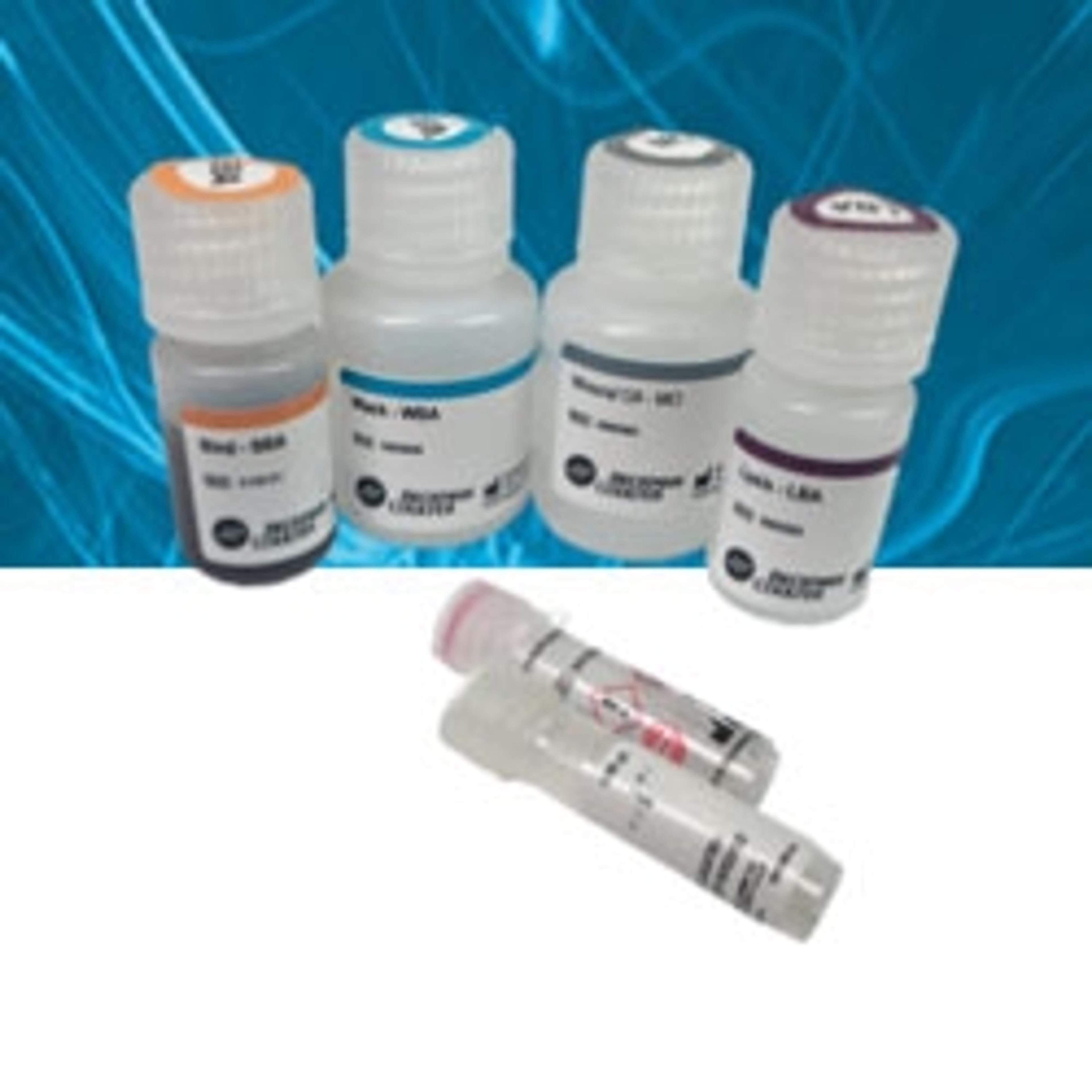
The other big challenge in NGS is processing FFPE samples. The process of formalin fixation causes several significant challenges for NGS scientists. Formalin fixation crosslinks the nucleic acids and makes the genetic information inaccessible for NGS library creation. Moreover, the nucleic acid often becomes highly fragmented, impacting the library yield and quality. Lastly, the nucleic acids themselves can undergo base pair modifications, posing unique bioinformatics challenges in the NGS data. However, Beckman Coulter, again, offers a way — the FormaPure DNA extraction kit can be used for extracting both DNA and RNA from the same sample. This kit works by first solubilizing the paraffin, before digesting the tissue and releasing the nucleic acids, finally de-crosslinking it at a high temperature. FFPE DNA and RNA extraction can also be coupled with automation.
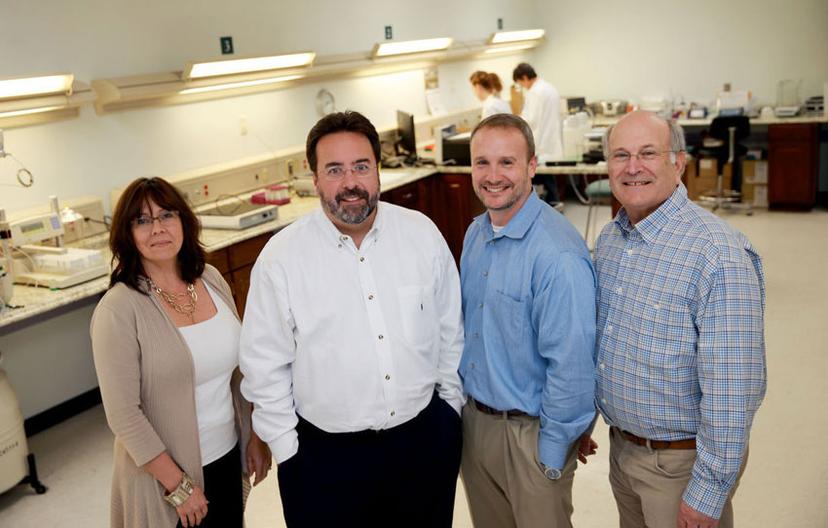
“NEXT is looking at automation for our NGS protocols as sample volumes increase and where value can be added,” adds Dr. Harris. NEXT Molecular Diagnostics in Chester, Virginia, is headed by Dr. Harris and two long-time colleagues. In addition to handling independent projects, they also provide life sciences research and diagnostic support to scientists and physicians alike. To deliver fast and reliable results for their clients, NEXT has robust workflows in place. Commenting on sample workflows, Dr. Harris says, “Since we first founded the predecessor company to NEXT in 1992, Beckman Coulter instruments have played an integral role. Over the years, we have used Beckman instruments and reagents in virtually all aspects of our research programs. Currently, we are equipped with Avanti and Allegra centrifuges, and Beckman microfuges which we use daily for sample prep. In fact, the Avanti is intrinsic to no fewer than four validated extraction protocols, and I dare say, without it, we would not be able to proceed with these studies.”
Aside from the sequencing project on inherited cancer mutation, the NEXT team will be rolling up their sleeves for more collaborations in the future. “Working with industry and university investigators, we are also looking at adenosine levels and enzymes affecting adenosine in different tumor and tissue samples,” says Dr. Harris, as he continues contributing to precision oncology.