
CBD production: Ensuring safety, legality, and quality in the beauty industry
Tariq Hasan reveals how the CBD beauty trend evolved, emerging analytical challenges, and where the industry is headed
20 Apr 2022
Editorial article

In the last five years, cannabidiol (CBD) has taken center stage in the health and beauty industry. CBD is among a host of cannabinoids present in cannabis that are known to interact with the human endocannabinoid system (ECS). Unlike THC, the key active ingredient in cannabis, CBD is not psychoactive and is derived from a variety of Cannabis sativa known as hemp.
The unprecedented growth in CBD’s popularity has followed a surge of research into its potential health benefits and the global easing of regulations, including the legalization of hemp through the 2018 Farm Bill in the US. Incorporated in everything from skincare products to over-the-counter (OCT) topicals, body lotions, and health supplements, CBD has since sent shockwaves across the beauty industry, bringing unique challenges for formulation companies, testing facilities, and regulatory bodies alike.
Providing an insider’s perspective on the rise of CBD, Tariq Hasan, President of RNA Corporation, shares how manufacturers have quickly adapted to meet the challenges posed by cannabinoid-based formulations, the need for robust analytical protocols, and what he hopes for the future of CBD in the industry.
Breaking into cannabis
A family-owned business since 1983, RNA Corporation began as a small formulation laboratory tasked with helping companies successfully develop a range of cosmetic and personal care products. Now boasting over 350,000 square feet, the company has evolved into a full-service turnkey contract manufacturer – and one which works with some of the largest brands in the health and beauty industry. When it came to working with hemp-derived CBD, RNA was among the first professional formulators to jump at the chance to make an impact in the industry.
“We first started formulating with CBD in 2017, and since then, the landscape has changed dramatically,” begins Tariq. “In the early days, we were relying on farmers that were producing CBD and hemp oil in their backyard, and we were experimenting with raw materials that honestly no manufacturer could ever work with. Now, we’re dealing with well-established chemical suppliers and extraction facilities that have built up expertise on a bunch of different cannabinoids, and it’s become almost like an à la carte menu.”
Spoiled for choice over a variety of CBD forms, including purified CBD isolates, broad- and full-spectrum oils, RNA oversees the formulation and manufacturing of a wide range of topicals, supplements, and beauty products. “We can make literally anything, from hair care and skin care to OTCs and chewable sweets,” says Tariq. “As we were involved early on, we are very familiar with this space, and we now advise, formulate, and manufacture for many of the major CBD brands that are out there.”
Pioneering testing protocols
As with any production process involving natural raw materials, rigorous testing throughout formulation, manufacturing, and quality control is essential to ensure the legality, safety, and efficacy of CBD products. In light of this, RNA invested heavily in developing its in-house testing capabilities as well as numerous protocols for testing different product types. “These protocols differ greatly depending on the complexity of the formulation,” explains Tariq. “For example, a body oil that uses a CBD distillate or CBD isolate is very easy to test; you send it straight through a column and use very standard protocols for extracting the cannabinoids from the formula. However, when you get into lotions and balms, it becomes very complicated, as multiple phases of emulsifier and carrier solvent need to be separated to recover the oil and test its CBD content.”
Whereas third-party testing labs have to tackle these analyses blind using ‘black-box’ methods, Tariq notes that in-house testing enables protocols to be more readily optimized, as formulations are already known. “This means we can easily test multiple different protocols and see which one is actually recovering the right amount of CBD that we're putting in,” he says.
Supplies for success
From material handling to formulation and analytical testing, the reliable procurement of chemical supplies and equipment forms a vital component of RNA’s operations. To this end, the company utilizes multiple vendors, including leading supplier Spectrum Chemical, whose wide portfolio of USP-NF and FCC Grade chemicals, HPLC solvents, organic chemicals, and buffers support all stages of the CBD production workflow, from cultivation to extraction, R&D to manufacturing, and the analysis of final product quality.
For Tariq, the importance of using well-established, reliable suppliers was particularly highlighted during the COVID-19 pandemic. “There were massive shortages and price increases across the board, and as a contract manufacturer, we had to be extremely nimble and clever about where to get products from,” he explains. “While people assume our number one consideration is cost, one of the major things we look for in vendors is transparency and particularly good communication around issues such as lead time disruptions.” Here, Spectrum’s enhanced change control procedures, documentation, and traceability, as well as its customizable batch sizes, can greatly reduce supply chain risk and prevent over-purchasing. “Looking around our warehouses, their logo is all over the place,” Tariq enthuses. “You can recognize it almost anywhere.”
High hopes
There are many advantages to hemp-derived CBD. Hemp is natural, plentiful, doesn’t need pesticides or fertilizer to grow, and produces an array of by-products, finding uses from clothing fiber to moisturizing butter and carrier oils.
Despite this, the CBD industry is still in its infancy, and many regulatory issues remain unresolved. “This is where it's still an evolving area,” says Tariq, rhetorizing: “How can the FDA classify something that can be ingested topically without any repercussions, and also incorporated at super-high potencies as an approved drug?”
He continues: “The lack of FDA guidance is a problem as it creates a huge grey area, but I just hope it’s not regulated to the point where it's considered a full-on drug and nobody can use it – because it’s actually four things: a drug, a supplement, a food, and a natural plant oil.”
For these reasons, alongside a growing body of evidence around CBD’s health benefits, Tariq believes the future of CBD is very bright. “It’s got so many pros, it's insane that it was ever banned in the first place,” he concludes.
Learn more about how Spectrum Chemical can support your cannabis production and testing workflows, in this video >>
Related products
Request Quote for All Products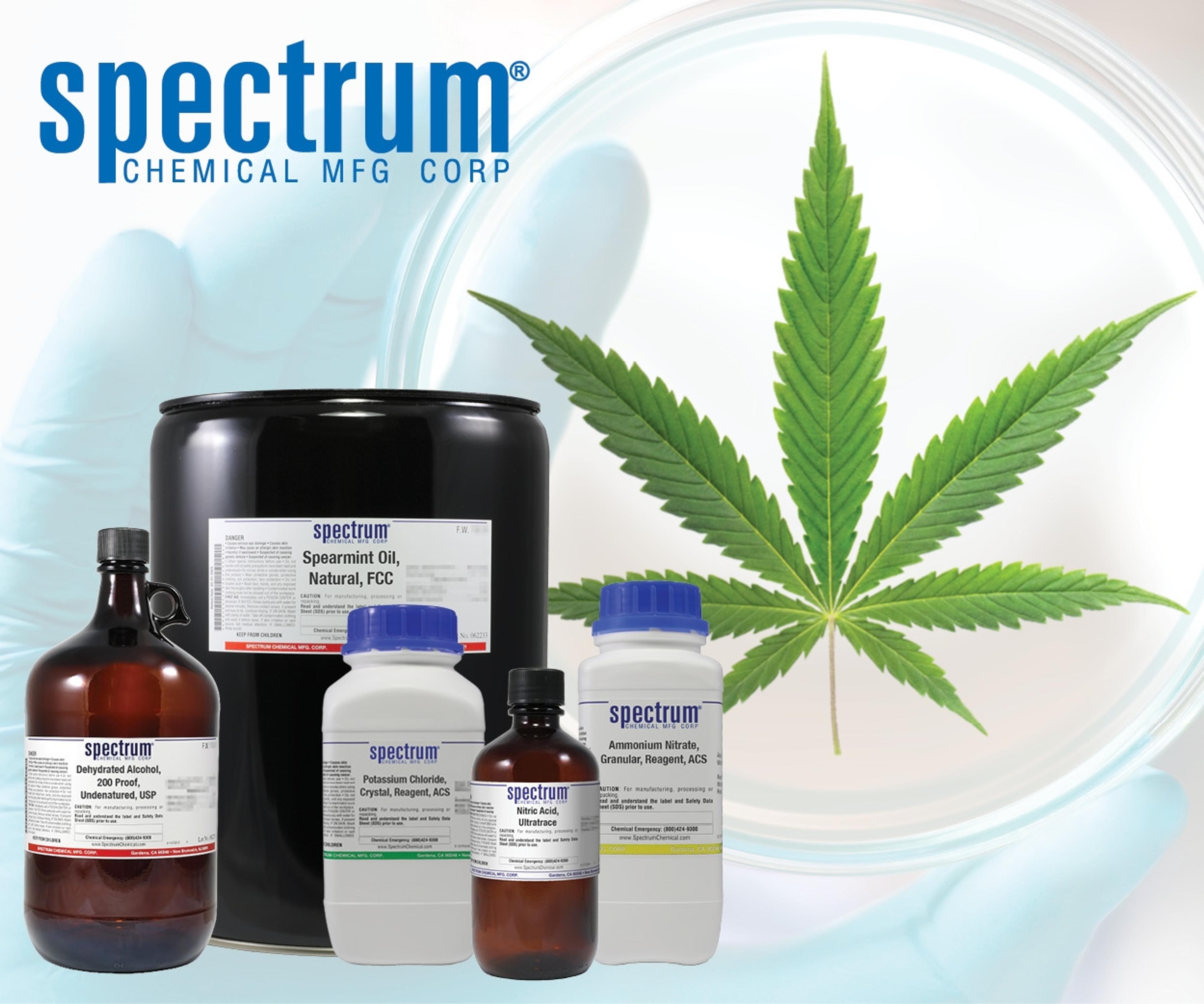
Chemicals for Cannabis Production and Analytical Testing
Spectrum ChemicalEnsure batch-to-batch consistency with a full spectrum of products with rigorous quality control. Our USP-NF, FCC grade chemicals are used by established pharmaceutical and biopharmaceutical manufacturers to ensure safe, quality, and effective products.