Bruker Shows Innovative rapifleX MALDI-TOF/TOF at ASMS 2016

The all-new rapifleX™ extends MALDI leadership in protein characterization, biologics development and QC, as well as in Mass Spectrometry Imaging (MSI)

6 Jun 2016
Weylan Kiam-Laine
Microbiologist

Product news

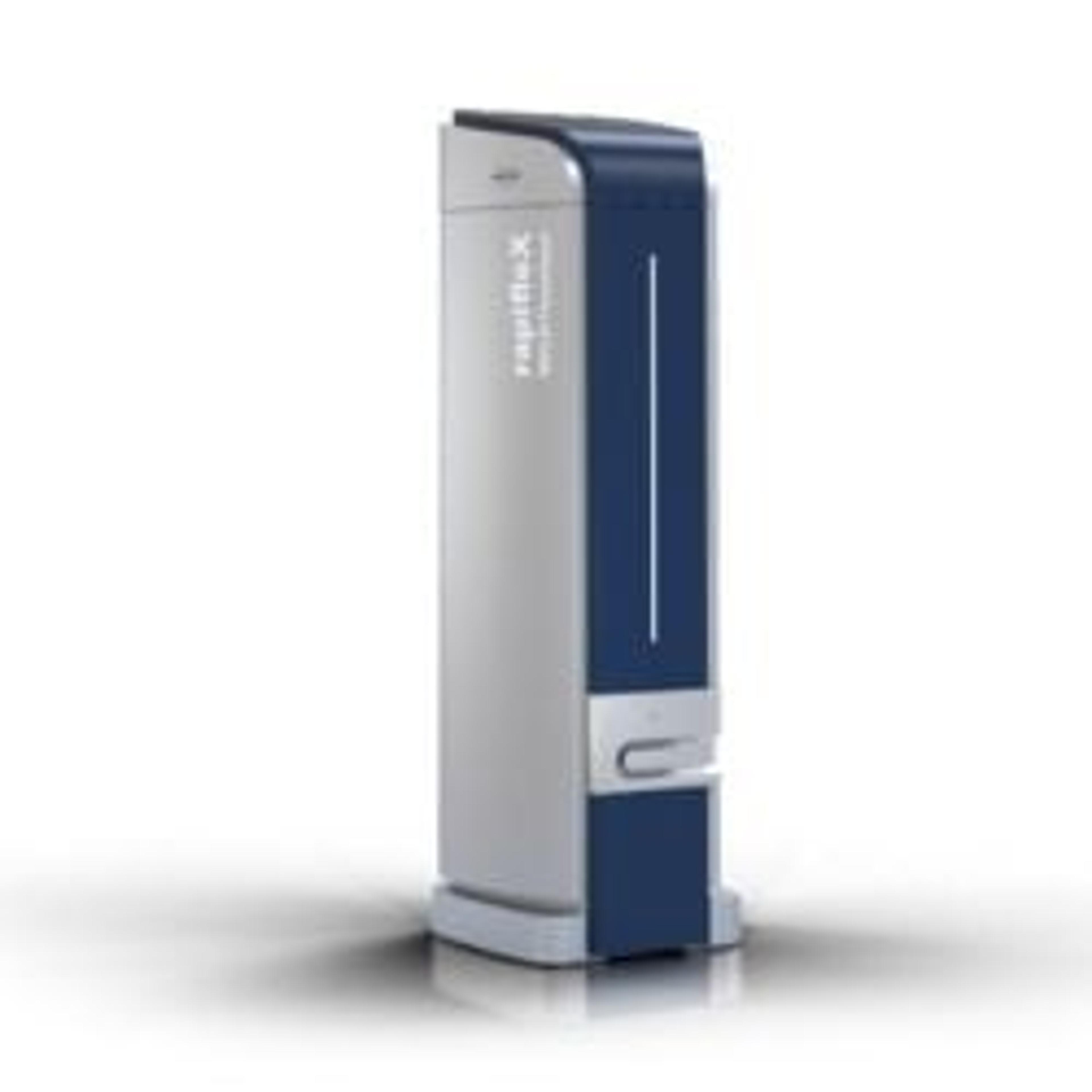
At the 64th ASMS Conference, Bruker introduces rapifleX™, the highest performance MALDI-TOF/TOF mass spectrometer, which had been shown as work-in-progress to early adopters at HUPO 2015. The rapifleX is by far the most advanced TOF/TOF system today, and was re-designed from the ground up to meet today's highest demands for in-depth intact and top-down protein characterization, and high-performance, high-throughput mass spectrometry imaging (MSI).

With its next-generation TOF/TOF ion optics and smartbeam® 10 kHz proprietary laser technology, the rapifleX system now offers significantly higher speed, better mass resolution and mass accuracy, and a significantly enhanced MS/MS mass range to enable new research and routine applications. Its unprecedented 10 kHz speed and ion source robustness, its wide dynamic range, higher specificity and resolution all contribute to the detailed characterization of biologically and clinically relevant lipids, peptides and proteins, resetting customer MALDI-TOF/TOF expectations for in-depth protein characterization and imaging of tissues, cell cultures, or other applications. Its enhanced ease-of-use, robustness and stability make the rapifleX a game-changer for research and large-scale validation.

Dr. Julian D. Langer, at the Max-Planck Institute (MPI) of Biophysics and the MPI for Brain Research in Frankfurt am Main, Germany, stated: "In our lab, with its high MS2 isolation efficiency, resolution and mass accuracy at high m/z values, the rapifleX TOF/TOF has been instrumental in identifying and characterizing new subunits of membrane protein complexes, including prokaryotic respiratory chain complexes and antibiotic drug targets."

The rapifleX TOF/TOF is well-suited for detailed protein characterization in life science research and biopharmaceutical laboratories. Many protein characterization tasks can be improved to gain better biological insight, including

  • Fast identification of post-translational modifications (PTM),
  • Top-down protein sequencing,
  • Patented T3-Sequencing to identify or confirm suspected modifications or sequence alterations near protein N- or C-termini,
  • Automated disulfide analysis of intact proteins without a priori assumptions using Bruker's unique DisulfideDetect™ method and software, and
  • Disulfide scrambling and trisulfide analysis with simplicity, speed and dynamic range.

Tissue- and cell-type specific proteomics is a major advancement for relevant biomarker discovery and identification, and requires MALDI imaging studies which include the identification of detected biomarker candidates for validation and subsequent development of targeted assays. The rapifleX extends the MALDI Tissuetyper® imaging capabilities with rapid, spatially resolved MS/MS data. It supports the patented ImageID™ workflow for biomarker discovery in MALDI imaging cohort studies, by obtaining matching identifications of tryptic peptides by LC-MALDI-TOF/TOF analysis.

About the rapifleX MALDI-TOF/TOF Mass Spectrometer

The rapifleX integrates a novel, 10 kHz smartbeam 3D scanning laser for breakthrough mass-spec imaging (MSI) with dramatically improved spatial resolution, image contrast and quality, and a new ion source for superior robustness and throughput in MSI, pharma screening, as well as for anatomical pathology clinical research.

Unique to the rapifleX is that its laser and ion optics can be dynamically adapted to research or analytical needs. Its smartbeam 3D laser offers different focus profiles for highest performance in different workflows. The MS/MS ion optics can be removed from the ion path to achieve uncompromised MS ease-of-use for imaging, intact protein and peptide applications. The three stage grid-less ion reflector is software adjustable to MS/MS and intact molecular weight measurements to achieve best performance for top-down protein sequencing, as well as for MS/MS analysis up to 8 kDa.

Its 10-bit digitizer improves the dynamic range for quantitative applications, such as High Throughput Screening (HTS) in drug discovery, or quantification of scrambled disulfide bonds and trisulfides in the 0.1-1% range relevant in biologics development and QC.

The rapifleX™ MALDI-TOF/TOF system is for research use only.
Links

Tags

Mass SpectrometryMass spectrometry (MS) is a powerful analytical technique used to identify and quantify molecules based on the mass-to-charge ratio of gas-phase ions. It provides detailed information about the structure, composition, and properties of compounds and is widely used across fields such as environmental monitoring, materials science, drug discovery and development, food and beverage testing, and wider chemical research. Key MS techniques include tandem mass spectrometry (MS/MS), liquid chromatography–mass spectrometry (LS-MS) and inductively coupled plasma (ICP-MS). Choosing from these wide range of techniques and technologies can be a daunting task, so keep up to date with scientific applications, performance expectations, and customer reviews here all in one place. Visit our product directory to receive quotes direct from the manufacturer. Cell / Tissue CultureCell culture or tissue culture is used to study the biology of cells or tissues and to isolate cellular products in an environment which can be manipulated and well defined. Accurately control your culture environment with bioreactors or culture incubators, bind your cells to a surface or together with an extracellular matrix. Distinguish cell types with differential media or proliferate cells with certain characteristics using selective media. Enrich your media with supplements such as growth factors, sera and vitamins. Find the best cell and tissue culture products, kits and equipment in our peer-reviewed product directory: compare products, check customer reviews and receive pricing direct from manufacturers.ProteomicsProteomics is the systemic bioinformatics study of proteins and amino acids, including their structure, size, function and identification. Tools used in proteomics include chromatography, blotting and gels, protein arrays, mass spectrometry and ELISA and associated analysis software. Analyzers and proteomic systems should be sensitive, high resolution, fast and may be automated for high-throughput.Cell Lines Stem Cells and Primary CellsPrimary cell cultures, established cell lines and stem cells are vital for <i>in vitro</i> and <i>ex vivo</i> experimentation. High-quality cells, optimized for your applications, alongside optimized cell substrates, growth medium and supplements, are critical for experimental success. Explore a range of cells suitable for your applications, including isogenic cell lines, competent cells, induced pluripotent stem cell (iPSC)-derived cell lines, fungal/bacterial/mammalian cell lines, stem cells and cancer cell lines. Find the best cells for your research in our peer-reviewed product directory: compare products, check customer reviews and receive pricing direct from manufacturers.Cell-Based AssaysCell-based assays are used to monitor the presence, quantity and activities of a desired cellular analyte including drug molecules or biomarkers. This can reveal information on cell health (apoptosis, cytotoxicity, viability and proliferation assays), cell metabolism, cell migration and cell signaling mechanisms. Find the best cell-based assay products, kits and equipment with our peer reviewed product directory: compare products, check customer reviews and receiving pricing direct from manufacturers.MALDI-TOF MSMALDI-TOF mass spectrometers (matrix-assisted laser desorption/ionization time-of-flight) are used for the mass analysis of large molecules, including proteins, DNA, polymers and other macromolecules due to its relatively soft ionization, reducing fragmentation whilst allowing fast data acquisition. Tandem mass analyzers such as TOF/TOF systems can be used to increase resolution and sensitivity of your analysis. Find the best MALDI-TOF products in our peer-reviewed product directory: compare products, check customer reviews and receive pricing direct from manufacturers.BiomarkersBiomarkers are biological markers which can be measured and evaluated to indicate a biological state. The use of biomarkers in research and diagnosis can indicate a normal or disease state or drug response of cells / tissues. Biomarkers include genetic markers, cell surface markers such as antigens, antibodies or receptors and secreted molecules such as cytokines. An assay system is required for identification of biomarkers. :Next Generation SequencingNext-generation sequencing (NGS), also known as whole-genome sequencing, high-throughput sequencing and massive parallel sequencing, produces and analyses thousands to millions of nucleotide sequences at once. Sequencing systems operate via varying technologies depending on the manufacturer, including sequencing by synthesis, ligation, pyrosequencing, ion semiconductor and single-molecule real-time sequencing. For NGS, library preparation is paramount to successful sequencing. In this section, explore a range of library preparation kits, from targeted, amplicon-based or hybridization-based kits including epigenomic, transcriptomic and genomic workflows to fragmentation kits. Find the best next-generation sequencing products in our peer-reviewed product directory: compare products, check customer reviews and receive pricing direct from manufacturers.Quality ControlQuality control is needed in all production processes. Quality control is a monitoring procedure or set of procedures that are put in place to ensure that a manufactured product adheres to a defined set of quality criteria. Cell ImagingCell imaging can be achieved using a number of techniques including confocal microscopy, transmission electron microscopy, atomic force microscopy, and light sheet microscopy.High ThroughputHigh throughput experiments allow the simultaneous processing of several samples. This parallelization reduces the cost per experiment and increases reproducibility and output volume of data.MALDI ImagingPost-Translational ModificationsBiologicsBiologics are medical products derived from living organisms, including vaccines, gene therapies, and monoclonal antibodies. These treatments are key to modern healthcare, especially in oncology and autoimmune diseases. Explore biologics research tools in our peer-reviewed product directory; compare products, check reviews, and get pricing directly from manufacturers.Method ValidationMethod validation is the process used to prove that the analytical procedure used for a particular test is capable of providing suitable data.