
Bruker launches the Q4 POLO compact Spark-OES metals analyzer
The new Q4 POLO analyzer aims to give ultrafast analysis of solid metal samples without complications
26 Sept 2021Product news
Bruker has announced the launch of the new Q4 POLO, a compact Spark Optical Emission Spectrometer (OES) with superior analytical performance for a multitude of applications across the metals industry. The Q4 POLO extends Bruker’s line of benchtop OES systems, combining high precision elemental analysis capabilities with low cost of ownership and small footprint.
In addition to best-in-class analytical performance for the extensive element range from lithium (Li) to bismuth (Bi), the Q4 POLO enables applications previously not addressable by such compact instruments. It is claimed to have outstanding precision, particularly on light elements, and may achieve excellent results in the challenging analysis of cast iron. This new metal analyzer is said to attain reliable nitrogen analysis at low ppm levels in low alloyed steels and oxygen analysis in copper.
Just as impressive as the results achieved by the Q4 POLO is its incredible long-term stability. The absence of thermal- and contamination-based drifts reduces the need for cleaning and recalibrations, leading to stable results around the clock. Bruker’s patented Automatic Ambient Compensation (AAC™) ensures that the optical system keeps its focus by eliminating thermal drift. The new ArgonShield™ prevents contamination of the optical window during measurements. The active sensing digital SmartSpark™ source further improves analytical precision and long-term stability, enabling shorter measurement times. A unique electromagnetic light junction achieves the coverage of the full elemental range as the core component of the MultiVision™ optics.
The new Q4 POLO is the ready-to-analyze solution from day one, covering all relevant elements and wide concentration ranges. Each base metal package includes all dedicated alloy groups, calibrations, and standardization samples. At the same time, the Q4 POLO provides high uptime, low maintenance, and hassle-free operation.
Dr. Peter Paplewski, Product Line Manager for Bruker’s OES analysis business, commented: “With its impressive analytical performance, stability, and compactness, the Q4 POLO is extending the capabilities of compact spark-OES. The Q4 POLO combines multiple innovations to reach performance levels not achieved before in compact metal analyzers. Reliable, high-precision analysis is now available for every foundry and production floor. With its unique features, the Q4 POLO will help users to obtain compositional results faster, easier, and more cost-effectively than ever before.”
Do you use Bruker products in your lab? Write a review today for your chance to win a $400 Amazon gift card>>
Related products
Request Quote for All Products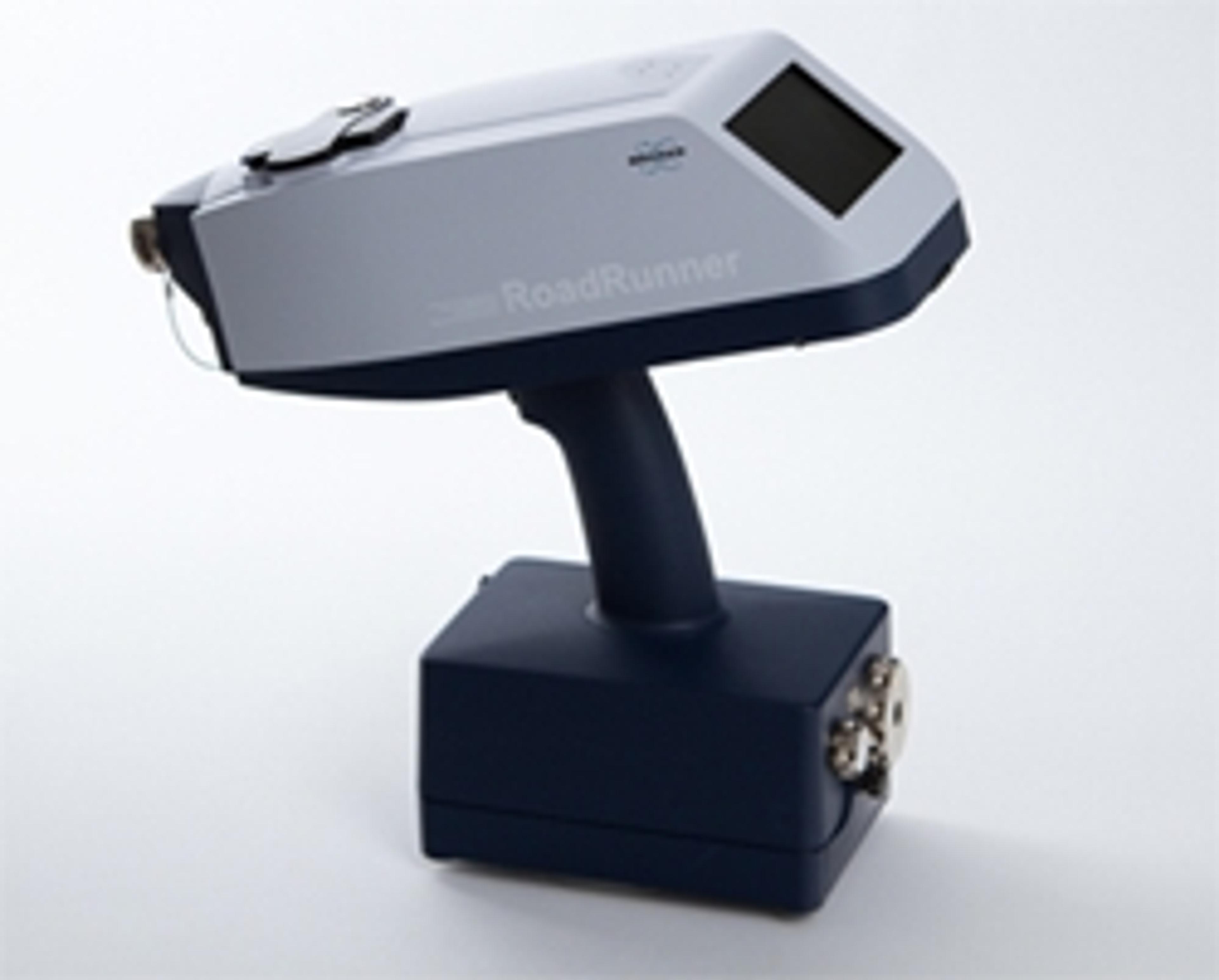
RoadRunner™ Explosive Trace Detector
RoadRunner™ is a battery-operated, innovative, hand-held explosives and narcotics trace detector with outstanding sensitivity, selectivity, substance coverage and ease of use. This light-weight, hand-held trace the detector that has the same outstanding detection performance as state-of-the art benchtop ETD instruments. This rugged, easy to use system is battery-operated, weighs just 7.7 lbs (3.5 kg), and offers dual modes for ‘sniffing’ vapor samples directly, as well as for thermal desorption of particles captured by industry-standard sampling swabs. A battery lifetime of 4 hours combined with a hot-swap battery feature further expands the usability of RoadRunner in remote locations and routine use. Its non-radioactive photoionization source simplifies maintainability by removing the need to comply with regulations for radioactive source safety. For the first time, the incorporation of CHIRP-IM™ technology provides the sensitivity and selectivity of a bench-top trace detector in a hand-held design. This patented feature, coupled with continuous automatic internal calibration, makes manual calibration and verification steps obsolete and simplifies day-to-day operation.