Bruker Introduces New Analytical Solutions and Scientific Instruments at Pittcon 2016

10 Mar 2016
Alex Waite
Editorial Assistant

Product news

At Pittcon 2016, Bruker is showcasing new products and analytical solutions for core Applied & Pharma markets, for our Nanoanalysis, Microscopy & Advanced Materials Research markets, as well as new after-market services and life-cycle support solutions for customers.

Applied and Pharmaceutical Markets

  • The new MATRIX™-MG series of high-performance gas analyzers offer automated, high precision and real-time monitoring of gas compounds based on infrared spectroscopy.
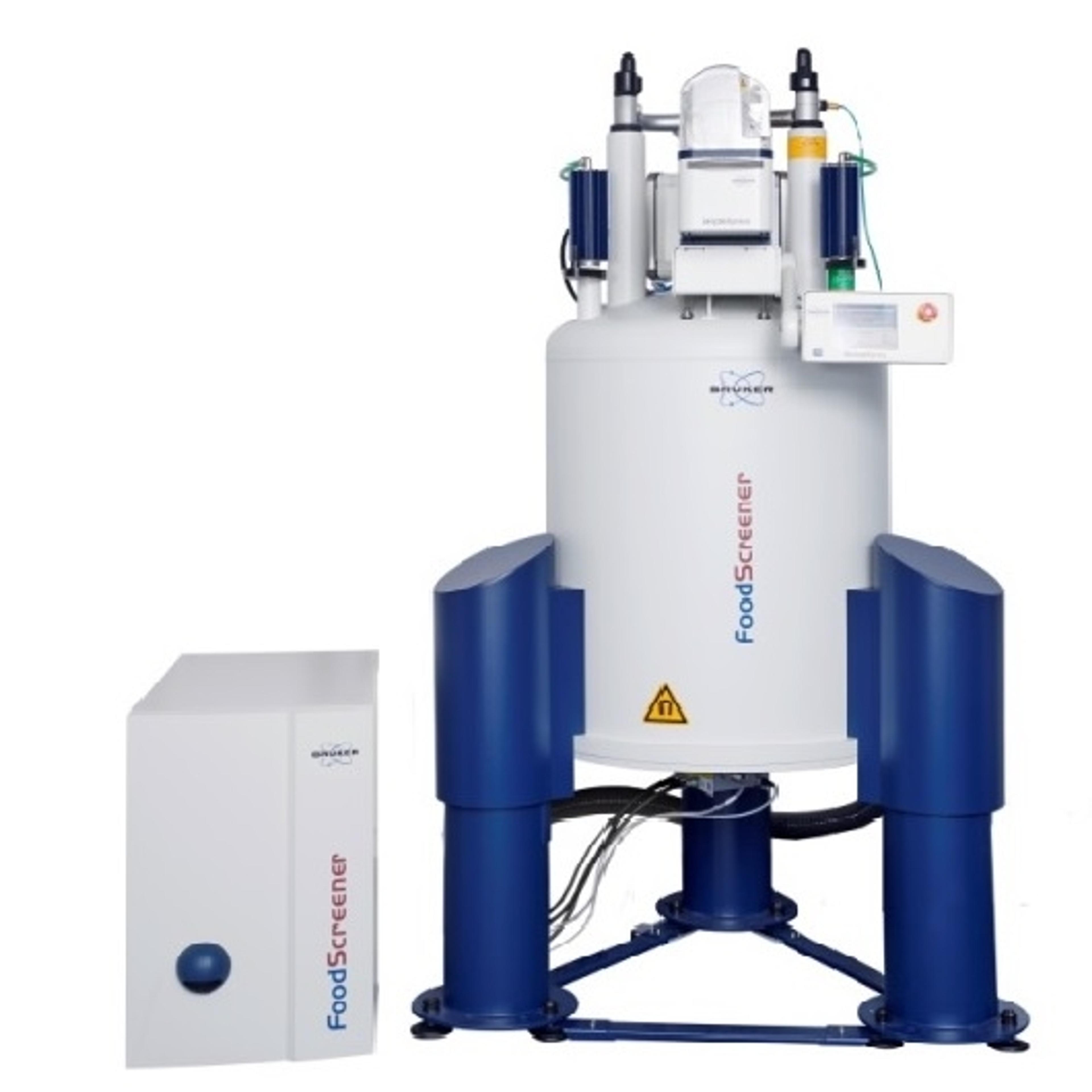
  • The new Honey Profiling module of the NMR FoodScreener™ has quickly gained acceptance by major global food analysis labs and honey-packers due to its unique capabilities to rapidly and cost-effectively detect adulteration, and mislabeling of content or origin.
  • The latest update of the Wine Profiling module of the NMR FoodScreener™ provides a unique solution for the authentication, fraud detection and labeling compliance of high-value wines.
  • The new Bruker FUSION-SV 1.1 automated structure verification solution for small molecules in pharma and chemistry research integrates high-resolution, accurate mass ESI-QTOF mass spectrometry for automated chemical formula generation with NMR spectroscopy.
  • Designed for the real-time analysis of chemical reactions under process conditions, the new InsightMR™ solution uses NMR flow-tube online monitoring to analyze and optimize chemical reactions.

Nanoanalysis, Microscopy & Advanced Materials Research

  • The new Bruker SiBrickScan (SBS) is the first at-line FTIR instrument allowing for the quantification of interstitial Oxygen in complete Silicon bricks and ingots.
  • The micro-XRF spectrometer M4 TORNADO™ offers new key capabilities for the analysis of multilayer materials as well as for the quantification at uneven surfaces, e.g. in powder samples.
  • The new Vutara™ 352 Super-Resolution Fluorescence Microscope enables entirely new research functionality in super-resolution microscopy, including the ability to perform pair-correlation, co-location, cluster, and live-cell analysis with super resolution.
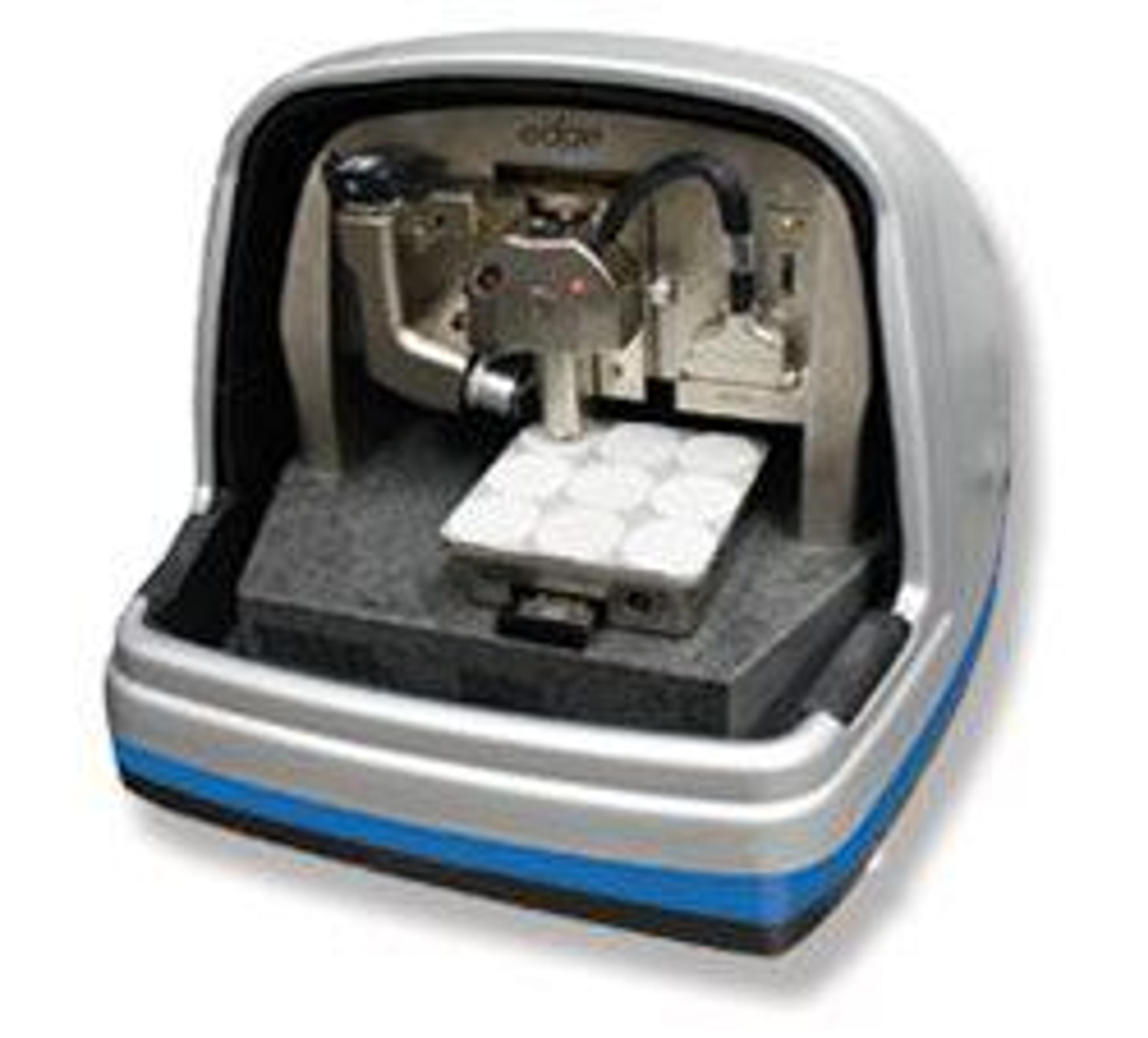
  • The new MultiMode™ 8-HR AFM (Atomic Force Microscope) brings extensive capabilities for nanomechanics and higher speed imaging to the world’s highest resolution and most widely-used AFM.
  • The novel Contour™ CMM Dimensional Analysis System is the world’s first non-contact metrology system to perform simultaneous nanoscale height, surface texture, waviness and form measurements, as well as 3D coordinate measurements for geometric dimensioning and tolerancing, all on one instrument.

After-Market Services and Life-Cycle Support with LabScape™

As laboratories continue to optimize uptime, productivity and total cost of ownership, the Bruker BioSpin Group introduces a new, flexible approach to instrument life-cycle management, maintenance and service - the new LabScape™ concept.

Frank Laukien, Ph.D., the President and CEO of Bruker Corporation, commented: “At Pittcon 2016, Bruker continues its Innovation with Integrity tradition, offering novel products that push the boundaries of performance for enabling our research customers around the world, while also focusing on unique, high value analytical solutions for our applied markets and pharma customers. Our Bruker NANO Group is launching an exciting range of powerful products or enhancements for leading-edge nano-materials and cell biology research, as well as for high-performance elemental analysis and metrology. Finally, we continue to invest in more comprehensive and flexible customer life-cycle management and service solutions.”
Links

Tags

AutosamplersAutosamplers are automated sample loaders used with a number of separation and analytical techniques. HPLC autosamplers use automated partial or full-loop injection systems and place samples in vials or microplates for analysis. Autosamplers can also be used for elemental analysis. Features to consider include repeatability, syringe capacity, footprint and temperature controls.  Gas ChromatographyGas chromatography (GC) is an analytical technique used to separate and quantitate mixtures of small and volatile compounds. Gas chromatographs or GC systems include components such as GC columns, detectors, pumps and autosamplers. Choose from packed or capillary GC columns, flame ionization (FID), photoionization (PID) electron capture detectors and selective or non-selective detectors. Find the best gas chromatographs in our peer-reviewed product directory: compare products, check customer reviews and receive pricing direct from manufacturers.Sample PreparationSample preparation can improve the quality and speed of separation techniques. Products to assist sample preparation include filtration equipment, evaporators, membranes and sieves.Atomic Absorption / Emission SpectroscopyAtomic absorption spectroscopy (AAS) and atomic emission spectroscopy (AES) — also called optical emission spectroscopy (OES) — are used to detect the elemental constituents in samples. Both techniques involve the atomization of a sample. Atomic absorption spectrometers may use a flame or furnace to create an atomic vapor of the sample before irradiation with spectral light. Optical emission spectrometers may use a flame, inductively coupled plasma (ICP), microwave plasma (MP) or spark arcs to atomize and excite the sample. At higher excitation energies, electrons can be emitted instead of photons, which can be useful for samples that can’t be atomized and for surface analysis. Explore electron spectroscopy equipment such as Auger spectrometers and photoelectron spectrometers for surface elemental analysis of samples. Find the best atomic absorption, photoelectron and optical emission spectrometers in our peer-reviewed product directory: compare products, check customer reviews and receive pricing direct from manufacturers.NMR and EPR SpectroscopyNuclear magnetic resonance (NMR) spectroscopy is used to resolve the local chemical environment of atomic nuclei with spin, revealing information on molecular structure, dynamic processes and chemical reactions of organic molecules, from proteins to synthetics. Electron paramagnetic resonance (EPR) also known as electron spin resonance (ESR) spectroscopy is used to detect and quantify paramagnetic species in a sample, including free radicals as transition metal ions. By immersing the sample in a strong magnetic field, both NMR and EPR spectrometers probe the sample with either radio waves or microwaves respectively. A range of benchtop, solid-state and time domain NMR spectrometers & EPR spectrometers are available, as well as NMR tubes, NMR solvents, software, coils, and magnets. Find the best NMR & EPR equipment in our peer-reviewed product directory: compare products, check customer reviews and receive pricing direct from manufacturers.Spectroscopy LampsMonochromators, filters and spectroscopy lamps are available for specific applications of spectroscopy instruments. Available spectroscopy lamps include xenon, hollow cathode, ultraviolet, tungsten, halogen, mercury and deuterium.Data AnalysisData analysis hardware and software is available to make data processing straight-forward yet powerful. Data software can be used for math and stats, technical graphing and image analysis. In addition, software is available for specific data analysis of electrophoresis, densitometry, ELISA and DNA sequencing.Gas Generators and AnalyzersGas generators are used for supplying or monitoring a regular flow of a high purity gas such as nitrogen, hydrogen or zero air for applications such as gas chromatography. Gas analyzers can be used in supply chain processes and laboratory experiments with portable analyzers for monitoring CO<sub>2</sub> and O<sub>2</sub> levels as well as trace gases. Regular flow can be produced with gas control modules and flow meters. Find the best gas generators and analyzers in our peer-reviewed product directory: compare products, check customer reviews and receive pricing direct from manufacturers.Gel Doc / Image AnalysisGel documentation (gel doc) or gel imaging systems are used for the analysis of proteins, antibodies and nucleic acid immobilized in polyacrylamide or agarose gels, membranes or microarrays. Explore a range of a gel imaging systems, densitometers, scanners, transilluminators or UV lamp + CCD cameras for your image analysis solutions. Colorimetric, fluorescent and/or radioisotopic samples can be visualized and documented for further analysis. See gel doc / Image analysis software for quantitative 1D and 2D analysis of your samples. Find the best gel doc / image analysis products in our peer-reviewed product directory: compare products, check customer reviews and receive pricing direct from manufacturers.Consultancy ServicesLaboratory consultancy services are available for automated systems design, research and development, lab equipment procurement and lab equipment rental.Integration ServicesIncorporate lab systems, software and equipment with integration services.Sample ManagementSample management systems include sample storage devices such as freezers and plate storers, sample environment enclosures and sample organization, retrieval and sorter systems. Useful system features include high-throughput, automation, robotic arms, automated liquid handling and associated database systems. Accessories in sample management include barcode scanners, heat sealers and tubes.NanoLCNano LC is a nano scale liquid chromatography technique typically used for proteomic applications. The nano refers to the very low flow rate of the mobile phase in the system. The advantage of nanoLC is its high sensitivity. Often the system is integrated with a mass spectrometer in nano LC-MS or nano LC-MS/MS. When using nanoLC equipment consider column choice, software and accurate and precise flow rate control.Molecular Recognition SoftwareMolecular recognition software is widely used to analyze DNA, RNA, proteins and chemicals. The software can be useful for graphical viewing, comparative analyses, high-throughput screening, genomics, proteomics and phylogenetics. Molecular recognition software uses bioinformatics tools and analyses such as BLAST searches and generates structural predictions, 3D structures and sequencing information.Cell-Based AssaysCell-based assays are used to monitor the presence, quantity and activities of a desired cellular analyte including drug molecules or biomarkers. This can reveal information on cell health (apoptosis, cytotoxicity, viability and proliferation assays), cell metabolism, cell migration and cell signaling mechanisms. Find the best cell-based assay products, kits and equipment with our peer reviewed product directory: compare products, check customer reviews and receiving pricing direct from manufacturers.