
Bruker Announces New Phenomics Research Tools
26 Jun 2019Product news
At Metabolomics 2019, Bruker highlighted innovative mass spectrometry (MS) and Nuclear Magnetic Resonance (NMR) systems and novel high-value solutions for molecular phenomics and clinical metabolomics research.
The proven Bruker IVDr NMR solution, which is based on a fully automated and standardized 600 MHz NMR platform, is uniquely suitable for large-scale, quantitative metabolomics and translational phenomics studies. Its standardized and automated Bruker IVDr (B.I.) Methods 2.0 are now available on the AVANCE® III HD, as well as on the newest AVANCE® NEO NMR console platform. The B.I. 2.0 methods have been further expanded with a new plasma and serum quantification package B.I.Quant-PS 2.0., which detects and quantifies up to 40 different metabolites using 1D NOESY NMR. B.I.Quant-PS 2.0 offers enhanced interactive reporting functions with additional quantification quality assessment.
The new B.I. Inborn Errors of Metabolism (IEM) panel is for research use only (RUO). It has been developed in collaboration with the Metagene consortium, and it generates NMR metabolic findings on inborn errors of metabolism in newborns, children and late onset adults. These can be compared to Metagene's database of almost 1,000 diseases and differential diagnoses for translational research in pediatrics.
Dr. med. Friedrich Trefz, co-founder of Metagene and professor at the University Children's Hospital Heidelberg in Germany, commented: "For the first time an automatic interpretation of the quantification results is possible by using Metagene's extensive database to support translational research. This is truly novel and of high value in the IEM field, as NMR can detect and quantify large numbers of chemically different IEM markers simultaneously, something that otherwise would require multiple conventional analytical methods."
Bruker also announced new MS solutions for next-generation metabolomics and translational phenomics research. Ultra-high sensitivity 4D lipidomics methods on the timsTOF Pro system allows for deep lipidome profiling in just 30 minutes using the PASEF method. In addition to quantifying more than 500 lipids with high accuracy and reproducibility from just 1ul of human plasma, accurate collision cross-sections (CCS) can be obtained to create 4D libraries to facilitate identification.
This approach can be combined with spatial molecular distributions in tissues obtained from MALDI imaging on the new timsTOF fleX system in a label-free SpatialOMx™ workflow. The new timsTOF fleX bridges the divide between molecular tissue imaging and body fluids analyses by combining high-spatial resolution MALDI imaging with deep 4D LC-TIMS-MS/MS multi-omics analyses on a single platform. A new automated software workflow combines the annotation of lipids and metabolites in molecular tissue images, using SCiLS Lab 2020 and MetaboScape 5.0 software. This makes the robust, ultra-high sensitivity timsTOF fleX an invaluable research tool to study heterogeneity in tissue lipidomics and metabolomics.
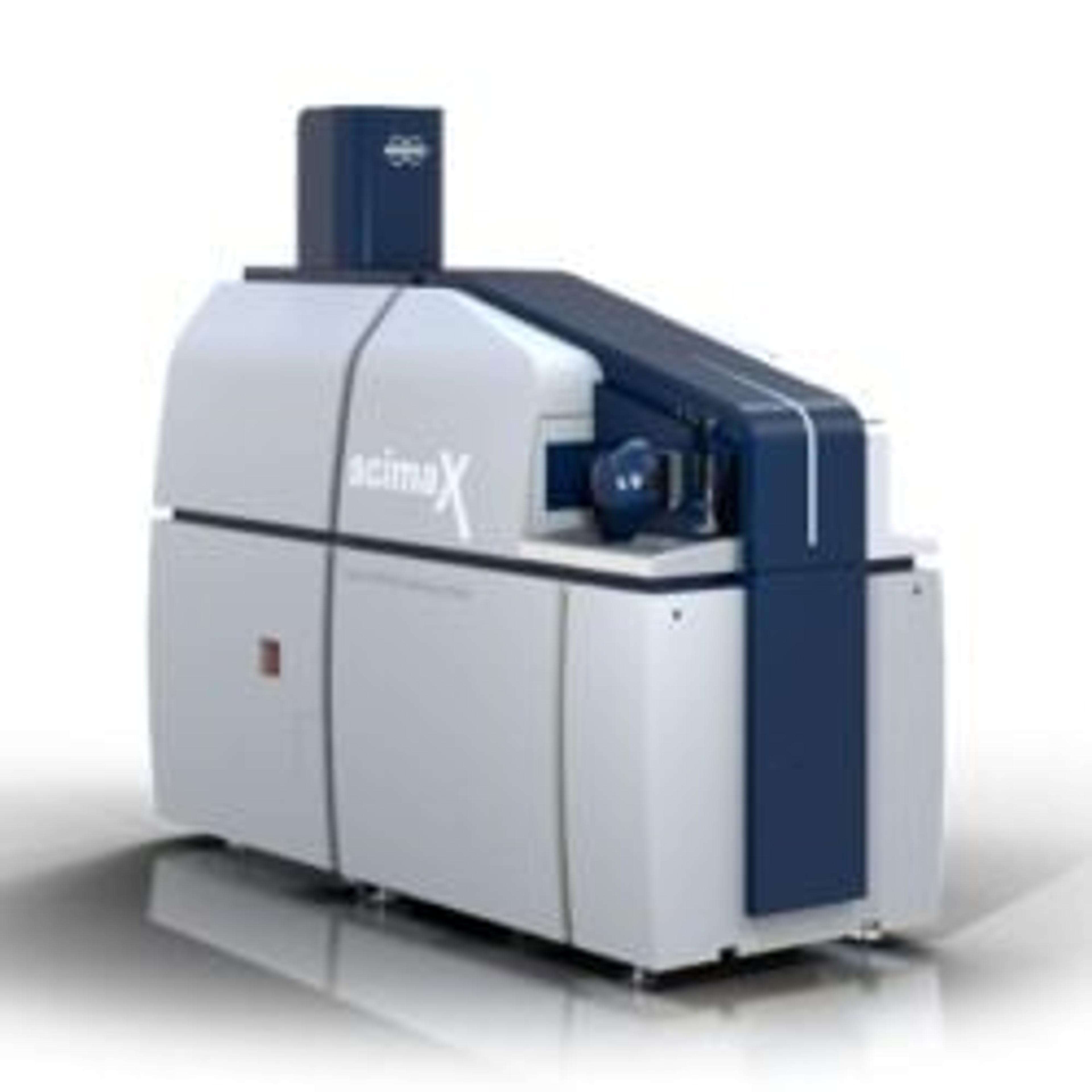
A new deep discovery metabolomics workflow, FIA-CASI-MRMS, allows for the determination of Isotopic Fine Structure (IFS) on large numbers of unknown metabolites. Powered by Bruker's revolutionary scimaX MRMS magnetic resonance mass spectrometer and MetaboScape 5.0 software, the continuous accumulation of selected ions (CASI) offers enhanced dynamic range that greatly increases peak density and sensitivity. Flow injection analysis (FIA) yields a combined mass spectrum with IFS unambiguous molecular formulae for thousands of unknown metabolites. The FIA-CASI-MRMS discovery workflow gives an unprecedented level of confidence when annotating unknown metabolites, providing deeper access into the 'dark metabolome'.
Combining the annotation capabilities of MRMS with NMR is the basis of a de novo strategy for the structural elucidation of urinary metabolites. Dr. Matthew Lewis and the group at the UK National Phenome Centre at Imperial College London have detailed this novel molecular profiling workflow in the journal Analytical Chemistry (‘Systematic isolation and structure elucidation of urinary metabolites optimized for the analytical-scale molecular profiling laboratory’). MRMS provides a high-confidence starting point for NMR analysis, increases the efficiency and reduces the time required for complete structural elucidation. The work also details a novel, urine-based pipeline solution that facilitates metabolite extraction, concentration and purification. This creates a reusable "fraction bank" for long-term storage that can be re-visited for further analysis later.
A similar molecular profiling workflow is now being used at the Australian National Phenome Center (ANPC), in collaboration with Bruker and Murdoch University in Perth, Western Australia. For its large-scale metabolic phenotyping studies, the ANPC has standardized NMR on Bruker's IVDr platform and on the impact II QTOF 'phenomics workhorse' for the characterization of complex mixtures of polar and non-polar urinary metabolites within the Australian population. The Western Australian Health Translation Network aims to develop the world's premier phenomics center for the advancement of precision medicine with multiple Bruker IVDr NMR and impact II systems to support the required increase in throughput.
For more science news, straight to your inbox, join SelectScience today.
Related products
Request Quote for All Products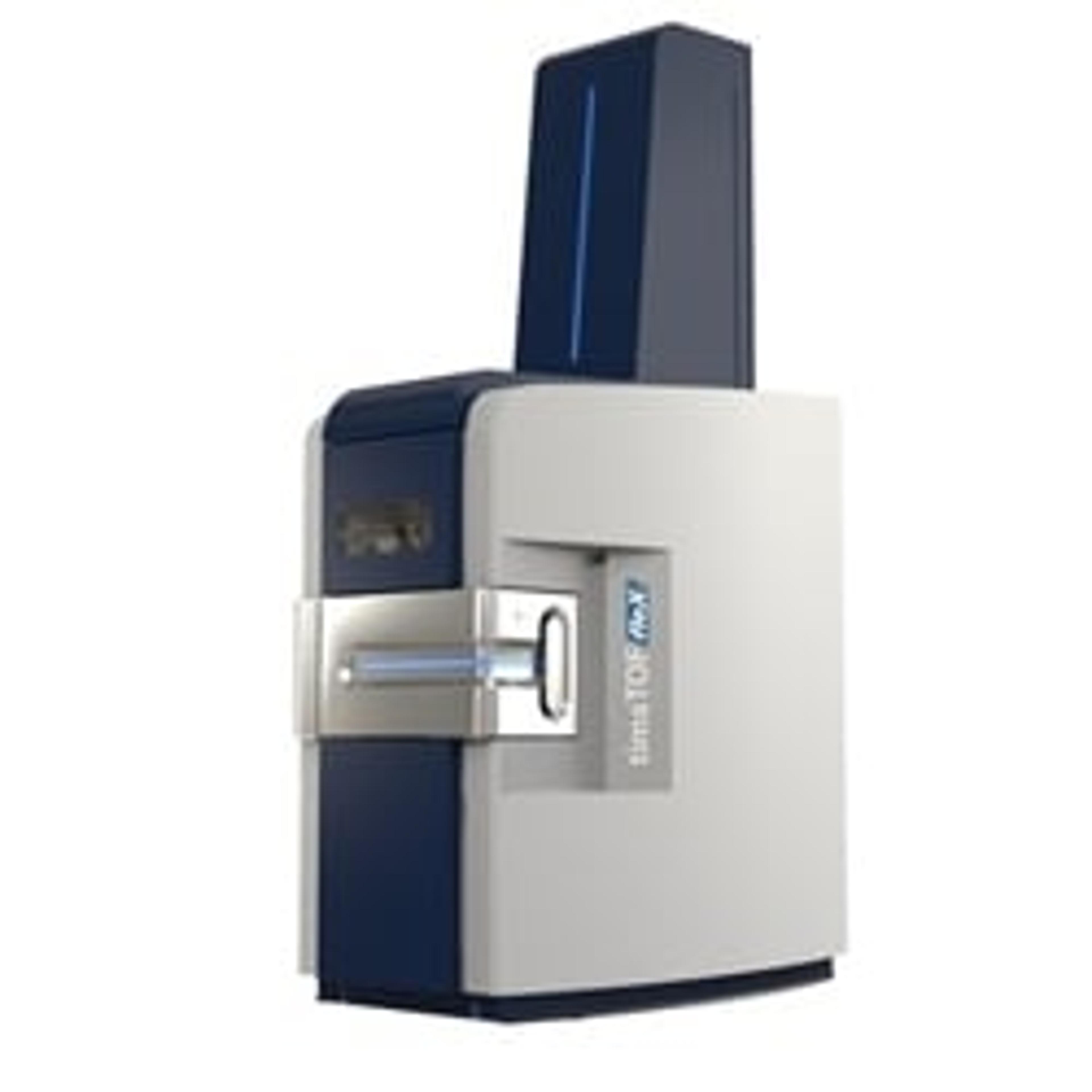
timsTOF fleX
Bruker DaltonicsMaximizing potential with SpatialOMx ® : Balancing ESI & MALDI with no sacrifices.
MetaboScape
Bruker DaltonicsAll-in-one software for accurate metabolic analysis through advanced mass spectrometry technology and software.