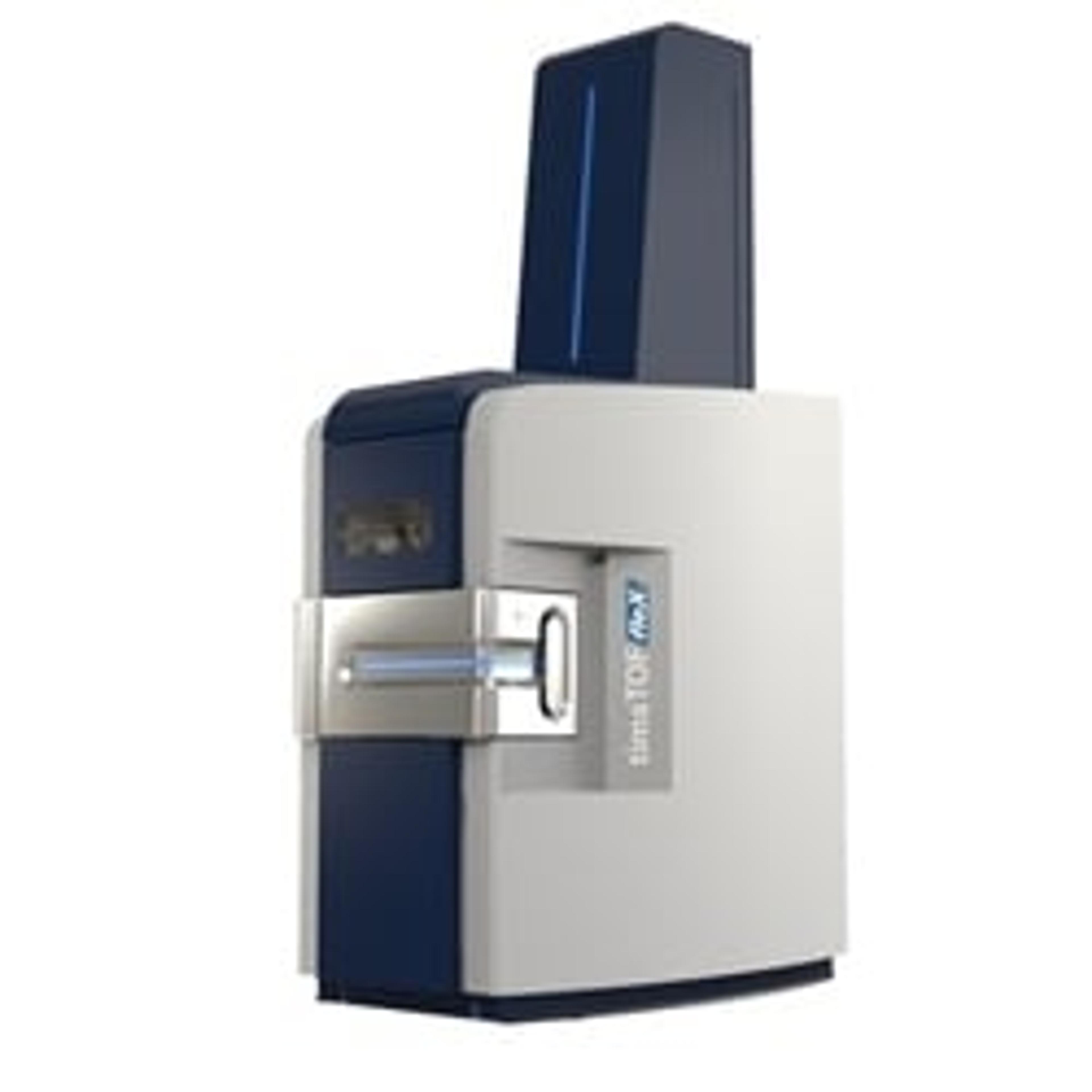
Bruker acquires Prolab Instruments to augment multiomics solutions

Prolab precision pumps, autosamplers, and nano-flow to cap-LC UHPLC systems to further enhance performance and robustness of timsTOF 4D proteomics and metabolomics solutions

19 Jan 2022

Blake Forman
Content Creator

Industry news

Bruker Corporation has announced the acquisition of Prolab Instruments GmbH, a Swiss technology company specialized in low-flow, high precision liquid chromatography technology, and systems. The financial terms of the transaction were not disclosed.

Established in 1988, ProLab’s innovations center around micro and nano-UHPLC pump technology, resulting in the development of the unique Zirconium™ split-less pump technology for flow rates from nano-flow (4-800 nL/min) to cap-flow (1-10 µL/min) regimes. The Zirconium™ Ultra nano- and cap-UHPLC system supports a broad range of flow rates from 4 nL/min to 10 µL/min at 1000 bar (15,000 psi) and is suitable for cap-LC in high-throughput proteomics and metabolomics.

Recently, Prolab launched the innovative Zirconium Qube autosampler with the proprietary mobile injection unit technology that integrates the injector valve and loop, and moves to each sample vial to minimize carry-over, thereby enabling ultra-low volume injections with high precision. This unique high-precision injection capability has the potential to further enhance single-cell proteomics.

Leveraging nearly 30 years of experience with low flow rates and minimized dead volumes, Prolab also offers unique Zircofit™ fused silica connectors known for flexibility, robustness, and ease of use.

Mr. Werner Doebelin, the Founder and CEO of Prolab, said: “We are pleased to become part of Bruker and augment the proteomics and metabolomics workflows of high-performance mass spectrometry systems like the timsTOF or scimaX® MRMS platforms. Our Zirconium pump is already part of the Bruker high-performance nanoElute system. Being part of Bruker allows us to increase the pace of product innovation, and we are looking forward to bringing our Mobile Injection Unit Technology to market to further improve performance and robustness in key applications, like single-cell proteomics and lipidomics.”

Mr. Juergen Srega, the President of the Bruker CALID Group, explained: “Given the enormous sensitivity improvements of our timsTOF Pro 2 and timsTOF SCP mass spectrometers, our customers are working with lower and lower sample amounts. Prolab’s innovative mobile injector technology on the Zirconium Qube autosampler provides high-precision, low volume injections with minimal sample loss and carryover, as well as faster cycle times. Zirconium perfectly complements our ultra-high sensitivity unbiased, deep 4D proteomics, immunopeptidomics, and single-cell proteomics solutions.”

Want the latest science news straight to your inbox? Become a SelectScience member for free today>>

Links

Tags

UHPLC and HPLCHigh performance liquid chromatography (HPLC) and ultra high performance liquid chromatography (UHPLC), also known as UPLC, are analytical techniques used to separate, identify and quantitate components of complex mixtures including biological samples such as proteins and lipids as well as chemical mixtures of pesticides, drugs and oils. Both techniques are liquid chromatographic methods but differ by operating pressures (HPLC < 6000 psi < UHPLC ). Components of HPLC and UHPLC systems include columns, detectors, pumps, autosamplers and column heaters. Explore a range of UHPLC and HPLC columns for your specific sample needs including reverse phase, normal phase, ion exchange, HILIC, ion exclusion and size exclusion columns. For more specialized HPLC, explore FPLC, countercurrent LC and simulated moving bed systems. Find the best UHPLC and HPLC equipment in our peer reviewed product directory: compare products, check customer reviews and receive pricing direct from manufacturers.LC-MSLC-MS (liquid chromatography-mass spectrometry) systems and equipment are used for separation and quantitative analysis of complex mixtures, combining liquid chromatography and mass spectrometry. Quantify proteins, contaminants, pesticides or screen for drug metabolites with a high level of sensitivity. LC-MS systems and equipment include reverse phase, normal phase and specialized columns integrated with various MS detectors such as time-of-flight (TOF), quadrupole, orbitrap or ion trap mass analyzers. LC-MS/MS instruments equipped with a qTOF or triple quadrupole analyzer give greater sensitivity and resolving power to your analysis. Find the best LC-MS equipment in our peer-reviewed product directory: compare products, check customer reviews and receive pricing direct from manufacturers.Mass SpectrometryMass spectrometry (MS) is a powerful analytical technique used to identify and quantify molecules based on the mass-to-charge ratio of gas-phase ions. It provides detailed information about the structure, composition, and properties of compounds and is widely used across fields such as environmental monitoring, materials science, drug discovery and development, food and beverage testing, and wider chemical research. Key MS techniques include tandem mass spectrometry (MS/MS), liquid chromatography–mass spectrometry (LS-MS) and inductively coupled plasma (ICP-MS). Choosing from these wide range of techniques and technologies can be a daunting task, so keep up to date with scientific applications, performance expectations, and customer reviews here all in one place. Visit our product directory to receive quotes direct from the manufacturer. NanoLCNano LC is a nano scale liquid chromatography technique typically used for proteomic applications. The nano refers to the very low flow rate of the mobile phase in the system. The advantage of nanoLC is its high sensitivity. Often the system is integrated with a mass spectrometer in nano LC-MS or nano LC-MS/MS. When using nanoLC equipment consider column choice, software and accurate and precise flow rate control.MetabolomicsMetabolomics is the study of small metabolites (the intermediates and products of metabolism). It involves the identification and quantification of cellular metabolites using analytical technologies such as GC, HPLC, NMR, and LC/MS.ChromatographyChromatography is a powerful technique used to separate and analyze components of mixtures based on their chemical properties. It is widely used in fields like biochemistry, pharmaceuticals, and environmental analysis. By exploiting differences in the interaction of substances with a stationary phase and a mobile phase, chromatography enables precise purification and quantification of compounds. Whether you're working with complex biological samples or industrial chemicals, chromatography is essential for obtaining high-quality results. Browse our peer-reviewed product directory to find the best chromatography systems, compare products, read customer reviews, and get pricing directly from manufacturers.ProteomicsProteomics refers to the analysis of proteins through a variety of different experiments in order to understand structure and functionality. Typical techniques include protein purification and mass spectrometry.