
Breaking down barriers: Willing precision omics to life
Dr. John Wilson explains how ProtiFi set out to develop solutions to all the problems preventing omics from delivering real clinical impact
26 Mar 2021
Editorial article

In this interview, we speak with Dr. John Wilson, Founder and CEO of ProtiFi, to learn how omics is evolving to achieve clinical relevance through innovative solutions that remove the barriers traditionally holding it back. Wilson explains the problems his team of experts needed to solve. He also discusses partnerships and how his collaboration with PHCbi affords mission-critical capabilities to reliably store and preserve precious samples.
From humble beginnings
Inspired by the goal of enabling omics scientists to directly impact health, Dr. John Wilson initially founded ProtiFi in his garage, the same birthplace as many of today’s world-leading companies. “It’s been a long, continual road. We had to develop not just one piece of technology but all of the technologies that are needed to bring precision omics to life,” Wilson explains. “The field of omics started with genomics and it made a whole lot of promises. But the problem with genomics is that your eyeball and your toe have the same genes, so fundamentally genomics cannot deliver the information that is required. We need to do so much more, and that’s what ProtiFi is about: reproducibly turning all pieces of biology into numbers and biological understanding.”
Omics is the analysis of entire populations of biological molecules, usually of one particular class. Multiple different omics fields exist including genomics, transcriptomics, proteomics, metabolomics, lipidomics and glycomics, each of which explores its own type of biomolecule such as genes, mRNA, proteins, metabolites, etc. Omics technologies are at their heart survey methods that yield vast amounts of information on states of health and disease. While omics techniques will underpin personalized medicine, their translation from R&D to clinical implementation remains difficult. Specifically, progress has been hindered by poor sample processing, low N and slow throughput, lack of true multiomics analyses and limitations in data analysis software.
Only by solving all of these problems will omics produce actionable clinical insights, such as diagnoses, and enabling those actions is precisely ProtiFi’s goal. “ProtiFi solutions span the whole spectrum from sample collection and preparation – the S-Trap, Si-Trap and Tryp-N – through to process control and chromatography, all the way to data analysis and the early detection of disease with SimpliFi,” explains Wilson. Further, “every single one of those pieces of an omics pipeline has to be controlled, precise and reliable and also extraordinarily reproducible. People simply hadn’t done that and, beginning in my garage, we willed all those solutions into existence.”
Due to the requirements of throughput and reliability, only very robust biomedical technologies have a chance at making real impact in clinical settings. “The instruments running clinical samples have to operate 24/7, which means these workflows have to be super bulletproof, so much so that a person with just a high school degree can operate them,” says Wilson. The team at ProtiFi focused on developing solutions that deliver this exceptional level of stability and reliability because only those kinds of solutions have a chance of helping translate R&D omics into clinical relevance. “This level of robustness has never been achieved before and it has allowed the pipelines we developed to be installed in research and clinical laboratories, in hospitals and medical settings,” Wilson explains. “We have made omics analyses simply work, and that allows scientists, researchers and medical professionals to bring precision omics to life. That’s actually our tagline and it means both breathing life into unkept promises and bringing omics techniques to people’s lives.”
Transformative sample prep
Sample preparation is often a critical and essential step in many analytical procedures due to the complexities of detection and identification of analytes in their original, in-situ form. Often, for example due to matrix effects or other interferences, a sample must be prepared before a measurement can even be conducted. In sample prep, attention to detail, consistency, reproducibility and precision reign king. “One of the major omics bottlenecks has been in sample preparation, which according to published reports is responsible for 75% of the overall variability in omics data,” Wilson says. “That 75% is a huge problem and our S-Trap sample processing system reduces it to less than 10%. That has been incredibly transformative.”
Sample prep can be especially problematic when facing a diverse array of sample types, but help is at hand: “Sample preparation is actually a really hard problem,” says Wilson. “Proteins have very diverse solubilities, so how do you develop a system that works just as well with the proteins of the brain as it does with the proteins of blood? We did this and it has meant that researchers all over the world are able to apply the same technique, the same workflow, the same pipeline to samples as diverse as serum and stool and everything in between, literally all kingdoms of life.”
This was just the beginning, as Wilson explains: “Life isn’t composed of just proteins, though they are extremely important, and to enable true multiomics, we then developed the Si-Trap. The Si-Trap is the world’s first and only multiomics sample preparation system that takes one sample and prepares separate metabolomics, lipidomics, transcriptomics, glycomics and proteomics fractions from that single sample. Now we can reproducibly prepare and study all the different kinds of molecules that make life possible.”
Wilson stresses the importance of automation: “Sample prep is easily subject to human error and we partnered to make affordable, automated workflows available worldwide. Using our joint workflows, a single scientist can now prepare more than 10,000 samples a day; the issue is now analyzing the samples!”
Smartly tackling complex data: Inside the world’s first data-to-meaning search engine
To overcome head-on the barriers that have prevented omics from reaching clinical relevance, ProtiFi assembled a high-powered group of experts, including Wilson himself, who specialize in omics analyses and how to effectively deploy them into clinical settings. “We as a company have great knowledge about what these limitations are and where the challenges are,” says Wilson. Another significant issue associated with omics is data analysis. Wilson explains that although an extensive variety of tools exist, many of these tools are poorly tested, misunderstood or misused. People may also misuse statistics, resulting in data and conclusions that are of questionable value, and may contain little to no meaning.
With this in mind, Wilson and his team designed and coded SimpliFi, which ProtiFi describes as the world’s first data-to-meaning engine that can easily and quickly extract meaning from omics data. This video outlines how SimpliFi operates and explains how to analyze this complex data on the go, via your smartphone. “The technologies we have developed solve all the bottleneck issues that have prevented omics from making a clinical impact,” concludes Wilson. “They allow use of a single sample processing system and a single data analysis system, which you can use on every sample and with every omics.” The SimpliFi runs on massive GPU clusters, affording immense scalability allowing analysis of even the largest of datasets.
Partnering to find trust
Sample storage is essential in all areas of biological research for ProtiFi and every other company that handles biomedical samples. To ensure safe sample storage, ProtiFi partnered with PHCbi because of its reputation of dependability and reliability. “Sample storage is essential and if a freezer goes down, we will lose not one sample but a whole freezer full of samples,” says Wilson. “A freezer failure happened to us and that’s what brought us to PHCbi: we need to be completely assured that this equipment will simply work. We wanted to plug a freezer in and not worry about the equipment essential to our business. That’s what PHCbi has delivered to us: a fundamental capability that’s simply reliable and trustable."
Related products
Request Quote for All Products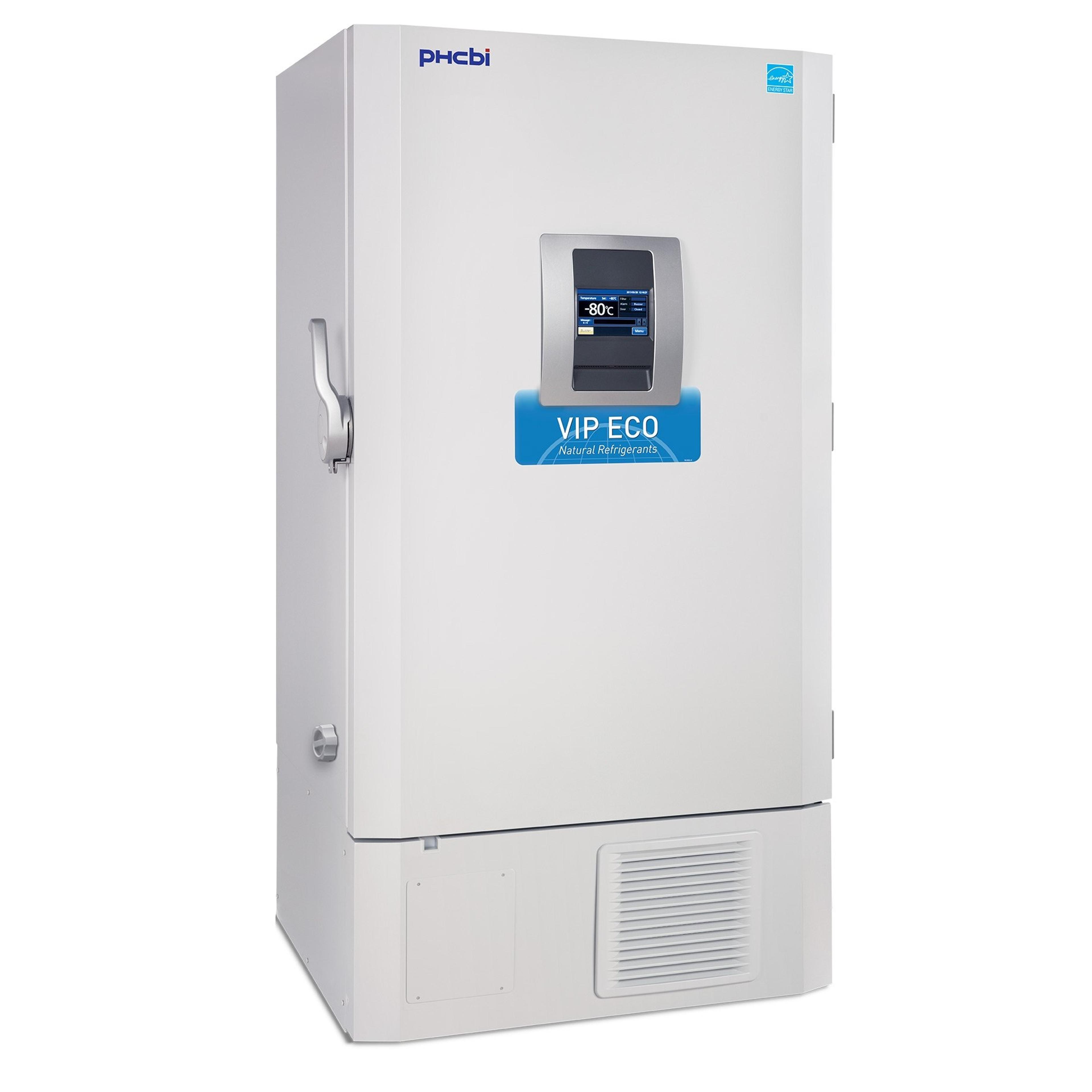
VIP ECO Natural Refrigerant -86°C Upright Freezer
PHC Corporation of North AmericaVIP ECO Natural Refrigerant Ultra Low-Temperature Freezer. 25.7 cubic feet