Boost Clinical Lab Efficiency with the ThunderBolt EIA+CLIA Automation Platform

15 Aug 2012
Sonia Nicholas
Managing Editor and Clinical Lead

Product news

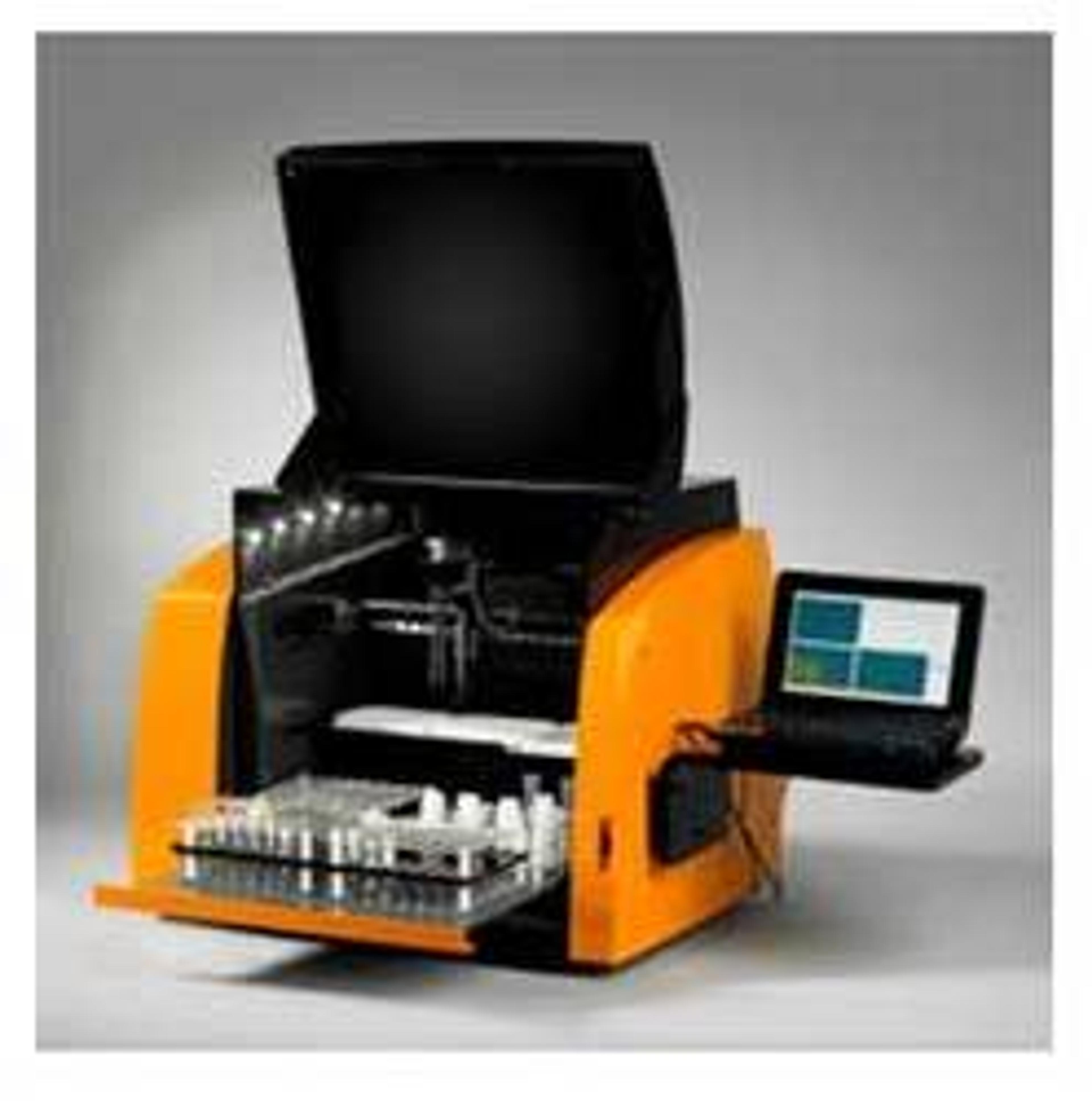
Gold Standard Diagnostics (GSD) have announced the addition of fully-automated Chemiluminescence Immunoassay (CLIA) processing capability to the powerful ThunderBolt® Automation Platform. With the ability to simultaneously automate CLIA alongside EIA, laboratories of any size can now achieve even more dramatic increases in throughput, flexibility and cost savings.

Through a host of patent-pending features, the ThunderBolt® delivers exceptional power and flexibility in a small size. The dual function analyzer provides complete, walk-away automation of 192 patient samples in only a 2’ by 2’ space. Completely open architecture allows any EIA or CLIA protocol to be programmed, and up to eight different protocols to run in a single batch. Intuitive and robust software further enriches the ThunderBolt®, making it the total laboratory automation solution.

Gold Standard Diagnostics also boasts a suite of over 200 “ThunderBolt-Ready” assays from more than 20 different manufacturers. Each validated protocol in the large library deploys seamlessly on the ThunderBolt® to realize maximum laboratory benefit as quickly as possible. GSD also supports the entire solution of reagents and instrumentation to guarantee smooth operation and maximum uptime.

GSD Thunderbolt ™

Gold Standard Diagnostics

An Automation Solution for Every Lab This 2-plate fully automated open platform is compact, efficient and innovative. Features include positive identification sample racks, continuous barcode reading, and on-board optics for remote trouble-shooting access. The interface is bi directional and compatible with any LIS system. User friendly, flexible, and customizable software make automation possible for any EIA application. Up to 192 results can be generated in one run on a combination of up to 8 assays. Unique Features Intelligent Racks (IR) automatically detect the position in which barcoded vials are placed 192 patient sample positions Standard 13 x 75 mm racks; custom racks for any sized vials available 14 position reagent rack holds 22 to 35mm vials Retractable carrier for loading and unloading samples & reagents Internal camera for real time viewing of probe activity Open system to process any EIA assay program  

(5)

Links

Tags

ELISAEnzyme-linked immunosorbent assays (ELISA), also known as enzyme immunoassays (EIA), are used for the detection and quantification of proteins, peptides and antibodies in a sample. ELISA often comes in kit format, with pre-selected antibody pairs to detect specific proteins or biomarkers of diseases such as diabetes and obesity, or cardiovascular and neurological disorders. Detection is made possible with chemiluminescent, fluorescent or colorimetric substrates and detection instruments such as microplate / ELISA readers. Other kits available include: Enzyme-linked immunospot (ELISPOT) assays for the quantification of protein-producing cells and chemiluminescent immunoassays (CLIA) kits. Find the best ELISA kits and products in our peer-reviewed product directory: compare products, check customer reviews and receive pricing direct from manufacturers.ImmunologyImmunological techniques measure and characterize immune responses. Immunology kits and analysis systems often use techniques such as ELISA, radioimmunoassay (RIA) and immunodiffusion assays, Immunohistochemistry, and flow cytometry. Immunologists use equipment such as flow Cytometers, plate readers, plate washers and fluorescent microscopes.Plate ProcessingAutomated plate processing is used in microplate technologies for high-throughput, speed and efficiency. Plate processing systems include microplate handlers for moving plates, heat sealers, stackers and carousels for storage, retrieval and delivery, microplate washers and piercers. Useful features of plate processors include walk-away automation, compatibility and easy integration with microplate systems.Clinical ChemistryBiochemistry (or clinical chemistry) involves the analysis of bodily fluids using chemical tests. Techniques used include HPLC, chromatography, spectroscopy, mass spectrometry, immunochemical, electrophoresis, turbidometric / spectrophotometric assay, MRI and ISE analysis. Tests are often carried out on plasma or serum but urine (urinalysis) and fecal specimens are also processed.Clinical MicrobiologyMicrobiology is the study of microorganisms including protists, prokaryotes, fungi, and, often, viruses. Microorganisms are a useful research tool as genetic vectors and, in immunology, for antibiotic susceptibility testing, cellular biology and genetics. Microorganisms commonly grow readily in incubators with microbial culture media; this can contain chromogenic supplements to differentiate between cell lines. Estimate your culture’s density of microorganisms with colony counters, or screen and select colonies for desirable clones with automated colony pickers. Additionally, equipment is available to monitor environments for the presence of microbes and identify with microbial identification instruments. Find the best microbiology products in our peer-reviewed product directory: compare products, check customer reviews and receive pricing direct from manufacturers.ChemiluminescenceCLIA
Boost Clinical Lab Efficiency with the ThunderBolt EIA+CLIA Automation Platform