BMG LABTECH Helps Student Research Team with their Participation at the International iGEM Competition

15 Jul 2015
Chelsie Phillips
Temporary Editorial Assistant

Industry news

The research iGEM team of the Albert-Ludwigs-University Freiburg, Germany presents their newly developed “Microarray Xeroxing” technique to the Jury in Boston. A technique with which just a few drops of blood are enough to detect many different diseases simultaneously, quickly, and cost-effectively. The 19 students received financial support for their project from German microplate reader manufacturer BMG LABTECH.

This year, 280 teams from all around the world take part in the competition which is organized by non-profit organization iGEM (international genetically engineered machine). The teams work all summer long on their synthetic biology projects. From September 24th to 28th all participants present their results at the Hynes Convention Center in Boston, USA.

Amongst others, the Freiburg University team is sponsored by German microplate reader company BMG LABTECH. “The fast detection and differentiation of diseases is a crucial and fundamental task. With its project the young research team makes a great contribution to this topic. We support the students to enable as many participants as possible to travel to the award ceremony in Boston,” says Tobias Pusterla, the company’s International Marketing Manager.

The aim of the project is to propose an advanced procedure for the parallel detection of various antibodies, or disease markers, in a fast and inexpensive manner with just one syringe of blood. The approach is based on the interaction of antibodies with the respective antigens immobilized on the surface of a microarray. Antigens derived from various pathogens are generated by cell free protein expression using the corresponding DNA array as a template, and are arranged in distinct spots on the protein array. Placed in a microfluidic chamber the protein array gets incubated with the patient’s blood sample. The interaction between an antibody in the sample and the immobilized antigen results in a small but significant increase of the thickness of the microarray’s surface layer. The detection is realized by a technology called iRIf (imaging Reflectometric Interference) which offers a label-free and real-time measurement and no further biochemistry is needed. By cost- and time-effective simultaneous screening for several diseases, the proposed system offers a strong potential to improve future diagnostics.

The iGEM competition is an annual, worldwide, synthetic biology event aimed at undergraduate university students, as well as high school and graduate students. At the Giant Jamboree, iGEM teams compete for various awards. These awards range from Medals to Track Awards to Special Prizes for the finalists. The three finalists will be selected based on their overall excellence of their entire project, from choice of project, presentation, to the success and impact of the project, to consideration of issues of Human Practices.

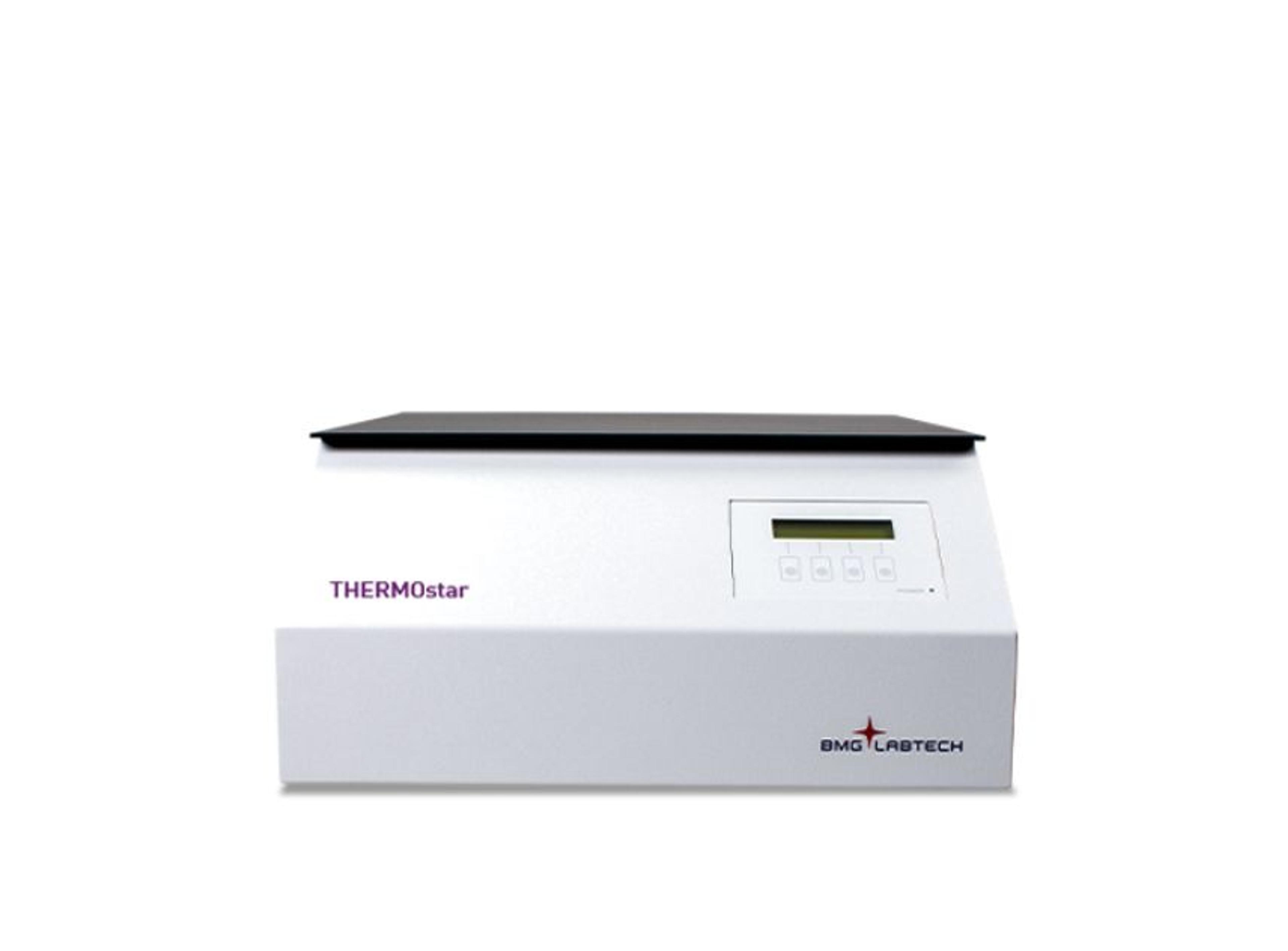
THERMOstar Intelligent Microplate Incubation

BMG LABTECH

The THERMOstar is a high performance microplate incubator and orbital shaker which accommodates up to four microplates. The THERMOstar can be used for any enzyme or cell-based assays requiring uniform and strictly controlled incubation up to 56°C and effective mixing.

(0)

Links

Tags

MicroplatesMicroplates are multi-well plates used to increase the throughput of biological investigations. The number of wells microplates contain can range from 6 to 3243 wells, with the 96-well format being the most commonly used. Microplates can come tailored for a range of applications including cell culture, PCR, filtration, storage, non-binding surface, protein crystallization, as well as pre-coated, deep well and normal Standard microplates. Additionally, options for microplate colors include clear , black, white or black with clear bottom and white with clear bottom for absorbance microplate reader applications. Find the best microplates for your lab in our peer-reviewed product directory: compare products, check customer reviews and receive pricing direct from manufacturers.Microplate Readers / DetectorsMicroplate readers are used to automate the detection and analysis of labeled or label-free components in microplates during assays or live-cell monitoring. Microplate readers are generally distinguished by their mode of detection. Types include absorbance, luminescence, fluorescence intensity, fluorescence polarization, TRF / FRET and multimode microplate readers. Microplate readers deliver a high throughput of samples by reading multiple wells simultaneously, with the 96-well format the most commonly used. As a result, microplate readers are often used in the drug discovery, bioassays, research and pharmaceutical industries for screening applications. Microplate loading can also be automated, with robotic microplate stackers to increase throughput. Find the best microplate readers in our peer-reviewed product directory: compare products, check customer reviews and receive pricing direct from manufacturers.HematologyIn Haematology / Hematology, complete blood cell counts (or full blood counts) are obtained using automated blood count analyzers to enumerate blood cell types.  Hematology also encompasses haemostasis and coagulation, thrombophilia and hemophilia, plasma viscosity and ESR analysis, hemoglobinopathies, cell morphology and haematinic measurement.Clinical ChemistryBiochemistry (or clinical chemistry) involves the analysis of bodily fluids using chemical tests. Techniques used include HPLC, chromatography, spectroscopy, mass spectrometry, immunochemical, electrophoresis, turbidometric / spectrophotometric assay, MRI and ISE analysis. Tests are often carried out on plasma or serum but urine (urinalysis) and fecal specimens are also processed.Hematology SolutionsHematology solutions involve diagnostic tests and equipment used to analyze blood samples and diagnose blood disorders such as anemia, leukemia, and hemophilia. These tools include automated full blood count analyzers, reagents, and digital morphology systems. Explore hematology solutions in our peer-reviewed product directory; compare products, check reviews, and get pricing directly from manufacturers.Blood AnalysisThe analysis of blood is vital for many areas of life sciences and forensic investigations. Blood samples can be tested for a number of different reasons such as diagnosis, glucose levels, cholesterol and drug testing.Infectious DiseasesInfectious diseases are caused by pathogens such as bacteria, viruses, and fungi. Effective detection, prevention, and treatment are crucial to control outbreaks and improve public health. Diagnostic tools, vaccines, and antimicrobial treatments are essential components of managing these diseases. Research into emerging pathogens and resistance patterns continues to evolve. Browse our peer-reviewed product directory to find the best diagnostic tools, prevention solutions, and treatment options; compare products, read customer reviews, and get pricing directly from manufacturers.