BioTek to Present Latest Microplate Instrumentation at MipTec 2010

14 Sept 2010
Sarah Sarah
Marketing / Sales

Product news

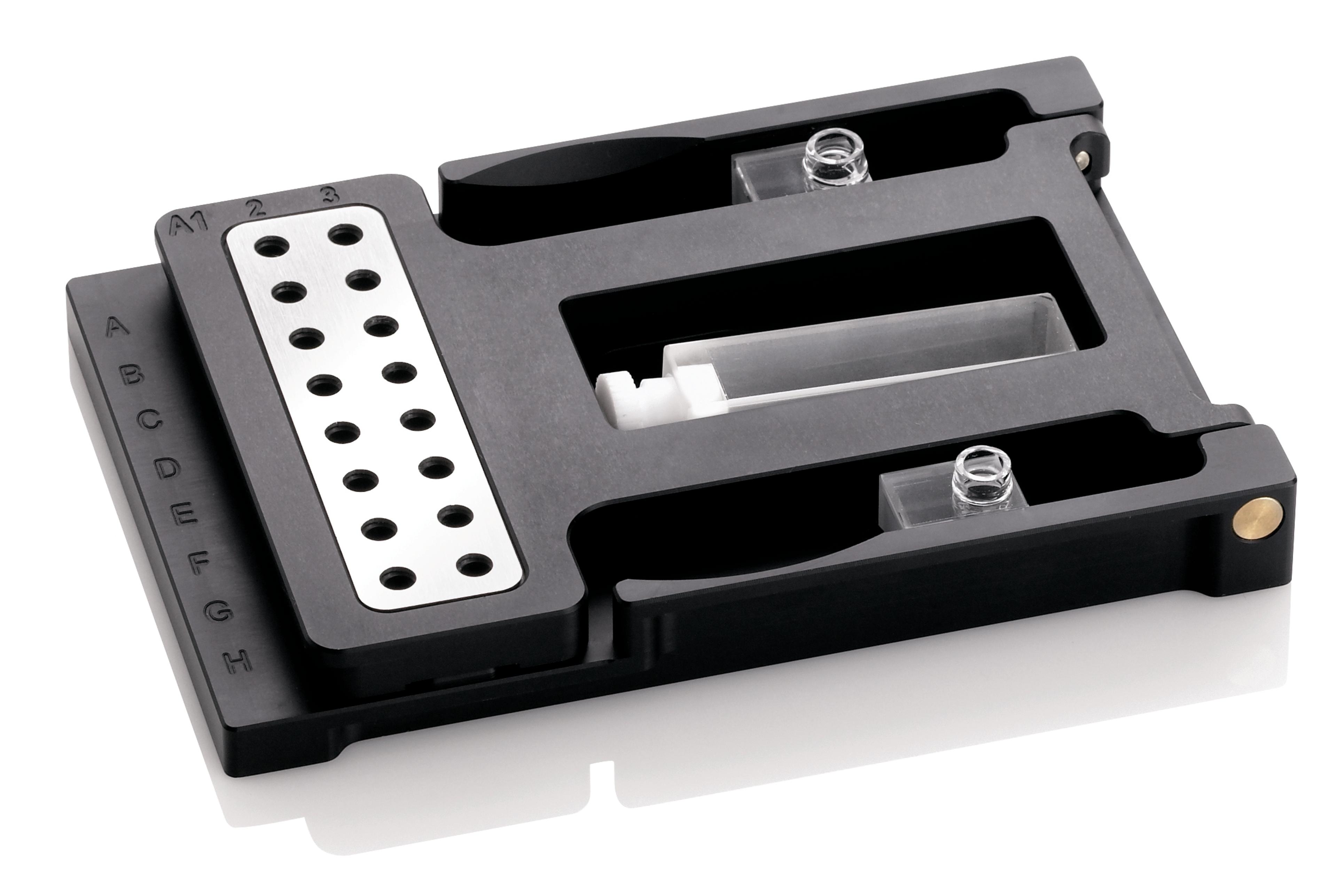
BioTek’s newest products will be featured, including the new, patent-pending Synergy™ H1 Multi-Mode Microplate Reader. This cost-efficient quadruple-grating monochromator-based reader can be upgraded to a true, flexible hybrid reader with the addition of filter-based optics. The result is a highly versatile microplate reader for current and future assays. The Synergy H1 is compatible with BioTek’s Take3™ Multi-Volume Plate for multi-volume, multi-sample measurements in 2 μL microspots, BioCells or standard cuvettes.

BioTek’s newest addition to the microplate dispenser product line is the 1-to-4 reagent MultiFlo™ Microplate Dispenser. This all-in-one dispenser dispenses up to four independent and parallel reagents in 1 μL to 3 mL volumes into 6- to 1536-well microplates and microtubes. Additionally, peristaltic pump and microprocessor-controlled syringe pumps allow any dispensing combination to be chosen and upgraded as necessary, and MultiFlo is robotic-friendly. MultiFlo is controlled via the familiar instrument keypad or Liquid Handling Control™ (LHC™) PC software.

BioTek’s poster presentations at MipTec include:

• Homogeneous Cell-based Signal Transduction Assays using AlphaScreen® SureFire® and a Novel 3D Cell Culture Matrix
• HTRF® Ligand Binding Assay for the Chemokine Receptor CXCR4
• Automation of a Live-Cell Assay to Interrogate GPCRs by monitoring cAMP Levels using a Bioluminescent Readout
• Concerted Microplate-Based Formulation Screening and Protein Refolding Detection Platform for Solubilization of Recombinant Proteins from Inclusion Bodies
• Use of a Flexible Multipurpose Automated 1536-well Microplate Dispenser for HTS

Additionally, BioTek will present, “Rapid assessment of aggregates in protein-based pharmaceuticals” in conjunction with Enzo Life Sciences on Tuesday, September 21 at the Main Entrance Hall 1.0.

For more details on BioTek’s products and technologies visit booth J43.

Links

Tags

MicroplatesMicroplates are multi-well plates used to increase the throughput of biological investigations. The number of wells microplates contain can range from 6 to 3243 wells, with the 96-well format being the most commonly used. Microplates can come tailored for a range of applications including cell culture, PCR, filtration, storage, non-binding surface, protein crystallization, as well as pre-coated, deep well and normal Standard microplates. Additionally, options for microplate colors include clear , black, white or black with clear bottom and white with clear bottom for absorbance microplate reader applications. Find the best microplates for your lab in our peer-reviewed product directory: compare products, check customer reviews and receive pricing direct from manufacturers.Pipettes and DispensersPipettes and dispensers are essential lab equipment used to dispense measured volumes of liquid accurately. Explore a range of manual and electronic pipettes, including single and multichannel, serological and volumetric pipettes, as well as a range of pipette tips. Bottle-top dispensers are also available for simple and fast solvent dispensing. Find the best pipettes & dispensers in our peer-reviewed product directory: compare products, check customer reviews and receive pricing direct from manufacturers.Microplate Readers / DetectorsMicroplate readers are used to automate the detection and analysis of labeled or label-free components in microplates during assays or live-cell monitoring. Microplate readers are generally distinguished by their mode of detection. Types include absorbance, luminescence, fluorescence intensity, fluorescence polarization, TRF / FRET and multimode microplate readers. Microplate readers deliver a high throughput of samples by reading multiple wells simultaneously, with the 96-well format the most commonly used. As a result, microplate readers are often used in the drug discovery, bioassays, research and pharmaceutical industries for screening applications. Microplate loading can also be automated, with robotic microplate stackers to increase throughput. Find the best microplate readers in our peer-reviewed product directory: compare products, check customer reviews and receive pricing direct from manufacturers.Automated Liquid HandlingAutomated liquid handling equipment is used to mix, dilute and dispense allotted volumes of liquid into microplates and other vessels automatically. The robotic, liquid handling arms can dispense from single channel to 3456 multichannel as well as operate nanoliter dispensing, enabling high throughput of samples. Find the best automated liquid handlers in our peer-reviewed product directory: compare products, check customer reviews and receive pricing direct from manufacturers.