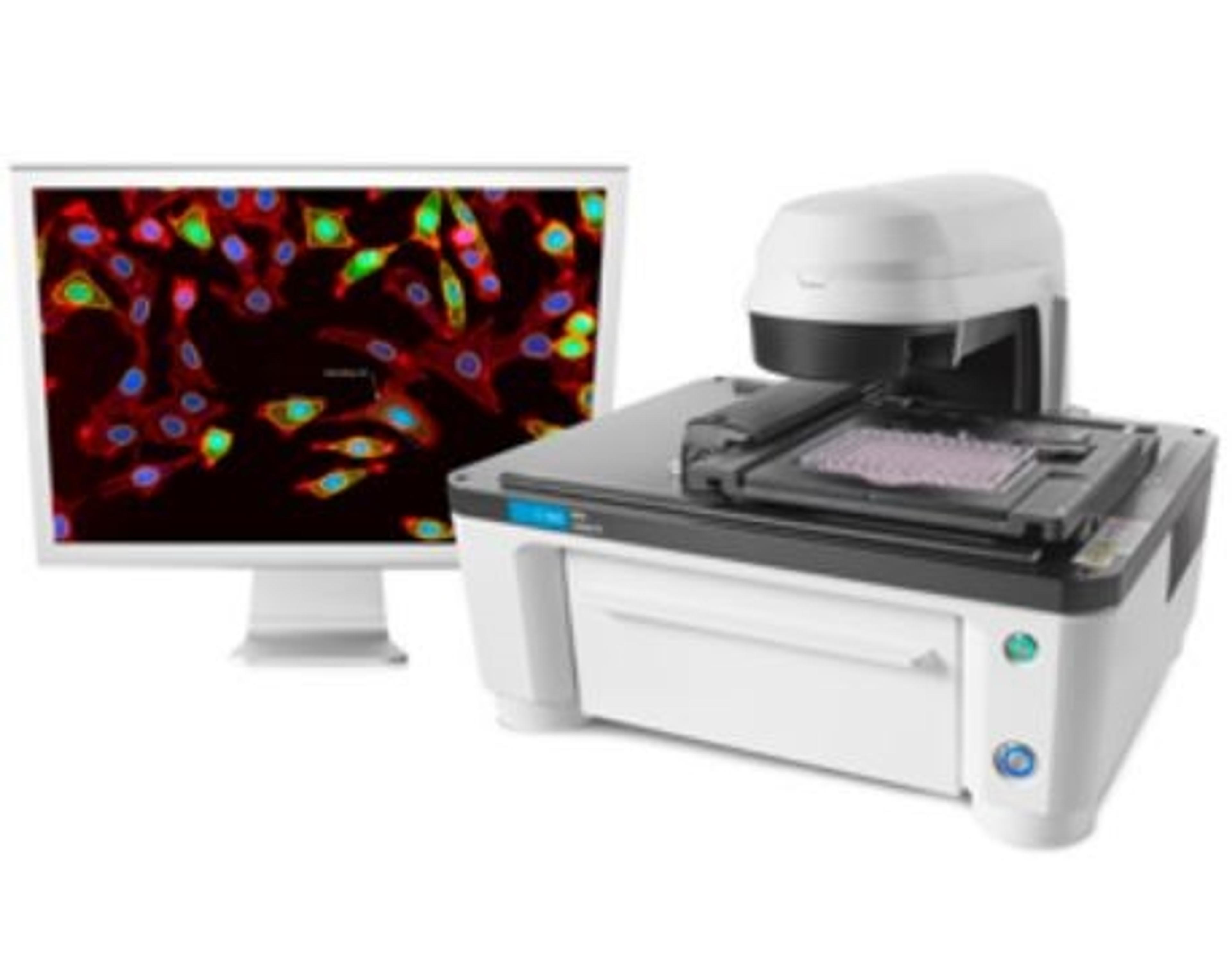
Biotek introduces a new cell count and viability starter kit

1 Apr 2020
Tom Casburn
Associate Editor

Product news

BioTek Instruments has introduced a new kit that can help researchers quickly obtain high-quality cell count results by automating the often tedious and errorprone process of mammalian cell counting.

The new Cell Count & Viability Starter Kit automates cell counting and viability measurements in a mammalian cell suspension. When used with BioTek’s Cytation™ Cell Imaging Multi-Mode Readers or Lionheart™ Automated Imagers in a workflow, researchers may quickly and automatically image and analyze cell counts in multiple samples.

The Starter Kit includes the Cell Count & Viability App with pre-defined protocols to automatically calculate cell count and % live/dead. The simple step-by-step interface makes multi-sample image capture and analysis fast and easy. Also included in the convenient kit are disposable counting slides, Trypan blue stain, and a holder for four slides, enabling processing of up to 8 samples per batch. A reusable glass counting slide with coverslips and corresponding holder are also available.

The new Cell Count & Viability Starter Kit expands BioTek’s portfolio of application-specific Kits and Apps that are easy to use, yet produce robust image and data capture along with powerful analysis tools for the highest quality results.

BioTek Instruments, Inc., a part of Agilent and headquartered in Winooski, VT, USA, is a worldwide leader in the design, manufacture, and distribution of innovative life science instrumentation. Their comprehensive product line includes cell imaging systems, microplate readers, washers, dispensers, automated incubators and stackers. These products enable life science research by providing high performance, cost-effective analysis and quantification of biomolecules, biomolecular interactions and cellular structure and function across diverse applications. BioTek espouses a "Think Possible" approach that sets the tone for fresh ideas, unsurpassed customer service and original innovations.

Do you use BioTek Instruments products in your lab? Write a review today for your chance to win a $400 Amazon Gift Card>>

Agilent BioTek Lionheart LX Automated Microscope

Agilent Technologies

The Agilent BioTek Lionheart LX automated microscope is designed for affordability, offering an alternative to expensive, custom-built automated microscopes that are complex to learn and use. The compact, ocular-free hardware design is more comfortable to use and reduces ergonomic distress in operators. Along with Gen5 software, Lionheart LX enables Augmented Microscopy, which fully automates image capture, processing, and analysis. Operation is easy, load samples, start a run, and gather publication-ready images and quantitative data. Lionheart LX can increase your research output and reduce time and costs.

(0)

Links

Tags

Cell / Tissue CultureCell culture or tissue culture is used to study the biology of cells or tissues and to isolate cellular products in an environment which can be manipulated and well defined. Accurately control your culture environment with bioreactors or culture incubators, bind your cells to a surface or together with an extracellular matrix. Distinguish cell types with differential media or proliferate cells with certain characteristics using selective media. Enrich your media with supplements such as growth factors, sera and vitamins. Find the best cell and tissue culture products, kits and equipment in our peer-reviewed product directory: compare products, check customer reviews and receive pricing direct from manufacturers.Microplate Readers / DetectorsMicroplate readers are used to automate the detection and analysis of labeled or label-free components in microplates during assays or live-cell monitoring. Microplate readers are generally distinguished by their mode of detection. Types include absorbance, luminescence, fluorescence intensity, fluorescence polarization, TRF / FRET and multimode microplate readers. Microplate readers deliver a high throughput of samples by reading multiple wells simultaneously, with the 96-well format the most commonly used. As a result, microplate readers are often used in the drug discovery, bioassays, research and pharmaceutical industries for screening applications. Microplate loading can also be automated, with robotic microplate stackers to increase throughput. Find the best microplate readers in our peer-reviewed product directory: compare products, check customer reviews and receive pricing direct from manufacturers.Flow Cytometry / Cell CountingFlow cytometers are used to count, sort and examine multiple characteristics of cells. Other cell analysis equipment includes image cytometers, cell counters, fluorescence-activated cell sorters (FACS), magnetic-activated cell sorters (MACS), and a range of flow cytometry assay kits. Flow cytometers can reveal information on cell viability, cell proliferation, apoptosis and cell cycle progression, as well as identify cell populations and intracellular or cell-surface molecules. Additionally, some flow cytometers, known as FACS, have an additional sorting function after analysis. Cell counters and image cytometers count live and dead cell populations and can also conduct cell proliferation assays. Find the best flow cytometers, cell counters and cell sorters in our peer-reviewed product directory: compare products, check customer reviews and receive pricing direct from manufacturers.Light MicroscopyLight microscopes or optical microscopes are used to visualize microscale objects under magnification, including cells, clinical specimens and materials. Lab equipment for light microscopy includes confocal microscopes, fluorescence microscopes, zoom and stereo microscopes. Microscope slides and imaging reagents are available for visualizing samples, as well as various microscope stages and incubators for large or temperature-sensitive samples. Find the best light microscopes in our peer-reviewed product directory: compare products, check customer reviews and receive pricing direct from manufacturers.Cell ViabilityCell viability assays assess the health of cells and their ability to proliferate. These tests are crucial in drug development, toxicity testing, and cell-based research. Common methods for assessing viability include MTT, live/dead assays, and flow cytometry. Browse our peer-reviewed product directory to find the best tools for cell viability assays, compare products, check reviews, and get pricing directly from manufacturers.Cell ImagingCell imaging can be achieved using a number of techniques including confocal microscopy, transmission electron microscopy, atomic force microscopy, and light sheet microscopy.Cell BiologyCell biology studies the structure, function, and behavior of cells. Understanding cellular processes is essential for research in areas such as cancer biology, stem cell research, and neurobiology. Techniques like flow cytometry, microscopy, and cell culture enable researchers to explore cellular mechanisms in detail. Browse our peer-reviewed product directory to find the best cell biology tools and equipment, compare products, check customer reviews, and get pricing directly from manufacturers.