BioAssay Works to Present Assay Development Services at AACC 2011

17 Jul 2011
bridget bridget
Laboratory Director

Product news

BioAssay Works is exhibiting at the 2011 AACC Annual Meeting in Atlanta, GA. Come visit them at Booth 4020. Also, an OEM Lecture presentation on the BAW patented ultra-sensitive lateral-flow assay platform will take place in room B404 on Tuesday, July 26 at 10:00 AM.

BioAssay Works will present the four core technologies that they use to develop high-sensitivity, rapid-format, lateral-flow assays for clients. These technologies include:

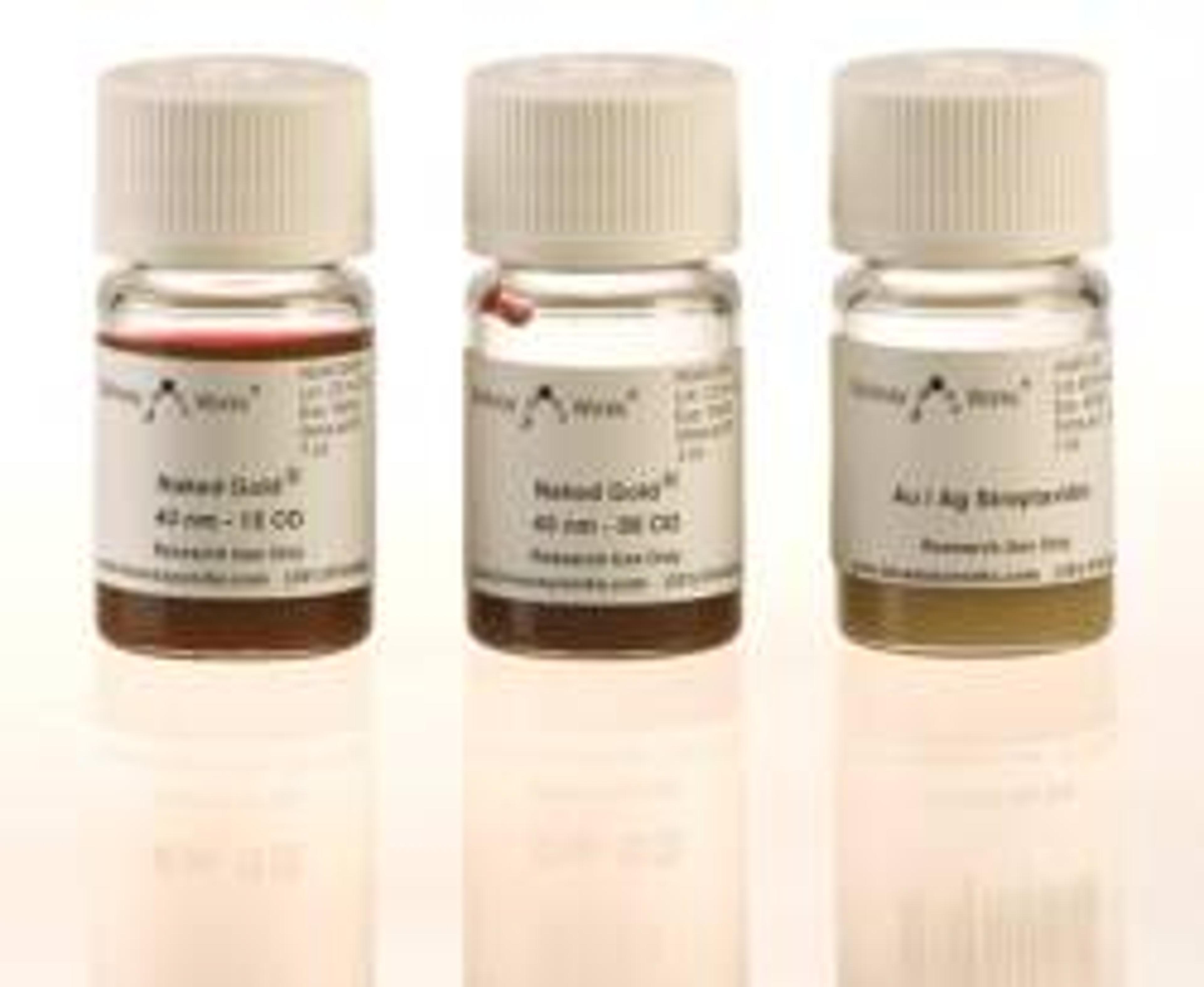
1) A unique, high–OD, concentrated gold- sol that is the foundation for their ultra-sensitive assay development;

2) Optimized conjugation techniques that allow conjugation of the most demanding ligands to nanoparticles;

3) A conjugate ribbon-pad process that enhances the release of the conjugate for more complete mixing with the assay sample; and

4) Patented C-FLAT lateral-flow assay platforms that further enhance sensitivity.

Specifically, BioAssay Works offers:

1) Gold sols and gold conjugates, manufactured in a proprietary process that produces 10- nm to 120-nm nanoparticles at 10-OD to 100-OD, optimized for rapid assays without the traditional boiling and centrifugation-concentration steps. Nor do conjugates made with BioAssay Works’ gold have to be centrifuged to remove free antibody. The elimination of these steps improves gold-sol consistency, reduces assay-development problems, and saves time and cost. These cost savings carry over to scaled up conjugate-production volumes. The proprietary manfuacturing process also reduces problems of unwanted polymers and aggregates and optimizes rapid-assay performance.

2) Custom-conjugation services where BioAssay Works applies its experience to conjugate your ligand to to their novel gold sols to speed assay R & D.

3) Assay development services using BioAssay Works’ technical innovations to save development time and money.

4) Gold-in-a-Box™ research kit—gold-conjugation kit to speed gold-sol research. With the unique kit, you can prepare a gold conjugate in less than one hour without the need to boil gold or centrifuge conjugate.

Links

Tags

AntibodiesAntibodies are used in techniques such as confocal and fluorescence microscopy, flow cytometry, ELISA, ELISPOT, immunohistochemistry, western blotting and immunopreciptation. Select specific antigen reactivity, high specific affinity, low non-specific binding, monoclonal or polyclonal, primary or secondary antibodies and associated conjugates such as an enzyme or dye for visualization.Western BlottingWestern blotting equipment is used to transfer and identify specific proteins within a sample, reveal protein modifications, as well as give a semi-quantitative estimation of their concentration. Western blotting equipment includes all apparatus necessary to transfer proteins from gel to membrane and subsequent processing steps. Protein transfer can be performed by electroblotting with wet, semi-dry and dry transfer systems onto nitrocellulose and PVDF membranes. Blocking, washing and labeling of membranes follows, involving buffers, blocking reagents, blotting / incubation trays, labeling reagents, immunoblotting assays, antibodies and conjugates. Automated equipment for these steps is available to accelerate your lab workflow. Finally, detection and imaging of proteins can be conducted using gel documentation and imaging systems. Find the best western blotting equipment in our peer-reviewed product directory: compare products, check customer reviews and receive pricing direct from manufacturers.Cell / Tissue CultureCell culture or tissue culture is used to study the biology of cells or tissues and to isolate cellular products in an environment which can be manipulated and well defined. Accurately control your culture environment with bioreactors or culture incubators, bind your cells to a surface or together with an extracellular matrix. Distinguish cell types with differential media or proliferate cells with certain characteristics using selective media. Enrich your media with supplements such as growth factors, sera and vitamins. Find the best cell and tissue culture products, kits and equipment in our peer-reviewed product directory: compare products, check customer reviews and receive pricing direct from manufacturers.Genome AnalysisGenomics, the study of genomes, includes functional genomics, evolutionary genomics and comparative genomics. There are many genomic technologies such as DNA sequencing of whole genomes, computational biology and bioinformatics. DNA and nucleic acids must be isolated and concentrated from cells for analysis with kits, automated analyzers and software. Other useful technologies for studying genomics include PCR, microarrays and electrophoresis.ProteomicsProteomics is the systemic bioinformatics study of proteins and amino acids, including their structure, size, function and identification. Tools used in proteomics include chromatography, blotting and gels, protein arrays, mass spectrometry and ELISA and associated analysis software. Analyzers and proteomic systems should be sensitive, high resolution, fast and may be automated for high-throughput.High-Throughput ScreeningHigh-throughput screening (HTS) is an automated drug discovery technique for identification of active compounds against a compound library. Use HTS readers and integrated assay preparation / analysis workstations to screen your compounds. Identify active compounds against various HTS libraries, including membranes, proteins and peptides and HTS cell lines. Find the best high-throughput screening products in our peer-reviewed product directory: compare products, check customer reviews and receive pricing direct from manufacturers.Cell Lines Stem Cells and Primary CellsPrimary cell cultures, established cell lines and stem cells are vital for <i>in vitro</i> and <i>ex vivo</i> experimentation. High-quality cells, optimized for your applications, alongside optimized cell substrates, growth medium and supplements, are critical for experimental success. Explore a range of cells suitable for your applications, including isogenic cell lines, competent cells, induced pluripotent stem cell (iPSC)-derived cell lines, fungal/bacterial/mammalian cell lines, stem cells and cancer cell lines. Find the best cells for your research in our peer-reviewed product directory: compare products, check customer reviews and receive pricing direct from manufacturers.Gel Doc / Image AnalysisGel documentation (gel doc) or gel imaging systems are used for the analysis of proteins, antibodies and nucleic acid immobilized in polyacrylamide or agarose gels, membranes or microarrays. Explore a range of a gel imaging systems, densitometers, scanners, transilluminators or UV lamp + CCD cameras for your image analysis solutions. Colorimetric, fluorescent and/or radioisotopic samples can be visualized and documented for further analysis. See gel doc / Image analysis software for quantitative 1D and 2D analysis of your samples. Find the best gel doc / image analysis products in our peer-reviewed product directory: compare products, check customer reviews and receive pricing direct from manufacturers.ADME-ToxicologyADME-toxicology (ADME-Tox) studies are used in pharmacology and pharmacokinetics to assess the activity/toxicity of drugs <i>in vivo</i> or <i>in vitro</i>. Find bioassays for absorption, distribution, metabolism, and excretion of drug molecules including cytotoxicity, transporter/permeability, metabolism and activity assays as well as hepatocytes and cell lines for ADME. Find the best ADME-toxicology products in our peer-reviewed product directory: compare products, check customer reviews and receive pricing direct from manufacturers.Assay AssemblyAssay Assembly is technique used in drug discovery to develop assays to test the cytotoxicity, genotoxicity, or other activities of a compound on a cell. Assay assembly requires chip assembly, a delivery system and a detection and analysis method. Beneficial features of assay kits or automated systems include high-throughput, high speed and sensitivity and low signal to noise ratio.Medicinal ChemistryMedicinal chemistry is a broad discipline encompassing the design, identification, synthesis and development of chemicals in drug discovery. It includes a number of techniques covering structural biology, synthetic chemistry and molecular biology. Technologies used in medicinal chemistry include ADME, lab-on-a-chip, high content screening and assay assembly.Microarray AnalysisMicroarrays, also known as biochips, are used for the detection and analysis of multiple genes, proteins, antibodies, or biomarkers on a single microchip. This can reveal information on protein or gene expression, single nucleotide polymorphism (SNP), copy number variation (CNV), epigenetics and patient health in clinical diagnostic tests. Discover a range of microarray scanners and prefabricated antibody, protein, RNA and DNA microarrays for your analysis or consider creating your own custom microarrays with a microarray printer. Find the best microarray products in our peer-reviewed product directory: compare products, check customer reviews and receive pricing direct from manufacturers.Process ChemistryProcess chemistry is an important stage of drug development for scaling-up drug production or chemical synthesis reactions. It is useful for optimizing economical and efficient drug production. Process chemistry uses reactors and pump systems as well as reagents, standards and buffers.Cell-Based AssaysCell-based assays are used to monitor the presence, quantity and activities of a desired cellular analyte including drug molecules or biomarkers. This can reveal information on cell health (apoptosis, cytotoxicity, viability and proliferation assays), cell metabolism, cell migration and cell signaling mechanisms. Find the best cell-based assay products, kits and equipment with our peer reviewed product directory: compare products, check customer reviews and receiving pricing direct from manufacturers.High-Content ScreeningHigh-content screening (HCS), also known as high-content analysis (HCA), is a high-throughput technique used in drug discovery to identify substances that alter the phenotype of cells. HCS uses fluorescent microscopic imaging and automated image analysis to investigate cellular events such as apoptosis, cell viability, GPCR activation, oxide production, neurite outgrowth, and cell signaling. Find the best fluorescent labeling reagents, cellular assays, and high-content imaging systems in our peer-reviewed product directory: compare products, check customer reviews and receive pricing direct from manufacturers.