Bio-Rad to Showcase New Products and Developments at ILMAC 2013

15 Aug 2013

Sarah Thomas
Associate Editor

Product news

Join Bio-Rad at booth B42 (Hall 1.2) during the ILMAC exhibition between the 24-27th September to learn about new products and workflow solutions. Booth highlights include:

S3™ Cell Sorter - The first truly walk-up automated cell sorter available to scientists. Expertly engineered with revolutionary precision and automated setup, the S3 cell sorter is a benchtop cell sorter equipped with one or two lasers and up to four fluorescence detectors plus forward and side scatter (FSC and SSC). Small in footprint, the S3 cell sorter brings affordable, dependable, and simplified cell sorting to every researcher.

NGC™ Medium-Pressure Chromatography Systems – A laboratory chromatography solution that aligns and scales to fit your purification, automation and throughput requirements. The plug-and-play systems are fully customizable and offer a truly modular platform. Powered by instinctive ChromLab™ software for simple instrument control and method development, coupled with intuitive data analysis.

QX100™ Droplet Digital™ PCR System – The next generation of quantitative PCR technology for an absolute measure of target DNA molecules with unrivalled performance in precision, accuracy and sensitivity. This technology is being utilized in a number of applications including copy number variation, rare mutation detection and gene expression analysis.

Learn about these technologies and more at the Bio-Rad booth (B42) during ILMAC and also pick up your free sample of Clarity™ western ECL substrate.


Before you visit ILMAC though, why don’t you click here to take a preview tour around the Bio-Rad ILMAC booth?

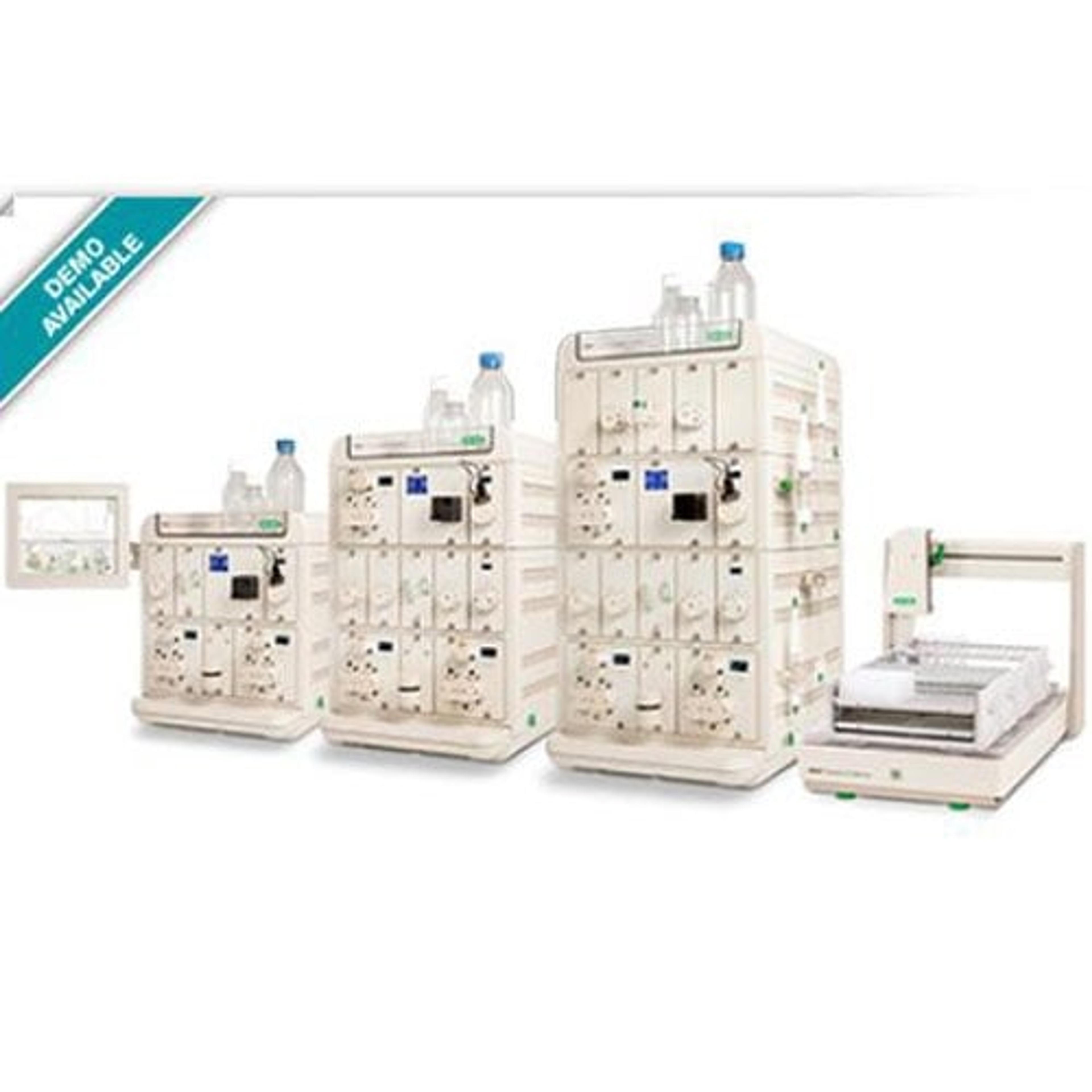
NGC 10 Medium-Pressure Chromatography Systems

Bio-Rad

Preconfigured NGC 10 Chromatography Systems meet a range of throughput and application needs. Each system can be easily upgraded. All configurations share a common software platform. For analytical and preparative chromatography.

(3)

Links

Tags

UHPLC and HPLCHigh performance liquid chromatography (HPLC) and ultra high performance liquid chromatography (UHPLC), also known as UPLC, are analytical techniques used to separate, identify and quantitate components of complex mixtures including biological samples such as proteins and lipids as well as chemical mixtures of pesticides, drugs and oils. Both techniques are liquid chromatographic methods but differ by operating pressures (HPLC < 6000 psi < UHPLC ). Components of HPLC and UHPLC systems include columns, detectors, pumps, autosamplers and column heaters. Explore a range of UHPLC and HPLC columns for your specific sample needs including reverse phase, normal phase, ion exchange, HILIC, ion exclusion and size exclusion columns. For more specialized HPLC, explore FPLC, countercurrent LC and simulated moving bed systems. Find the best UHPLC and HPLC equipment in our peer reviewed product directory: compare products, check customer reviews and receive pricing direct from manufacturers.PCR and Thermal CyclingPolymerase chain reaction (PCR) kits and thermal cyclers are used for the in vitro amplification of DNA permitting subsequent analysis and experimental procedures. Explore a range of high-quality polymerase, primers and nucleotides or simplify your workflow with a PCR mastermix. Find reverse transcription PCR (RT-PCR) and cDNA synthesis kits for RNA products and libraries. Quantitatively measure the amplification of DNA with real-time PCR (qPCR) and droplet digital PCR (ddPCR) kits and systems, and discover automated PCR setup solutions to increase throughput. Alternative DNA amplification methods also include recombinase polymerase amplification (RPA) kits. Find the best PCR kits and thermal cyclers and purification equipment in our peer-reviewed product directory: compare products, check customer reviews and receive pricing direct from manufacturers.Flow Cytometry / Cell CountingFlow cytometers are used to count, sort and examine multiple characteristics of cells. Other cell analysis equipment includes image cytometers, cell counters, fluorescence-activated cell sorters (FACS), magnetic-activated cell sorters (MACS), and a range of flow cytometry assay kits. Flow cytometers can reveal information on cell viability, cell proliferation, apoptosis and cell cycle progression, as well as identify cell populations and intracellular or cell-surface molecules. Additionally, some flow cytometers, known as FACS, have an additional sorting function after analysis. Cell counters and image cytometers count live and dead cell populations and can also conduct cell proliferation assays. Find the best flow cytometers, cell counters and cell sorters in our peer-reviewed product directory: compare products, check customer reviews and receive pricing direct from manufacturers.Gene Expression and Molecular CloningMolecular cloning is a set of techniques that utilizes vectors to transfer recombinant DNA into host cells and is an essential tool for investigating the expression of genes and proteins in bacterial or mammalian cells. A variety of vectors optimized for gene cloning and expression in a range of host organisms are available, alongside competent cells for genetic replication. Here, you can explore a range of molecular tools, high-quality genomic and cDNA libraries, premade clones, transformation and transfection reagents and mutagenesis or gene expression detection assays and expression arrays. Find the best gene expression and molecular cloning products in our peer-reviewed product directory: compare products, check customer reviews and receive pricing direct from manufacturers.FluorescenceThe emission of fluorescence occurs when a photon of energy is supplied to a fluorescent chemical compound by an external source, causing it to become excited. Fluorescence can be detected and measured for different purposes using microplate readers, fluorescence microscopes, fluorescence scanners, and flow cytometers.Cell AnalysisThe analysis of cells allows researchers to understand the factors which contribute to cell health and function. These influencing processes can then be predicted and altered, leading to the development of medication and disease treatments.DNA AmplificationDNA Amplification is a technique used to amplify a single or multiple copies of DNA or mRNA by orders of magnitude. The most common method employed is PCR, but other options exist that eliminate the need for thermocycling.