Bio-Rad’s New Workflow Enables Highly Sensitive Evaluation of Antibodies Used to Measure HCP Impurities in Biotherapeutics

28 Jan 2016

Product news

Bio-Rad Laboratories, Inc. today announced the launch of a new simplified and robust workflow to more effectively evaluate antibodies used for measuring residual host cell protein (HCP) impurities in biotherapeutics. The two-dimensional electrophoresis (2-DE)- and western blotting (WB)-based workflow will be unveiled during the Well Characterized Biotechnology Pharmaceutical (WCBP) Symposium in Washington, D.C. January 29–31.

Regulatory agencies worldwide including the U.S. Food and Drug Administration (FDA) require that residual HCP impurities in biotherapeutics remain below levels detectable using a highly sensitive analytical method (PTC 1997). Failure to meet this requirement puts patients at risk, an issue recently documented by a biopharmaceutical company forced to put a clinical trial on hold when patients developed a positive response to its product’s HCP.

“It can take a company several months and tens of thousands of dollars to develop an adequately immunospecific host cell protein reagent, so there is a lot time and money riding on the validity of that reagent,” said Nadine Ritter, senior CMC consultant at the Biologics Consulting Group.

The most widely used quality control method for determining the presence of HCPs is the ELISA, a test that uses a polyclonal anti-HCP antibody mixture raised against HCPs. To ensure the accuracy of HCP ELISA results, ICH Q6B guidelines state that polyclonal antibodies must be “capable of detecting a wide range of protein impurities.” The standard workflow for evaluating this range — defined as the percentage of HCPs that are detectable by polyclonal antibodies — involves 2-DE separation of host cell protein preparations, then transfer of the proteins from the gel to a solid support membrane, followed by western blotting with the polyclonal anti-HCP antibodies.

Although this workflow is widely used, several key issues remain, including time-intensive optimization of the components of 2-DE separation (IEF and SDS-PAGE) and variable protein transfer efficiencies. These issues reduce the overall reliability of 2-DE and western blotting results and thus lower confidence in the evaluation of anti-HCP antibodies. By integrating unique instruments and consumables into a workflow solution for addressing these issues, Bio-Rad offers highly confident evaluation of the range of protein impurities detectable by anti-HCP antibodies.

Results Presented at WCBP Demonstrate Workflow’s Effectiveness
Bio-Rad researchers will present results at WCBP that demonstrate the effectiveness of their 2-DE/WB-based workflow for evaluating polyclonal anti-HCP antisera. Bio-Rad senior staff scientist Tom Berkelman and his colleagues generated optimized host cell protein separations via 2-DE and integrated them with rapid semi-dry blotting, fluorescent protein staining, and western blotting to confidently evaluate the antisera within two days.

“Bio-Rad’s 2-DE/WB-based technique allows the detection of HCP impurities often unseen in one-dimensional electrophoresis,” said Karin Abarca Heidemann, PhD, R&D director at antibody development firm, Rockland Immunochemicals, Inc. “This is a significant benefit in the development of our HCP antibodies, as two-dimensional electrophoresis delivers improved insights into the quality and immunocoverage of antibodies against host cell contamination. Rockland is collaborating successfully with Bio-Rad on developing an improved standardized immunoassay for HCP detection using its 2-DE/WB workflow, the result of which will be presented during the WCBP Symposium.”

Bio-Rad’s New Workflow
Bio-Rad’s HCP antibody evaluation workflow consists of the following steps and takes two days to complete:

1. Separate proteins based on isoelectric point (pI) in IPG strips using the PROTEAN® i12™ IEF system (the first dimension of 2-DE). The individual lane control feature — unique to the PROTEAN i12 system — enables fast optimization of isoelectric focusing (IEF) conditions and easy application of different optimized conditions for highly reproducible, simultaneous IEF of multiple samples.

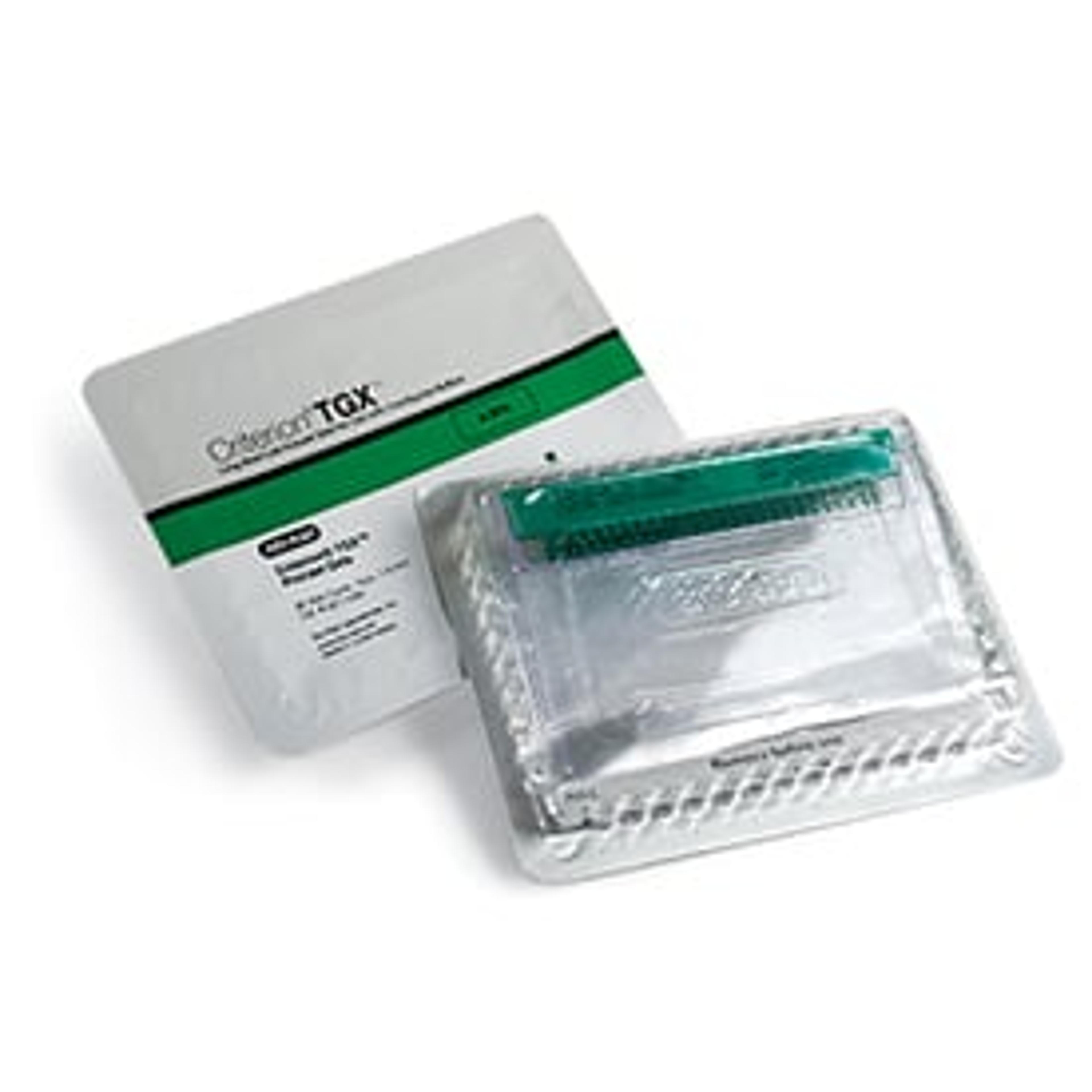
2. Separate proteins based on molecular weight (MW) by SDS-PAGE on TGX™ precast gels (the second dimension of 2-DE). The unique chemistry of Bio-Rad’s TGX gels enables fast electrophoresis times (less than 30 minutes) and highly efficient protein transfer.

3. Process the gel with the Trans-Blot® Turbo™ system to transfer the 2-DE separated proteins to a nitrocellulose or PVDF membrane in less than 10 minutes. The unique combination of TGX precast gels and the Trans-Blot Turbo system enables highly efficient and reproducible transfer of proteins across a broad pI/MW range, which is essential for confidence in 2-DE/WB results.

4. Perform fluorescent protein staining with SYPRO Ruby (to confirm the efficiency of protein transfer) and western blotting using polyclonal anti-HCP antibodies on a nitrocellulose or PVDF membrane.

5. Image using the ChemiDoc™ MP imager and analyze with PDQuest™ software to determine the percentage of matching spots between those detected by membrane-bound protein staining and those visualized by immunodetection.

“Bio-Rad’s solution provides a more sensitive means to confirm the effective transfer of all proteins from the gel to the membrane, which is a crucial step in this study,” Ritter said. “If you see a low degree of immunoreaction on the blot, you won’t know if it is due to limited coverage of the antibodies or the absence of immobilized protein. Bio-Rad’s system assures that the proteins will be present on the blot.”

Links

Tags

ElectrophoresisElectrophoresis equipment is used to separate mixtures of protein, DNA or RNA, based on their electric charge, size and other physical characteristics, by passing them through a medium such as a polyacrylamide gel, an agarose gel or a capillary tube. Electrophoresis equipment includes horizontal and vertical gel electrophoresis chambers, isoelectric focusing systems, 2D electrophoresis and capillary electrophoresis instruments. Precast gels with a gradient can be used or gels can be hand cast. Samples are run alongside ladders or markers to identify the approximate size of a molecule. Separated proteins and nucleic acids in the gel can be stained or probed with fluorescent markers and then imaged and detected using gel documentation instruments, transilluminators, densitometers and scanners. Find the best electrophoresis equipment in our peer-reviewed product directory: compare products, check customer reviews and receive pricing direct from manufacturers.AntibodiesAntibodies are used in techniques such as confocal and fluorescence microscopy, flow cytometry, ELISA, ELISPOT, immunohistochemistry, western blotting and immunopreciptation. Select specific antigen reactivity, high specific affinity, low non-specific binding, monoclonal or polyclonal, primary or secondary antibodies and associated conjugates such as an enzyme or dye for visualization.Western BlottingWestern blotting equipment is used to transfer and identify specific proteins within a sample, reveal protein modifications, as well as give a semi-quantitative estimation of their concentration. Western blotting equipment includes all apparatus necessary to transfer proteins from gel to membrane and subsequent processing steps. Protein transfer can be performed by electroblotting with wet, semi-dry and dry transfer systems onto nitrocellulose and PVDF membranes. Blocking, washing and labeling of membranes follows, involving buffers, blocking reagents, blotting / incubation trays, labeling reagents, immunoblotting assays, antibodies and conjugates. Automated equipment for these steps is available to accelerate your lab workflow. Finally, detection and imaging of proteins can be conducted using gel documentation and imaging systems. Find the best western blotting equipment in our peer-reviewed product directory: compare products, check customer reviews and receive pricing direct from manufacturers.ProteomicsProteomics is the systemic bioinformatics study of proteins and amino acids, including their structure, size, function and identification. Tools used in proteomics include chromatography, blotting and gels, protein arrays, mass spectrometry and ELISA and associated analysis software. Analyzers and proteomic systems should be sensitive, high resolution, fast and may be automated for high-throughput.Gel Doc / Image AnalysisGel documentation (gel doc) or gel imaging systems are used for the analysis of proteins, antibodies and nucleic acid immobilized in polyacrylamide or agarose gels, membranes or microarrays. Explore a range of a gel imaging systems, densitometers, scanners, transilluminators or UV lamp + CCD cameras for your image analysis solutions. Colorimetric, fluorescent and/or radioisotopic samples can be visualized and documented for further analysis. See gel doc / Image analysis software for quantitative 1D and 2D analysis of your samples. Find the best gel doc / image analysis products in our peer-reviewed product directory: compare products, check customer reviews and receive pricing direct from manufacturers.Protein PurificationProtein purification is a vital step in drug discovery, therapeutics, biotech and life science research. The purification process typically involves subcellular or membrane protein extraction with cell lysis kits, separation of proteins from cell debris by filtration or spin columns, and the isolation of proteins of interest from other proteins and impurities with affinity purification (including fusion protein tags and antibody binding proteins A, G and L), immunoprecipitation or chromatographic methods, such as ion exchange, size exclusion and immobilized metal affinity chromatography. All purification methods come in multiple formats for your laboratory needs, including agarose or magnetic beads, resins, columns and filter plates. Find the best protein purification equipment in our peer-reviewed product directory: compare products, check customer reviews and receive pricing direct from manufacturers.Gene Expression and Molecular CloningMolecular cloning is a set of techniques that utilizes vectors to transfer recombinant DNA into host cells and is an essential tool for investigating the expression of genes and proteins in bacterial or mammalian cells. A variety of vectors optimized for gene cloning and expression in a range of host organisms are available, alongside competent cells for genetic replication. Here, you can explore a range of molecular tools, high-quality genomic and cDNA libraries, premade clones, transformation and transfection reagents and mutagenesis or gene expression detection assays and expression arrays. Find the best gene expression and molecular cloning products in our peer-reviewed product directory: compare products, check customer reviews and receive pricing direct from manufacturers.ImmunoassayImmunoassays are laboratory tests that utilize antibody-antigen interactions to detect specific substances. They are widely used in diagnostics for detecting diseases, drug testing, and environmental monitoring. These assays offer rapid, sensitive, and precise detection of biomarkers, making them invaluable in clinical and research labs. Browse our peer-reviewed product directory to compare immunoassay systems, read user reviews, and get pricing directly from manufacturers.Fluorescence Based AssayFluorescence based assays are widely used in life science research and high-throughput screening to measure a broad range of cellular activities.Protein TransferBiopharmaceuticalsBiopharmaceuticals are proteins and other compounds (such as nucleic acids) produced by living organisms that have uses as therapeutics or for in vivo diagnostics. The most well known example of a biopharmaceutical product, and the first to be approved for therapeutic use, was recombinant human insulin.BiotherapeuticsBiotherapeutics are proteins and other compounds (such as nucleic acids) produced by living organisms that have uses as therapeutics or in <i>in vivo</i> diagnostics. The most well-known example of a biotherapeutic product, and the first to be approved for therapeutic use, was recombinant human insulin.TherapeuticsTherapeutics are treatments designed to alleviate or cure diseases. These include pharmaceuticals, biologics, and gene therapies, which work by targeting specific disease mechanisms. Advances in personalized medicine and biologics offer new hope for patients with conditions that were previously difficult to treat. Browse our peer-reviewed product directory to find therapeutic solutions for various diseases; compare products, check user reviews, and get pricing directly from manufacturers.BlottingProtein BiologyThe analysis of protein expression, identity and function is vital for many areas of life science research and drug discovery. Some of the most commonly used techniques in protein analysis include Western blotting, electrophoresis and mass spectrometry.