Bio-Rad launches benchtop GelDoc Go Imaging System for nucleic acid and protein gel documentation

The latest imaging system promises high-resolution, sensitivity and reliability in a compact system

18 May 2020

Diane Li
Assistant Editor

Product news

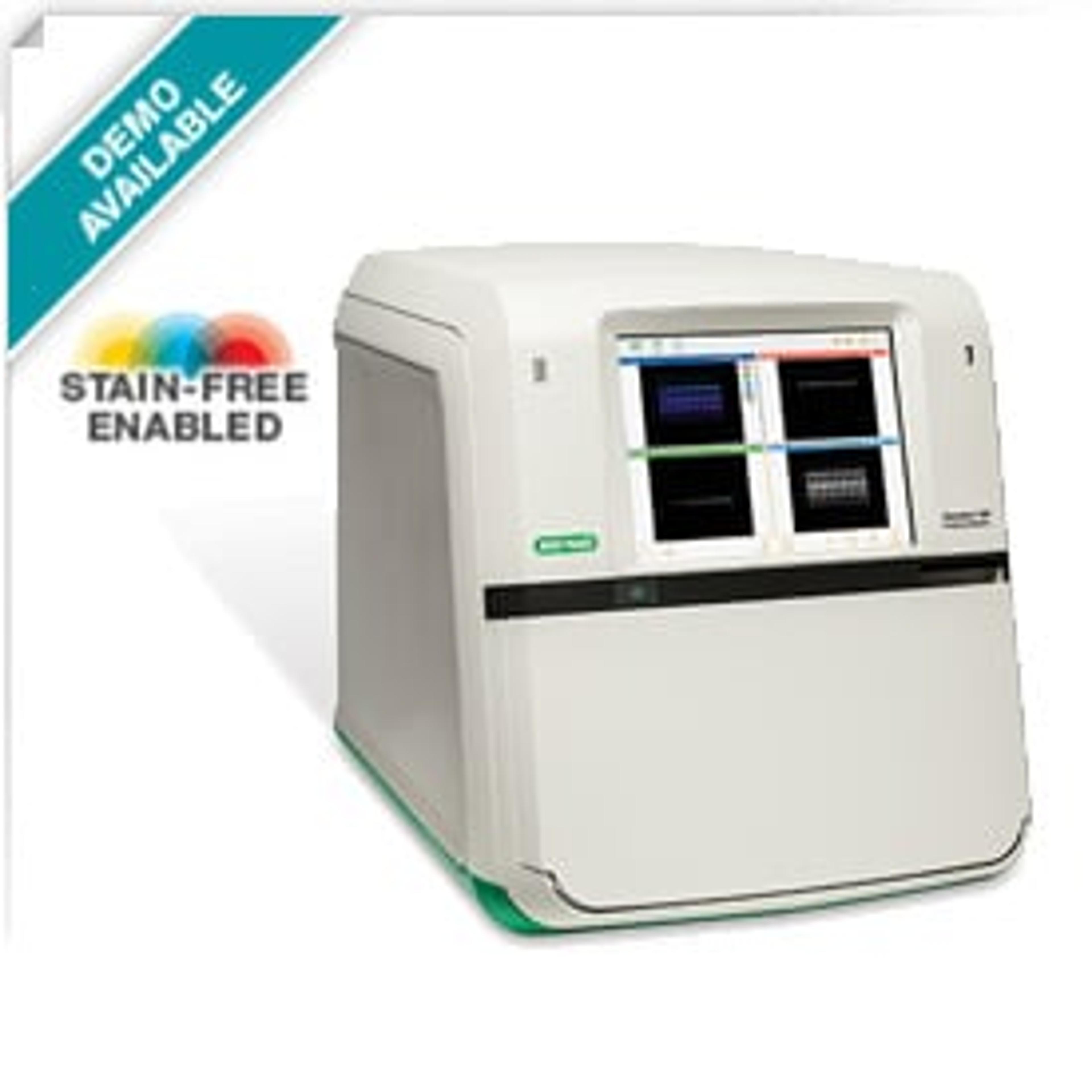
Bio-Rad Laboratories, Inc., a global leader of life science research and clinical diagnostic products, has announced the launch of its GelDoc Go Imaging System, a personal benchtop system for the documentation of nucleic acid and protein gels, Stain-Free blots and gels, and colorimetric blots.

The GelDoc Go Imaging System is the latest imaging system from the company’s GelDoc product line, offering sensitivity, performance, and reliability in a compact system. Its easy-to-use and intuitive software provides researchers a way generate images with just a few screen touches, saving time and providing results quickly.

"The GelDoc Go System is an easy-to-use and compact solution for gel documentation," said Paul Liu, Bio-Rad Product Manager, Western Blotting. "Using the system, researchers can generate publication-ready images quickly and reliably, and the system is backed by Bio-Rad’s service and support."

Key Benefits of the GelDoc Go Imaging System

  • Capture high resolution and publication-quality images at your bench
  • Easy-to-use and intuitive software allows users to generate images with just a few screen touches, saving time and providing results quickly
  • Offers intuitive software and user interface
  • Flexible imaging options include: full nucleic acid gels, protein gels, Stain-Free gels, or colorimetric blots
  • Pinch and zoom functionality help capture and print key areas of interest
  • Compact footprint conserves bench space
  • Users can image up to four mini-sized gels simultaneously with the system's large imaging area
  • IQ/OQ tools and software offer easy management of user accounts and permissions

Do you use Bio-Rad products in your lab? Write a review today for your chance to win a $400 Amazon Gift Card>>

Links

Tags

Gel Doc / Image AnalysisGel documentation (gel doc) or gel imaging systems are used for the analysis of proteins, antibodies and nucleic acid immobilized in polyacrylamide or agarose gels, membranes or microarrays. Explore a range of a gel imaging systems, densitometers, scanners, transilluminators or UV lamp + CCD cameras for your image analysis solutions. Colorimetric, fluorescent and/or radioisotopic samples can be visualized and documented for further analysis. See gel doc / Image analysis software for quantitative 1D and 2D analysis of your samples. Find the best gel doc / image analysis products in our peer-reviewed product directory: compare products, check customer reviews and receive pricing direct from manufacturers.Protein PurificationProtein purification is a vital step in drug discovery, therapeutics, biotech and life science research. The purification process typically involves subcellular or membrane protein extraction with cell lysis kits, separation of proteins from cell debris by filtration or spin columns, and the isolation of proteins of interest from other proteins and impurities with affinity purification (including fusion protein tags and antibody binding proteins A, G and L), immunoprecipitation or chromatographic methods, such as ion exchange, size exclusion and immobilized metal affinity chromatography. All purification methods come in multiple formats for your laboratory needs, including agarose or magnetic beads, resins, columns and filter plates. Find the best protein purification equipment in our peer-reviewed product directory: compare products, check customer reviews and receive pricing direct from manufacturers.Protein QuantificationThe detection and quantification of proteins in a sample is vital across life sciences, pharmaceutical research and clinical diagnostics, and a variety of equipment is available to scientists to simplify the workflow. Proteins of interest can be easily labeled and detected on light-based detection instruments. Immunoassay kits allow you to identify a specific protein of interest and protein detection beads or antibody microarrays allow you to identify multiple specific proteins at once. Protein interactions and enzyme activity can also be monitored with protein-protein interaction assays. Additionally, the biophysical characterization of proteins is made easy with biokinetic analyzers. Find the best protein detection and quantification products in our peer-reviewed product directory: compare products, check customer reviews and receive pricing direct from manufacturers.Protein ExpressionProtein expression is the utilization of cell machinery for the synthesis of proteins and has become a critical tool in biotherapeutic, genomic, and proteomic research. Produce recombinant proteins with expression vectors in combination with a host cell suitable for high-level protein expression. For production of toxic proteins, consider cell-free expression vectors. Create and monitor post-translational modifications with protein modification kits. Find the best protein expression products in our peer-reviewed product directory: compare products, check customer reviews and receive pricing direct from manufacturers.Gel ImagingGel imaging captures high-resolution images of electrophoresis gels to analyze DNA, RNA, and proteins. Essential in molecular biology, this technique helps visualize results for accurate quantification and documentation. Discover top imaging systems and compare user-reviewed options in our directory.ImagingImaging techniques are essential for obtaining visual representations of samples to understand structures, processes, and function in biological, chemical, and physical research. These tools range from traditional light microscopy to advanced imaging modalities like MRI and electron microscopy, providing researchers with valuable data for diagnostics, drug discovery, and material analysis. Explore imaging solutions in our peer-reviewed product directory to compare products, check reviews, and get pricing directly from manufacturers.BlottingProtein BiologyThe analysis of protein expression, identity and function is vital for many areas of life science research and drug discovery. Some of the most commonly used techniques in protein analysis include Western blotting, electrophoresis and mass spectrometry.
Bio-Rad launches benchtop GelDoc Go Imaging System for nucleic acid and protein gel documentation