
Bio-Rad launches anti-pertuzumab antibodies
31 Jan 2022
Product news
Bio-Rad Laboratories, Inc. has introduced four inhibitory antibodies that are highly specific to pertuzumab (Perjeta). These ready-made antibodies inhibit the binding of the drug to its target, human epidermal growth factor 2 (HER2), enabling researchers to develop highly selective and sensitive assays for bioanalysis and drug monitoring of pertuzumab and its biosimilars.
Pertuzumab is a targeted cancer drug that binds to the HER2 protein, which is overexpressed in HER2-positive cancers, preventing cell growth and proliferation. The new range of anti-pertuzumab antibodies includes monovalent Fab format antibodies suitable for the development of a pharmacokinetic bridging ELISA to measure free drug, as well as fully human IgG1 antibodies with varying levels of affinity, which can be used as a surrogate positive control or reference standard in an anti-drug antibody assay.
“We’re continuously introducing new ranges of recombinant, monoclonal anti-idiotypic antibodies to support researchers in developing robust methods that deliver reproducible and translatable results,” said Amanda Turner, Bio-Rad Product Manager, Life Science Group. “These sequence-defined reagents are well-characterized and non-animal-derived to ensure batch-to batch consistency and help reduce the use of animals in scientific research,” she said.
The antibodies are generated using the Human Combinatorial Antibody Libraries (HuCAL®) and CysDisplay®, a proprietary method of phage display, along with guided selection methods to obtain highly targeted reagents. The recombinant production method ensures a consistent and secure supply.
The anti-pertuzumab antibodies are approved for in vitro research purposes and for commercial services providing in vitro testing to support preclinical and clinical drug development.
Want the latest science news straight to your inbox? Become a SelectScience member for free today>>
Related products
Request Quote for All Products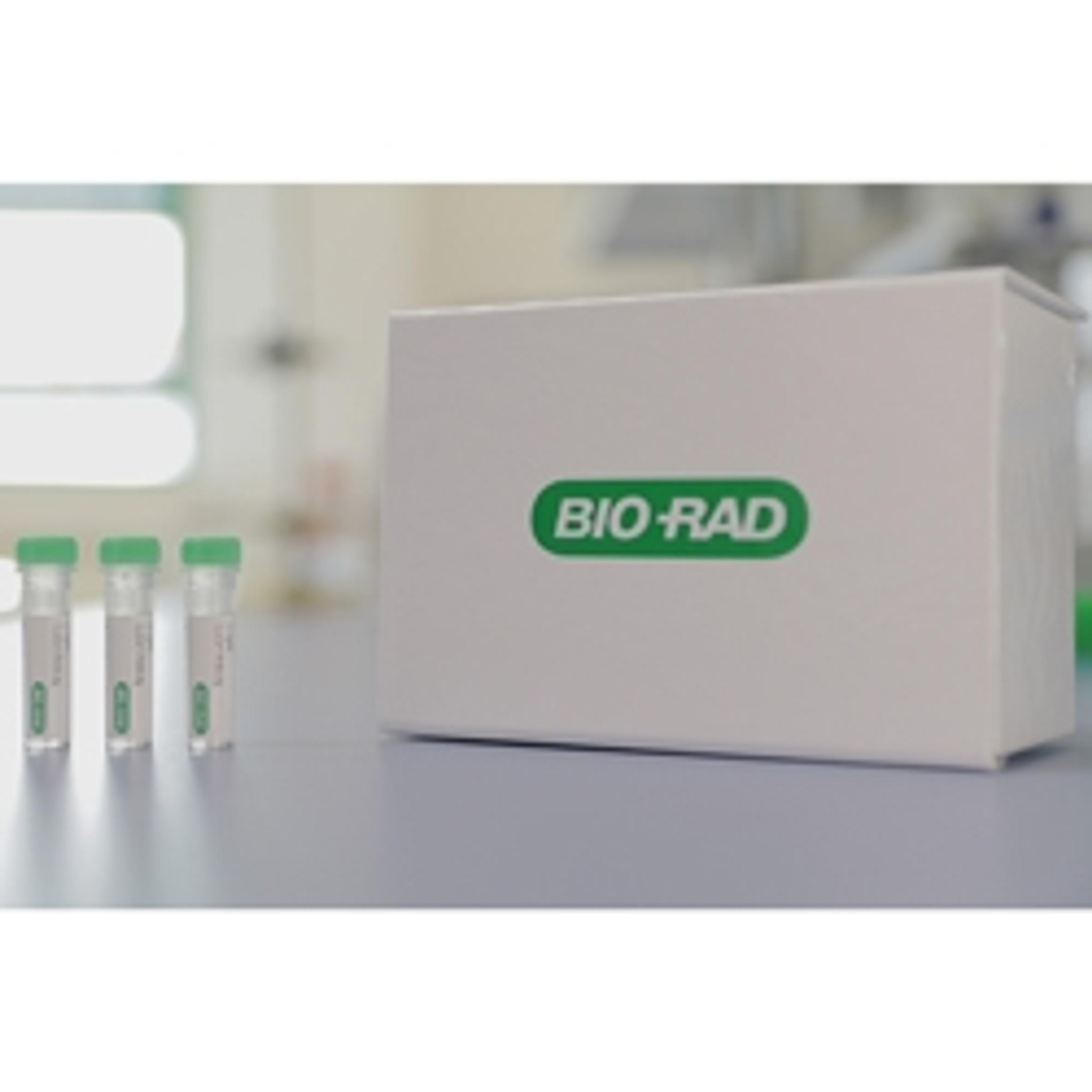
Custom HuCAL® Monoclonal Antibody Generation Service
Bio-RadHighly specific, high affinity recombinant monoclonal antibodies, selected in as little as 8 weeks