
Bio-Rad Introduces the ddPCR™ <i>KRAS</i> Screening Multiplex Kit for Cancer Research
14 Jan 2015
Product news
Bio-Rad Laboratories, Inc. has announced the launch of the ddPCR™ KRAS Screening Multiplex Kit, the latest offering in the company’s Droplet Digital™ PCR line of predesigned, fully wet-lab validated assays. The ddPCR KRAS Screening Multiplex Kit offers improved sensitivity and simultaneous detection of the seven most common KRAS mutations in a single ddPCR experiment.
KRAS mutations are found in 90% of pancreatic cancer cases and 30% of colorectal cancer cases, making it a gene of great interest to cancer researchers. The Multiplex Kit is able to detect and quantify extremely low levels (down to 0.2%) of KRAS mutant DNA in a single assay. Cancer samples are often available in limited quantities. Using the Multiplex Kit, researchers can derive results from low amounts of starting material.
“The KRAS Screening Multiplex Kit delivers a simple yes/no answer as to whether a KRAS mutation exists in smaller samples,” said Dr. Filip Janku of the University of Texas MD Anderson Cancer Center in Houston, TX. “If researchers were to test for the presence of each possible mutation they could end up performing seven to ten separate PCR experiments only to discover the sample was negative. Multiplex kits such as the KRAS Screening Multiplex Kit allow researchers to screen for multiple mutations in a single reaction, saving time and costly resources.”
Bio-Rad’s ddPCR technology provides an absolute measure of target DNA molecules without the need for a standard curve. Together with the ddPCR KRAS Screening Multiplex Kit, this technology enables detection of a single mutant molecule in a background of 2,000 wild-type molecules (0.05% mutation frequency). Measuring these extremely low levels of mutation abundance could lead to the development of new, less invasive and more sensitive cancer diagnostics.
ddPCR KRAS Screening Multiplex Kits are compatible with all of Bio-Rad’s Droplet Digital PCR Systems, including theQX200™ AutoDG™ Droplet Digital™ PCR System.
Related products
Request Quote for All Products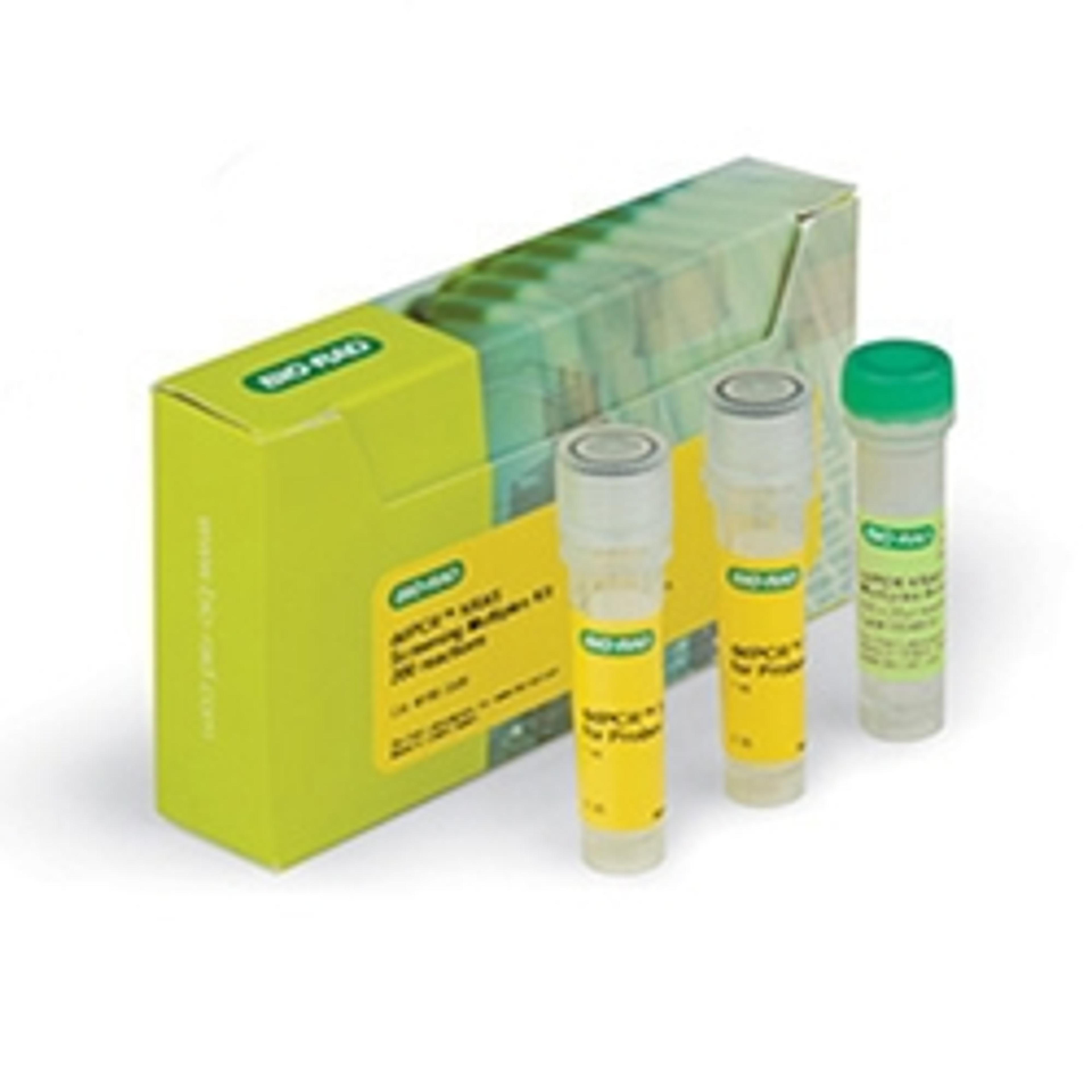
ddPCR™ KRAS Screening Multiplex Kit (1863506)
Bio-Rad200 x 20 µl reactions, includes 20x assay and ddPCR Supermix for Probes (No dUTP) for screening 7 mutations using the QX200™ or QX200™ AutoDG™ Droplet Digital™ PCR Systems