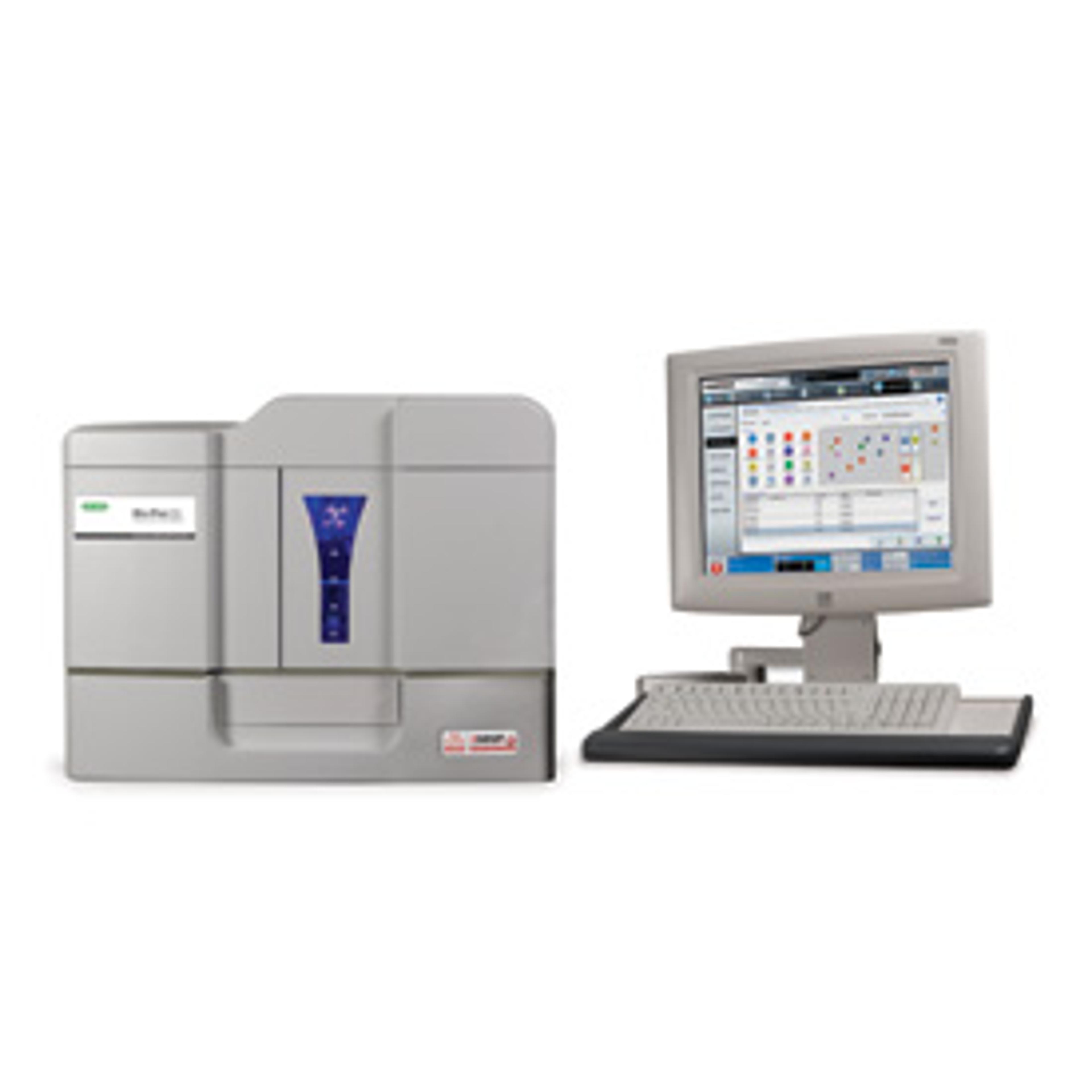
Bio-Rad Expands Its Multiplex Immunoassays with the Launch of Bio-Plex Pro™ Human Apolipoprotein Panel

Assay offers largest set of apolipoproteins commercially available

7 May 2017
Weylan Kiam-Laine
Microbiologist

Product news

Bio-Rad Laboratories, Inc. has announced the launch of the Bio-Plex Pro™ Human Apolipoprotein Panel. This 10-plex panel allows researchers to rapidly detect and quantify key human apolipoproteins associated with cardiovascular disease, especially within the statin pathway, as well as the widely used biomarker C-reactive protein. The panel, which offers the largest number of apolipoproteins on the market, includes four targets (Apo C1, Apo D, Apo J, and Apo H) not found on other multiplex panels.

“The Bio-Plex Pro Apolipoprotein Panel is not only the most comprehensive apolipoprotein assay available, it also allows researchers to detect more samples than any other assay on the market, leading to clear and actionable results,” said Brett Houser, Bio-Plex Global Product Manager, Bio-Rad.

Detecting changes in apolipoprotein levels can be difficult with traditional ELISA techniques because they require a large sample input. The Bio-Plex Pro Apolipoprotein Panel offers a multiplex solution with low sample requirements to accommodate the study of precious samples.

In addition, the panel allows researchers to measure the level of C-reactive protein, a commonly used biomarker for a wide range of conditions, in the same assay as apolipoproteins, and it can assess how these different analytes work in concert in the human body.

For scientists in both biopharma and academia exploring cholesterol metabolism and the statin pathway, the panel facilitates the robust, sensitive, and high-throughput study of a variety of apolipoproteins across many disease areas, including cardiovascular and neurological disease, hypercholesterolemia, diabetes, obesity, and sepsis.

Notable benefits of the Bio-Plex Pro Apolipoprotein Panel include:

High sample detectability — enables detection of more samples than any other available assay, allowing researchers to get more data out of each run

Premixed, ready-to-use reagents — saves time and simplifies workflow with clear instructions

Streamlined data analysis — includes Bio-Plex Manager™ and Bio-Plex Data Pro™ Software for efficient analysis and data management

The Bio-Plex Pro Apolipoprotein Panel is a ready-to-use, 1 x 96-well kit containing premixed magnetic capture beads and detection antibodies, standards, and buffers. The panel is compatible with platforms including the Bio-Plex® 200, Bio-Plex 3D, Bio-Plex® MAGPIX™, and all Luminex platforms.

For more information about Bio-Rad’s Bio-Plex product portfolio, please visit www.bio-rad.com/BioplexApo.

Links

Tags

AntibodiesAntibodies are used in techniques such as confocal and fluorescence microscopy, flow cytometry, ELISA, ELISPOT, immunohistochemistry, western blotting and immunopreciptation. Select specific antigen reactivity, high specific affinity, low non-specific binding, monoclonal or polyclonal, primary or secondary antibodies and associated conjugates such as an enzyme or dye for visualization.ELISAEnzyme-linked immunosorbent assays (ELISA), also known as enzyme immunoassays (EIA), are used for the detection and quantification of proteins, peptides and antibodies in a sample. ELISA often comes in kit format, with pre-selected antibody pairs to detect specific proteins or biomarkers of diseases such as diabetes and obesity, or cardiovascular and neurological disorders. Detection is made possible with chemiluminescent, fluorescent or colorimetric substrates and detection instruments such as microplate / ELISA readers. Other kits available include: Enzyme-linked immunospot (ELISPOT) assays for the quantification of protein-producing cells and chemiluminescent immunoassays (CLIA) kits. Find the best ELISA kits and products in our peer-reviewed product directory: compare products, check customer reviews and receive pricing direct from manufacturers.Protein PurificationProtein purification is a vital step in drug discovery, therapeutics, biotech and life science research. The purification process typically involves subcellular or membrane protein extraction with cell lysis kits, separation of proteins from cell debris by filtration or spin columns, and the isolation of proteins of interest from other proteins and impurities with affinity purification (including fusion protein tags and antibody binding proteins A, G and L), immunoprecipitation or chromatographic methods, such as ion exchange, size exclusion and immobilized metal affinity chromatography. All purification methods come in multiple formats for your laboratory needs, including agarose or magnetic beads, resins, columns and filter plates. Find the best protein purification equipment in our peer-reviewed product directory: compare products, check customer reviews and receive pricing direct from manufacturers.Software PlatformsSoftware platforms are useful for various stages of laboratory experiments from data collection to data storage and processing. For instance lab software is available for system control, data management, data analysis and qualification / validation.ImmunoassayImmunoassays are laboratory tests that utilize antibody-antigen interactions to detect specific substances. They are widely used in diagnostics for detecting diseases, drug testing, and environmental monitoring. These assays offer rapid, sensitive, and precise detection of biomarkers, making them invaluable in clinical and research labs. Browse our peer-reviewed product directory to compare immunoassay systems, read user reviews, and get pricing directly from manufacturers.Monoclonal AntibodiesMonoclonal antibodies (mAbs) are lab-made molecules that can bind to specific antigens on cells, making them highly effective in treating cancers, autoimmune diseases, and infections. These targeted therapies are transforming the treatment landscape for many conditions. Browse our peer-reviewed product directory to find monoclonal antibodies for research and clinical applications; compare products, check reviews, and get pricing directly from manufacturers.MultiplexData AnalysisThe analysis of data is the process of transforming, modeling and evaluating data to discover useful information from experimental results. Cardiovascular DiseaseCardiovascular disease refers to a group of disorders of the heart and blood vessels, including heart attacks, strokes, and high blood pressure. Early diagnosis and effective treatment are essential for improving patient outcomes. Explore cardiovascular disease research and diagnostic tools in our peer-reviewed product directory; compare products, check reviews, and get pricing directly from manufacturers.ELISABiomarker DiscoveryClinical biomarkers refer to substances related to known medical conditions that can be accurately measured <i>in vitro</i>. Biomarkers can be used to diagnose presence of a disease and indicate disease severity. The discovery of new biomarkers is incredibly valuable in the field of diagnostics.