Bio-Plex Pro™ Human Cancer Biomarker Assays

21 Nov 2012

Product news

Bio-Plex Pro™ human cancer biomarker assays provide high precision and a broad dynamic range in a high throughput cost effective multiplex format. Measure multiple biomarkers from as little at 12.5ul of sample in about 3hrs. Together with our new Bio-Plex® MAGPIX™ multiplex reader and Bio-Plex Data Pro™ software, these magnetic bead-based assays form a complete workflow that can accelerate your research.

Bio-Plex Pro™ human cancer biomarker panels are a unique blend of magnetic bead-based assays designed to meet the needs of the most discerning preclinical and clinical researchers. The multiplex format enables robust and reproducible measurement of 16 soluble proteins involved in disease processes such as angiogenesis, metastasis, cell proliferation, cell adhesion/migration, apoptosis and inflammation.

Human cancer biomarker panel 1 consists of receptors, cytokines, chemokines, growth factors and hormones. Available in a premixed 16-plex ready-to-use kit, singleplex kits, and customizable analyte configurations for measurement of the following analytes:

• sEGFR
• FGF-basic
• Follistatin
• G-CSF
• HGF
• sHER-2/neu
• sIL-6Rα
• Leptin
• Osteopontin
• PECAM-1
• PDGF-AB/BB
• Prolactin
• SCF
• sTIE-2
• sVEGFR-1
• sVEGFR-2

Human cancer biomarker panel 2 consists of ligands associated with the receptors in Panel 1, cytokines, chemokines and growth factors. Available in a premixed 18-plex ready-to-use kit, singleplex kits, and customizable analyte configurations for measurement of the following analytes:

• Angiopoietin-2
• sCD40L
• EGF
• Endoglin
• sFASL
• HB-EGF
• IGFBP-1
• IL-6
• IL-8
• IL-18
• uPA
• PAI-1
• PLGF
• TGF-α
• TNF-α
• VEGF-A
• VEGF-C
• VEGF-D

Based on 6.5 µm magnetic beads, these assay panels are compatible with both vacuum and magnetic wash stations. Magnetic washing simplifies plate processing, provides increased throughput, and results in decreased variability and increased reproducibility.

Key Features


• Magnetic beads for simplified plate processing
• All-in-one, space-saving complete kit
• Premixed standards for generation of curves over a broad dynamic range for each target
• Reagent kit II for reliable performance in serum and plasma samples
• Optimized protocol for high precision and broad assay working ranges
• Assay quick guide to get you started right away
• 2-level quality controls included with premixed kits

Other Assay Formats Available

• Custom premixed assays (We Mix) — available as Bio-Plex® x-Plex™ assays built using the Bio-Plex Assay Builder
• Custom assays (You Mix) — available as Bio-Plex Express assays built using the Bio-Plex Assay Builder
• Singleplex sets — each set includes a vial of coupled magnetic beads and a vial of detection bodies; requires reagent kit ll (#171-304055M or 171-304055) and standards (Panel 1 #171-DC5000) and (Panel 2 #171-DC6000)

Instrument Compatibility

• Bio-Plex® MAGPIX™ system
• Bio-Plex® 200 systems
• Bio-Plex 3D system
• Bio-Plex Pro wash stations

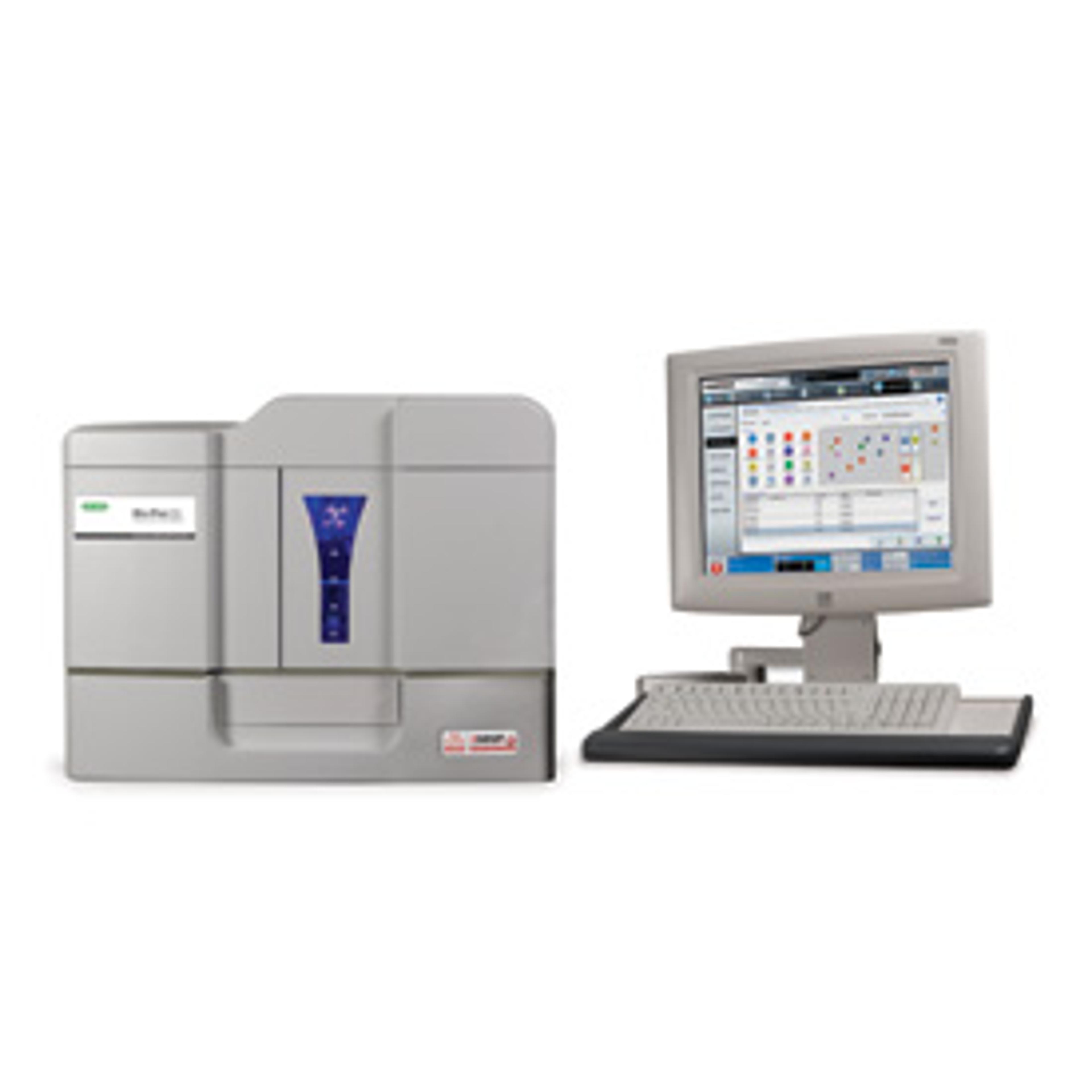
Bio-Plex® 200 System

Bio-Rad

100–240 V, multiplex array system, includes reader, microplate platform, Bio-Plex Manager 5.0 software, PC, calibration kit, validation kit 4.0, MCV plate IV, reservoir, sheath fluid, 2 sample needles
(5)

Links

Tags

Cell Adhesion AssaysCell adhesion assays are used to quantitate attachment and analyze the molecular mechanisms for extracellular matrix adhesion, cell migration and sensitivity to inhibitors. Find the best cell adhesion assay equipment in our peer-reviewed product directory: compare products, check customer reviews and receive pricing direct from manufacturers.Genome AnalysisGenomics, the study of genomes, includes functional genomics, evolutionary genomics and comparative genomics. There are many genomic technologies such as DNA sequencing of whole genomes, computational biology and bioinformatics. DNA and nucleic acids must be isolated and concentrated from cells for analysis with kits, automated analyzers and software. Other useful technologies for studying genomics include PCR, microarrays and electrophoresis.ProteomicsProteomics is the systemic bioinformatics study of proteins and amino acids, including their structure, size, function and identification. Tools used in proteomics include chromatography, blotting and gels, protein arrays, mass spectrometry and ELISA and associated analysis software. Analyzers and proteomic systems should be sensitive, high resolution, fast and may be automated for high-throughput.Labware and Lab SuppliesLabware and lab supplies include various forms of glassware, plasticware, reagents and personal protective equipment (PPE) and are used across all scientific laboratories, enabling daily tasks to be performed. Explore a range of flasks and beakers, petri dishes, carboys and storage bottles. Labware such as condensers, desiccators and burettes are also available for more specific tasks. Find the best labware and lab supplies in our peer-reviewed product directory: compare products, check customer reviews and receive pricing direct from manufacturers.Assay AssemblyAssay Assembly is technique used in drug discovery to develop assays to test the cytotoxicity, genotoxicity, or other activities of a compound on a cell. Assay assembly requires chip assembly, a delivery system and a detection and analysis method. Beneficial features of assay kits or automated systems include high-throughput, high speed and sensitivity and low signal to noise ratio.Cell-Based AssaysCell-based assays are used to monitor the presence, quantity and activities of a desired cellular analyte including drug molecules or biomarkers. This can reveal information on cell health (apoptosis, cytotoxicity, viability and proliferation assays), cell metabolism, cell migration and cell signaling mechanisms. Find the best cell-based assay products, kits and equipment with our peer reviewed product directory: compare products, check customer reviews and receiving pricing direct from manufacturers.BiomarkersBiomarkers are biological markers which can be measured and evaluated to indicate a biological state. The use of biomarkers in research and diagnosis can indicate a normal or disease state or drug response of cells / tissues. Biomarkers include genetic markers, cell surface markers such as antigens, antibodies or receptors and secreted molecules such as cytokines. An assay system is required for identification of biomarkers. :AngiogenesisApoptosisApoptosis, or programmed cell death, is a vital process for healthy tissues and is key to our understanding of disease mechanisms like cancer and neurodegeneration. Research tools enable apoptosis detection, quantification, and analysis. Browse products for apoptosis research in our peer-reviewed product directory.CytokinesCytokines are signaling proteins critical for cell communication in the immune system. They regulate inflammation, immune responses, and cell growth. Cytokine research is vital for understanding disease mechanisms and developing therapies. Explore tools for cytokine detection and analysis in our directory.Cell AnalysisThe analysis of cells allows researchers to understand the factors which contribute to cell health and function. These influencing processes can then be predicted and altered, leading to the development of medication and disease treatments.HormonesChemokinesInflammationMetastasis