Bio-Assay Works to Demonstrate Groundbreaking Rapid Assays at AACC

8 Jul 2012
Sonia Nicholas
Managing Editor and Clinical Lead

Product news

BioAssay Works is focused on antibody- (and antigen-) based detection technologies and their application in lateral-flow immunoassay, for both instrument-based and visually read tests. The company has substantial, trade-secret- protected intellectual property, especially in production of unique, high-sensitivity gold sols and gold conjugates, and has two of its own patented lateral-flow test platforms.

BioAssay Works offers four technologies for high-sensitivity, rapid-format lateral-flow assays. These include concentrated gold sol nanoparticles and rapid-assay development and custom conjugation services. The company’s patented C-FLAT® lateral-flow, rapid-assay platforms provides ultra-sensitive assays with ELISA-like sensitivity.

The skills of BioAssay Works were utilized by the clinical researchers at Brigham and Womens Hospital, Harvard University to convert a lab-based ELISA to a point-of-care urine dipstick for a new acute kidney damage biomarker. The requirement was to have similar sensitivity in the fifteen-minute dipstick as the ELISA test. BioAssay Works has been the only company able to develop a point-of-care format assay for this important kidney damage biomarker that is currently being used world-wide for toxicity research.

The rapid assay detects kidney injury molecule-1 (Kim-1), which has been qualified by the Food and Drug Administration and European Medicines Agency as a highly sensitive and specific urinary biomarker to monitor drug-induced kidney injury in preclinical studies and on a case-by-case basis in clinical trials.

The new KIM-1 acute kidney marker rapid assay and ELISA will be displayed at the BioAssay Works booth (#841) at the AACC Clinical lab Expo 2012 in Los Angeles, July 15th-19th.

C-FLAT® Counter-Flow Lateral Amplified Test

BioAssay Works, LLC

Patented lateral-flow platform contributes to an increased sensitivity, with a rapid assay platform that avoids current patent constraints. Not only is it a new patented platform, but the increased performance of this assay platform can offer you ELISA-like sensitivity in a lateral-flow format.
(0)

Gold Sols and Gold Conjugates

BioAssay Works, LLC

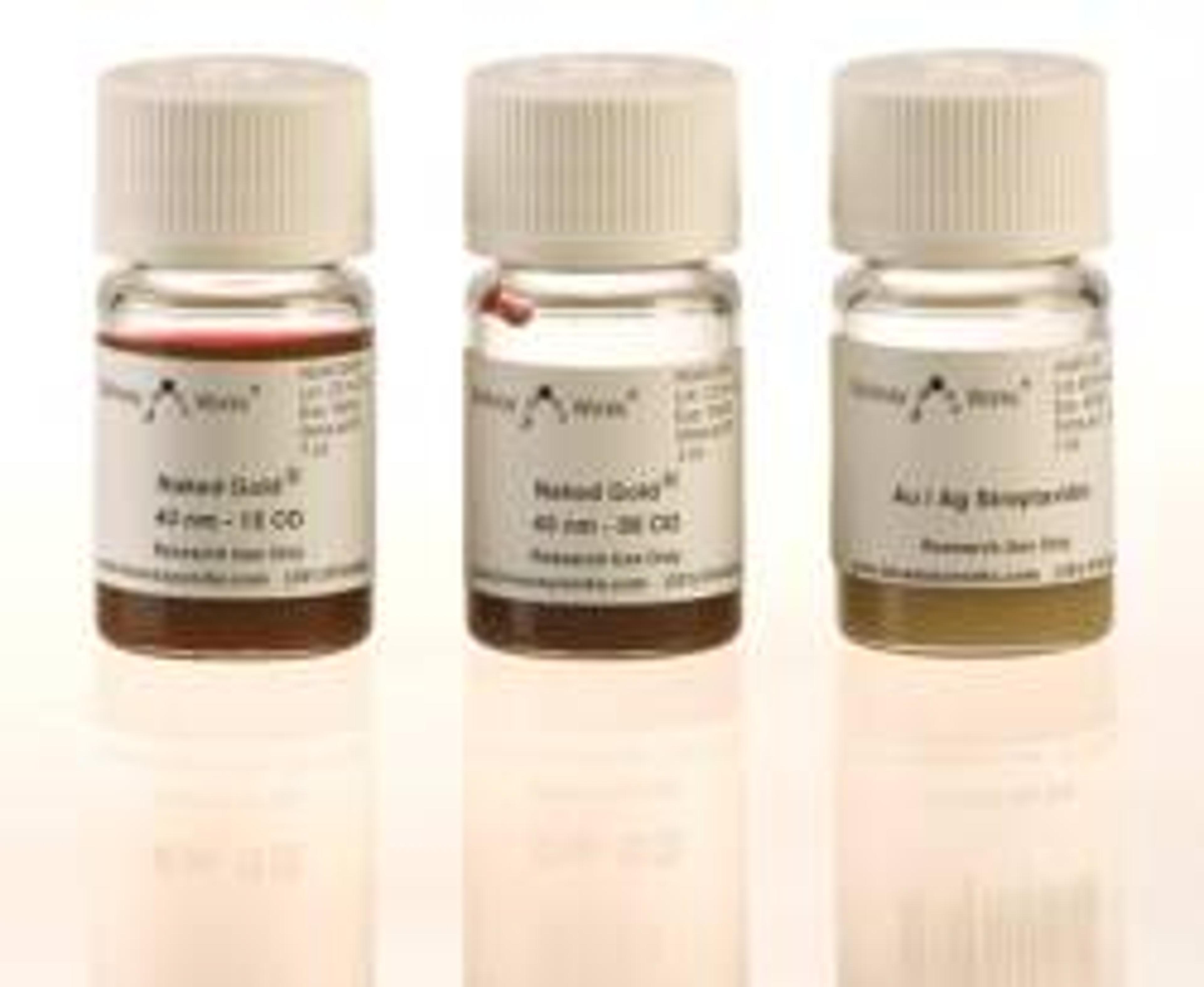
10 OD to 50 OD concentrated nanoparticles that have been optimized for rapid assays without the traditional boiling and centrifugation steps. The BioAssay Works gold sol production process is unique, by eliminating the boiling step, and because of the concentrated gold, you do not have to dilute the sols prior to conjugation, nor do they have to be centrifuged to remove free antibody. The elimination of these two steps alone immediately contributes to the gold sol consistency, reduction of assay development problems and cost savings for manufacturing. The proprietary process reduces the problem of polymers and aggregates, and this optimizes performance in your rapid assays.

(0)

Links

Tags

ELISAEnzyme-linked immunosorbent assays (ELISA), also known as enzyme immunoassays (EIA), are used for the detection and quantification of proteins, peptides and antibodies in a sample. ELISA often comes in kit format, with pre-selected antibody pairs to detect specific proteins or biomarkers of diseases such as diabetes and obesity, or cardiovascular and neurological disorders. Detection is made possible with chemiluminescent, fluorescent or colorimetric substrates and detection instruments such as microplate / ELISA readers. Other kits available include: Enzyme-linked immunospot (ELISPOT) assays for the quantification of protein-producing cells and chemiluminescent immunoassays (CLIA) kits. Find the best ELISA kits and products in our peer-reviewed product directory: compare products, check customer reviews and receive pricing direct from manufacturers.HematologyIn Haematology / Hematology, complete blood cell counts (or full blood counts) are obtained using automated blood count analyzers to enumerate blood cell types.  Hematology also encompasses haemostasis and coagulation, thrombophilia and hemophilia, plasma viscosity and ESR analysis, hemoglobinopathies, cell morphology and haematinic measurement.ImmunologyImmunological techniques measure and characterize immune responses. Immunology kits and analysis systems often use techniques such as ELISA, radioimmunoassay (RIA) and immunodiffusion assays, Immunohistochemistry, and flow cytometry. Immunologists use equipment such as flow Cytometers, plate readers, plate washers and fluorescent microscopes.Cell-Based AssaysCell-based assays are used to monitor the presence, quantity and activities of a desired cellular analyte including drug molecules or biomarkers. This can reveal information on cell health (apoptosis, cytotoxicity, viability and proliferation assays), cell metabolism, cell migration and cell signaling mechanisms. Find the best cell-based assay products, kits and equipment with our peer reviewed product directory: compare products, check customer reviews and receiving pricing direct from manufacturers.Point-of-CarePoint-of-Care Testing (POCT) or Near Patient Testing (NPT) products are available for urine, blood and other clinical chemistry analyses. POCT includes: blood glucose testing, blood gas and electrolytes analysis, rapid coagulation testing (PT / INR), rapid cardiac markers diagnostics, drugs of abuse screening, urine strips testing, pregnancy testing, fecal occult blood analysis, food pathogens screening, hemoglobin diagnostics, infectious disease testing and cholesterol screening.Clinical ChemistryBiochemistry (or clinical chemistry) involves the analysis of bodily fluids using chemical tests. Techniques used include HPLC, chromatography, spectroscopy, mass spectrometry, immunochemical, electrophoresis, turbidometric / spectrophotometric assay, MRI and ISE analysis. Tests are often carried out on plasma or serum but urine (urinalysis) and fecal specimens are also processed.Clinical MicrobiologyMicrobiology is the study of microorganisms including protists, prokaryotes, fungi, and, often, viruses. Microorganisms are a useful research tool as genetic vectors and, in immunology, for antibiotic susceptibility testing, cellular biology and genetics. Microorganisms commonly grow readily in incubators with microbial culture media; this can contain chromogenic supplements to differentiate between cell lines. Estimate your culture’s density of microorganisms with colony counters, or screen and select colonies for desirable clones with automated colony pickers. Additionally, equipment is available to monitor environments for the presence of microbes and identify with microbial identification instruments. Find the best microbiology products in our peer-reviewed product directory: compare products, check customer reviews and receive pricing direct from manufacturers.ImmunoassayImmunoassays are laboratory tests that utilize antibody-antigen interactions to detect specific substances. They are widely used in diagnostics for detecting diseases, drug testing, and environmental monitoring. These assays offer rapid, sensitive, and precise detection of biomarkers, making them invaluable in clinical and research labs. Browse our peer-reviewed product directory to compare immunoassay systems, read user reviews, and get pricing directly from manufacturers.AACCThe American Association for Clinical Chemistry (AACC) Annual Meeting and Clinical Lab Expo is the largest meeting for clinical laboratory professionals in the world. This year's meeting is being held in Atlanta, USA, July 26th-30th, 2015.Kidney Disease