binx health submits request for Emergency Use Authorization for first CRISPR-based point-of-care test for COVID-19

Platform poised to be first CLIA-waived CRISPR-based, point-of-care COVID-19 device with central-lab performance, developed in collaboration with Sherlock Biosciences

17 May 2021

Diane Li
Assistant Editor

Industry news

binx health has announced the submission of an Emergency Use Authorization (EUA) request to the U.S. Food and Drug Administration (FDA) for the first CLIA-waived CRISPR-based point-of-care (POC) test for COVID-19. binx io is already the first CLIA-waived platform for the molecular detection of chlamydia and gonorrhea in about 30 minutes. binx has now adapted the single-use cartridge for analysis of RNA-based targets, pairing the high performance of Sherlock Biosciences’ proprietary CRISPR technology with binx’s rapid and sensitive proprietary electrochemical detection to create a powerful tool to help combat COVID-19. Data obtained in support of this authorization positions binx io at the forefront of rapid, POC molecular detection of both viral and bacterial infections.

“Today’s EUA application is a major milestone for the binx io platform and its capability to detect both viral and bacterial infections. If authorized authorization, the binx io will be a pivotal tool for increasing access to rapid COVID-19 testing and treatment, which is a necessity to control the spread of the disease and save lives,” said Jeffrey Luber, binx health Chief Executive Officer. “We believe single-visit diagnoses with our easy-to-use desktop device will reduce transmission and ultimately empower communities and individuals to return to in-person working and learning more quickly, and with more confidence than they would have otherwise. We are very grateful to our partners, including Sherlock Biosciences, RADx and Open Philanthropy for their integral contributions to this effort.”

binx io has the demonstrated ability to deliver actionable, central laboratory quality results for chlamydia and gonorrhea detection in about 30 minutes, improving upon the current standard of care, which often requires days to weeks between testing and treatment. Recently, the FDA granted a Clinical Laboratory Improvement Amendments (CLIA) waiver for the binx io system for the detection of chlamydia and gonorrhea.

“Last year, Sherlock made history with the first FDA authorization of CRISPR technology in diagnostics or therapeutics with our Sherlock™ CRISPR SARS-CoV-2 kit. We are excited to see binx translate our technology into what may be the first point-of-care CRISPR test FDA-authorized for use on patients,” said Rahul Dhanda, Co-founder, President and Chief Executive Officer of Sherlock Biosciences. “As the leader in CRISPR and Synthetic Biology diagnostics, Sherlock partnered with binx, a leader in point-of-care testing, to reach the millions of people served by over 220,000 locations with CLIA certificates of waiver. Together, we anticipate that we can significantly limit the spread of existing and new variants of the SARS-CoV-2 virus.”

The Company’s EUA submission along with its ongoing feasibility efforts is another example of the io’s potential to be applied across a range of viral and bacterial infections exemplifying the capability of the platform. Key expansions to the platform, including RNA detection capabilities made through the combination of CRISPR technology and proprietary electrochemical detection, allows the platform to detect COVID-19 infection with both speed and accuracy.

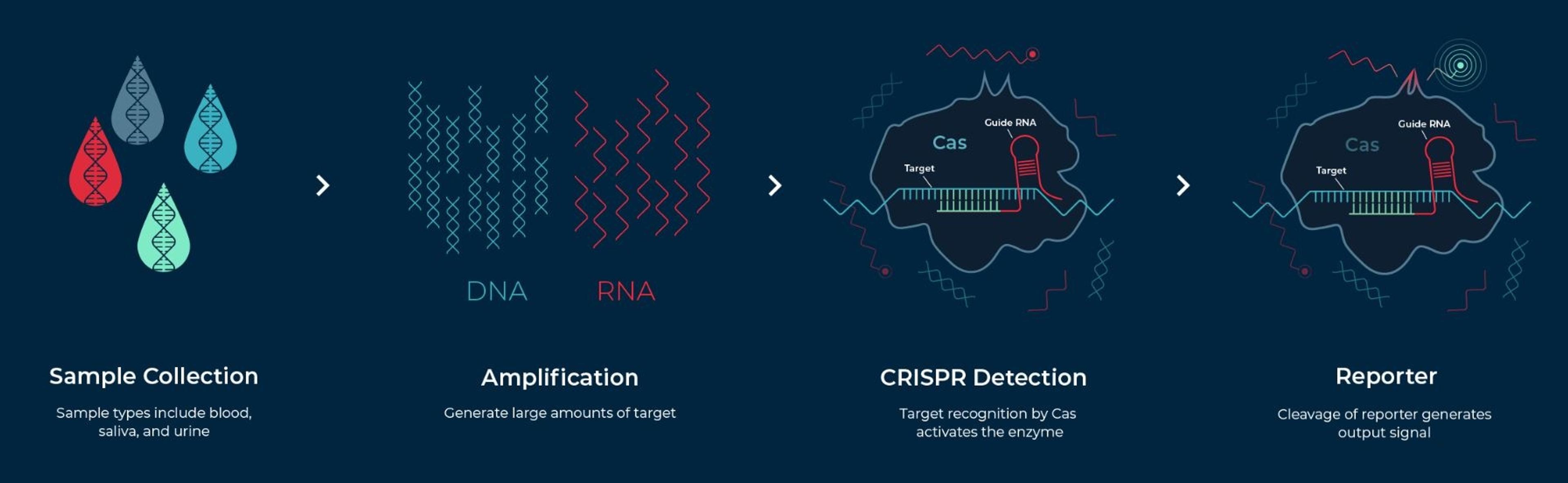
The currently available SherlockTM CRISPR SARS-CoV-2 kit uses the SHERLOCK (Specific High-sensitivity Enzymatic Reporter unLOCKing) method to program a CRISPR molecule to detect the presence of a specific SARS-CoV-2 genetic signature in specimens collected from patients suspected of COVID-19 by their healthcare provider. The kit is intended for use in CLIA laboratories to assay nasal swabs, nasopharyngeal swabs, oropharyngeal swabs or bronchoalveolar lavage (BAL) specimens. When the signature is found, the CRISPR enzyme is activated and releases a detectable signal, yielding results in about an hour. The kit is the first CRISPR-based diagnostic test to receive EUA from the FDA for qualitative detection of nucleic acid from SARS-CoV-2. Sherlock is also pressing forward in developing its INSPECTR at-home testing platform to create an instrument-free, handheld test – similar to that of an at-home pregnancy test – for the rapid detection of the SARS-CoV-2 virus.

Do you use binx health products in your lab? Write a review today for your chance to win a $400 Amazon Gift Card>>

SHERLOCK™

Sherlock Biosciences

SHERLOCK is an evolution of CRISPR technology, which others use to make precise edits in genetic code. SHERLOCK can detect the unique genetic fingerprints of virtually any DNA or RNA sequence in any organism or pathogen. Developed by our founders and licensed exclusively from the Broad Institute, SHERLOCK is a method for single molecule detection of nucleic acid targets and stands for Specific High Sensitivity Enzymatic Reporter unLOCKing. It works by amplifying genetic sequences and programming a CRISPR molecule to detect the presence of a specific genetic signature in a sample, which can also be quantified. When it finds those signatures, the CRISPR enzyme is activated and releases a robust signal. This signal can be adapted to work on a simple paper strip test, in laboratory equipment, or to provide an electrochemical readout that can be read with a mobile phone. Highly sensitive (can detect a single molecule in a sample) Highly specific (accurately detects the target) Integrates well with other tests and lab setups Quantitative (measures amount of target present) Rapid design and delivery to partners

(1)

Links

Tags

Cellular PathologyCellular Pathology deals with the microscopic analysis of tissue samples and cells. Sample preparation and processing includes fixation, staining, sectioning and slide mounting, using equipment such microtomes and cryostats. In choosing immunohistochemistry and immunocytochemistry kits, consider chromogens, staining method, antibodies, microscopes and imaging.Point-of-CarePoint-of-Care Testing (POCT) or Near Patient Testing (NPT) products are available for urine, blood and other clinical chemistry analyses. POCT includes: blood glucose testing, blood gas and electrolytes analysis, rapid coagulation testing (PT / INR), rapid cardiac markers diagnostics, drugs of abuse screening, urine strips testing, pregnancy testing, fecal occult blood analysis, food pathogens screening, hemoglobin diagnostics, infectious disease testing and cholesterol screening.Biopharmaceutical AdvancesBiopharmaceutical advances follow the development of pharmaceuticals derived from biotechnology, also known as biotechnology medicines. Biopharmaceuticals may be produced from cell lines, plants, or microbial cells. Important considerations of biopharmaceutical use include application, cost, production process and purification.Clinical ChemistryBiochemistry (or clinical chemistry) involves the analysis of bodily fluids using chemical tests. Techniques used include HPLC, chromatography, spectroscopy, mass spectrometry, immunochemical, electrophoresis, turbidometric / spectrophotometric assay, MRI and ISE analysis. Tests are often carried out on plasma or serum but urine (urinalysis) and fecal specimens are also processed.Clinical GeneticsMolecular Genetics covers the analysis of hereditary genetic disease and chromosomal abnormalities. Genetics can be analysed using DNA, RNA, and protein microarrays, PCR, RT PCR and DNA sequencing. Genetic equipment includes genetic workstations, thermal cyclers, cooling blocks and electrophoresis products. Diagnostic kits are used for DNA / RNA extraction and purification.Clinical MicrobiologyMicrobiology is the study of microorganisms including protists, prokaryotes, fungi, and, often, viruses. Microorganisms are a useful research tool as genetic vectors and, in immunology, for antibiotic susceptibility testing, cellular biology and genetics. Microorganisms commonly grow readily in incubators with microbial culture media; this can contain chromogenic supplements to differentiate between cell lines. Estimate your culture’s density of microorganisms with colony counters, or screen and select colonies for desirable clones with automated colony pickers. Additionally, equipment is available to monitor environments for the presence of microbes and identify with microbial identification instruments. Find the best microbiology products in our peer-reviewed product directory: compare products, check customer reviews and receive pricing direct from manufacturers.Epigenetic AnalysisEpigenetic analysis products are used to study heritable phenotype changes that do not alter the DNA sequence, such as DNA modifications affecting gene activity. Determine whether genes have been methylated with DNA methylation quantification kits or methylation microarrays. Assess epigenetic regulation with histone modification kits or ChIP-on-chip microarrays. Kits are also available for bisulfite conversion and amplification of your samples, as well as epigenomic library preparation kits for next-generation sequencing (NGS). Find the best epigenetic products in our peer-reviewed product directory: compare products, check customer reviews and receive pricing direct from manufacturers.RegulatoryPharmaceutical regulations impact on all areas of drug development, manufacture and control and supply. Services are provided from the early stages of drug development and clinical trials through to dossier submission, approval and marketing. Regulatory also includes submission of analytical studies from the pharmaceutical product and safety. Point of Care SolutionsPoint of care solutions provide medical diagnostics and treatments at or near the site of patient care. These technologies offer rapid results, helping healthcare providers make quick decisions. From glucose monitors to molecular diagnostics, point of care solutions are transforming healthcare delivery by reducing wait times and improving patient outcomes. Explore the best point of care products in our peer-reviewed product directory, compare options, check reviews, and get pricing directly from manufacturers.Gene EditingGene editing is the precise alteration to an organism's DNA, with CRISPR being the most well-known technique. It is used in a wide range of applications, including the development of disease models and gene therapy, and crop improvement. Browse our peer-reviewed product directory to find the best gene editing solutions, compare products, check reviews, and get pricing directly from manufacturers.CRISPRCRISPR technology enables precise editing of genes, allowing scientists to modify DNA at specific locations. This revolutionary tool is used in genetic research, drug development, and gene therapy. CRISPR has applications in agriculture, disease treatment, and creating genetically modified organisms (GMOs). Explore CRISPR solutions in our peer-reviewed product directory; compare products, check reviews, and get pricing directly from manufacturers.CoronavirusCoronaviruses are a large family of viruses that can cause illnesses ranging from the common cold to more severe diseases like COVID-19. Research into the biology, transmission, and treatment of coronaviruses has become a global priority, particularly since the emergence of SARS-CoV-2. Understanding the virus�s structure and behavior is essential for developing vaccines, diagnostics, and antiviral treatments. Explore our peer-reviewed product directory to discover the latest research tools, diagnostic tests, vaccines, and treatments for coronavirus, compare products, read reviews, and receive pricing directly from manufacturers.Covid-19COVID-19, caused by the SARS-CoV-2 virus, has led to a global health crisis with profound impacts on societies and economies. Research into diagnostics, vaccines, treatments, and understanding viral mechanisms continues to evolve. The pandemic has accelerated innovations in healthcare and biopharmaceuticals, including novel vaccine platforms and rapid testing technologies. Browse our peer-reviewed product directory to find top COVID-19 testing kits, research tools, vaccines, and treatments, compare products, read reviews, and receive direct pricing from manufacturers.
binx health submits request for Emergency Use Authorization for first CRISPR-based point-of-care test for COVID-19