
Benefits of Using Droplet Digital PCR for Measuring Immunotherapy Response Highlighted at ASCO 2017
12 Jul 2017Product news
New research demonstrating the clinical potential of Bio-Rad's Droplet Digital PCR (ddPCR) technology to measure patient response to immunotherapy was presented at the American Society of Clinical Oncology (ASCO) Annual Meeting in June.
Monitoring patient response in immunotherapies is essential to optimizing treatments in the clinic. Studies have shown that circulating tumor DNA (ctDNA) can provide an early indicator of whether or not these treatments are working.
"Clinical researchers are turning to liquid biopsy -- enabled by ddPCR -- to do this because it's a simple, fast, and sensitive molecular tool," said George Karlin-Neumann, PhD, Director of Scientific Affairs, Bio-Rad, Digital Biology Group.
The Puzzle of Pseudoprogression Solved
In one ASCO study, physicians used ddPCR technology to distinguish between tumor growth and pseudoprogression -- a common conundrum in cancer immunotherapy. Tumors can appear to grow before they begin to shrink as a result of treatment, so failure to detect pseudoprogression may lead physicians to prematurely withdraw an immunotherapy that might, in fact, be effective.
In the study, Jenny Lee, MD, of Macquarie University in Sydney and the Melanoma Institute Australia, used ddPCR to detect and quantify BRAF and NRAS mutations in ctDNA in the blood of patients with metastatic melanoma undergoing immunotherapy.
Dr. Lee found that nine of 11 patients with pseudoprogressing tumors manifested a marked decrease in (or undetectably low levels of) ctDNA in response to treatment, while 18 of 20 patients with progressing tumors showed an increase or no change in their ctDNA levels. These results indicate that ctDNA is a reliable biomarker for distinguishing between the two events.
"ddPCR is quite simple," Dr. Lee said. "It is automated, which means it requires very little hands-on time, and it is highly sensitive; you can detect very small amounts of extracted DNA with just a simple blood test."
Quicker Response Biomarker Could Guide Treatment
Other researchers evaluated whether a blood-based biomarker detected by ddPCR could indicate how well patients with non-small cell lung cancer (NSCLC) respond to immunotherapies. Liquid biopsy returned results within two weeks instead of six weeks, when physicians routinely perform diagnostic imaging tests and evaluate disease status.
In a prospective study, Jeroen Hiltermann, MD, PhD, a physician and researcher at University Medical Center Groningen in the Netherlands, in collaboration with Ed Schuuring, a clinical scientist in pathology at the same institution, observed a rapid spike in KRAS-mutated ctDNA in the blood of NSCLC patients responding to nivolumab. The levels in the blood of the patients later dropped to undetectable levels. This pattern was absent in those who did not respond to treatment. The researchers were able to rapidly and reliably detect the changes using ddPCR and show that the fluctuations corresponded with tumor response after only two weeks of treatment.
This biomarker could help physicians like Hiltermann measure how a patient responds to immuno-monotherapy and therefore add more toxic treatments only when a patient does not seem to respond.
"You can only do that with a marker that shows a response fast," Dr. Hiltermann said.
Find out more about ddPCR and Bio-Rad here.
Related products
Request Quote for All Products
QX200™ Droplet Digital PCR System
Bio-RadDroplet Digital PCR System, includes droplet generator, droplet reader, laptop computer, software, associated component consumables, for EvaGreen or probe-based digital PCR applications
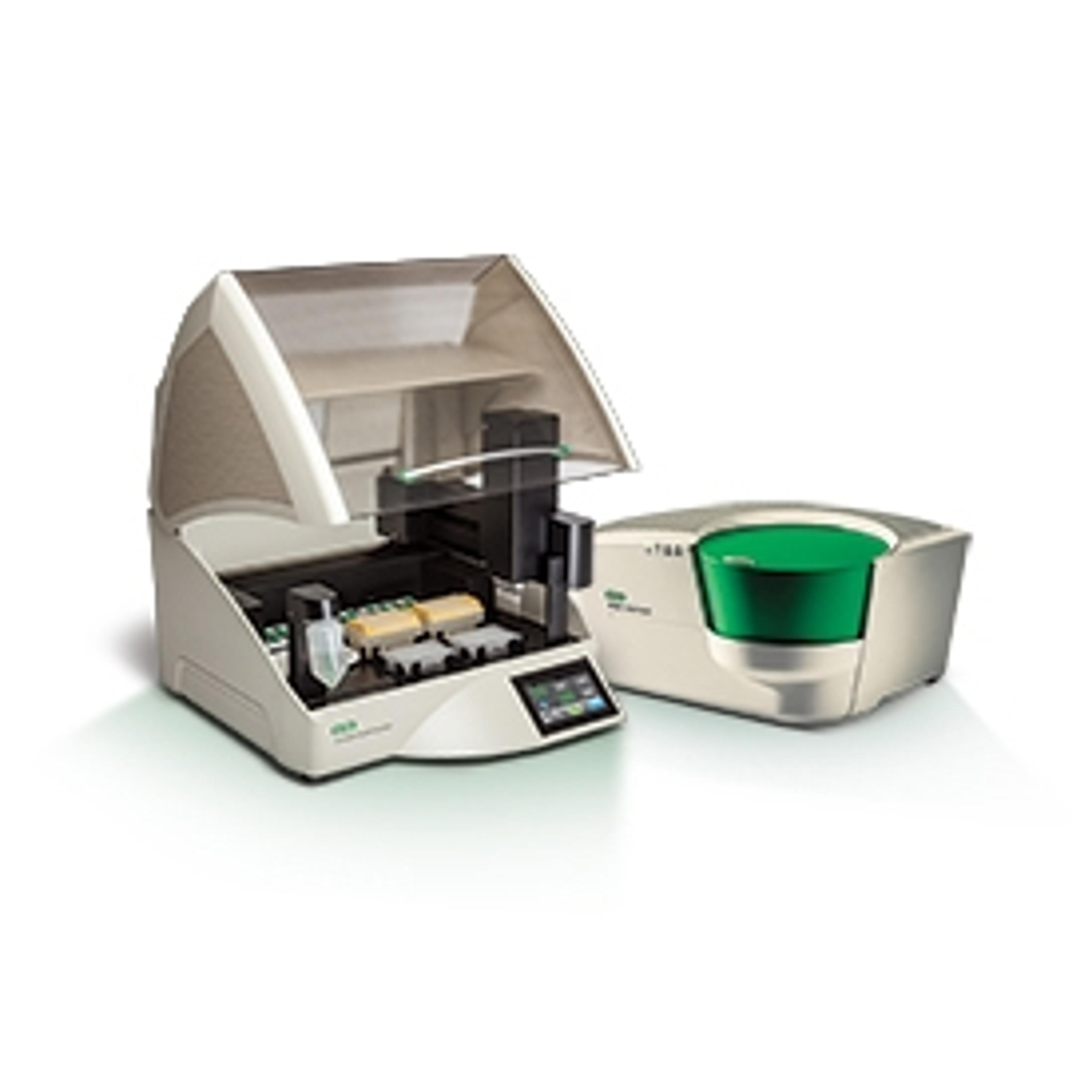
QX200™ AutoDG™ Droplet Digital™ PCR System (1864100)
Bio-RadAutoDG Droplet Digital PCR System for EvaGreen or probe-based digital PCR applications, includes Automated Droplet Generator, QX200 Droplet Reader, laptop computer, and QuantaSoft™ Software