
BellBrook Labs receives NIH funding for novel approach to stimulating anti-tumor immunity
12 Mar 2021
Industry news
BellBrook Labs has been awarded a $300,000 Phase I Small Business Innovative Research (SBIR) grant to develop and validate HTS assays for the discovery of small-molecule antagonists of TREX1.
Immunotherapy approaches such as immune checkpoint blockade are transforming oncology. However, many patients do not respond to existing agents, and new therapeutic strategies for eliciting immune responses to tumors are badly needed. It has recently become clear that activation of the stimulator of interferon (IFN) genes (STING) pathway is a critical step for initiating an antitumor T cell response in the tumor microenvironment (TME). TREX1 acts as a checkpoint on tumor cell immunity by preventing activation of the STING pathway in tumor cells. Upregulation of TREX1 by radiotherapy and chemotherapy interferes with their in situ vaccination effects. Multiple lines of evidence indicate that TREX1 antagonists could represent a new class of immune checkpoint blockers with broad and fundamental impact on cancer treatment regimens.
To enable the discovery of small molecule TREX1 antagonists, BellBrook will leverage its proprietary Transcreener HTS Assay platform to develop and validate a robust, quantitative high throughput TREX1 enzymatic assay as a critical tool for screening and lead optimization. They will also validate a virtual screening approach for TREX1 in collaboration with SilcsBio (Baltimore, MD), a leading-edge computer-aided drug design company. These milestones will establish technical feasibility for a robust TREX1 lead discovery program in Phase II.
Want the latest science news straight to your inbox? Become a SelectScience member for free today>>
Related products
Request Quote for All Products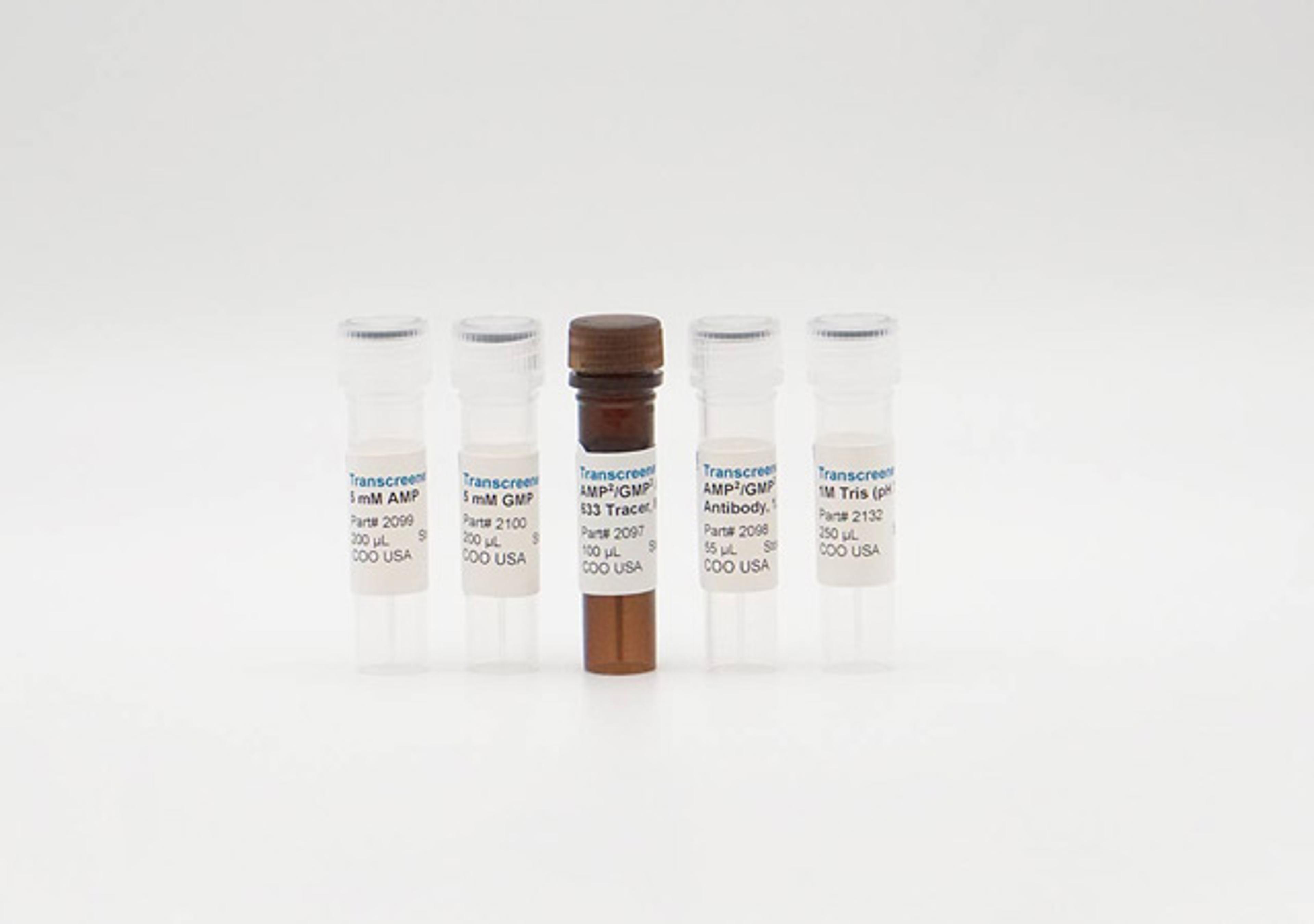
Transcreener® AMP²/GMP² Phosphodiesterase Assays
BellBrook LabsThe Transcreener® AMP²/GMP² Phosphodiesterase Assay Kit directly detects AMP or GMP produced by PDEs, ligases, synthetases, ENPP1, and related enzymes using a mix‑and‑read FP or TR‑FRET format—no coupling steps needed. Compatible with 1–1000 µM native substrates, it delivers excellent HTS performance (Z’ ≥ 0.7, ≥100 mP shift) in a one-step, far‑red fluorescence assay.