BellBrook Labs receive NIH grant to treat lupus and related autoimmune diseases

The grant will be used to accelerate the discovery of new treatments for autoimmune diseases by targeting the cGAS-STING pathway

21 Apr 2021

Diane Li
Assistant Editor

Industry news

BellBrook Labs has been awarded a $1.8 million Phase II SBIR grant by the National Institute of Allergy and Infectious Diseases (NIAID) to develop lead molecules that block cyclic GAMP synthase (cGAS) for the treatment of lupus and other autoimmune diseases. BellBrook’s CEO, Dr. Robert Lowery is the principal investigator for the effort, and Dr. Keith Elkon, Head of Rheumatology at the University of Washington, Seattle, is a collaborator.

Lupus is the second most common autoimmune disease, affecting more than 300,000 people in U.S, with 16,000 new cases annually. Lupus patients suffer from various symptoms, including skin lesions, arthritis, and fatigue; it strikes women much more frequently than men. Though the disease can be mild, lupus causes major organ damage in 50% of cases; e.g., heart, lung, kidneys, brain, and results in a 67% increase in mortality. The underlying cause of lupus is constitutive over-activation of the immune system driven by a class of potent immune signaling molecules called type I interferons.

Cyclic GAMP synthase (cGAS) is the trigger for autoimmunity: it senses DNA released from damaged cells. It produces signaling molecules that activate the pathway for the production of interferons, which circulate throughout the body, activating the immune system to attack critical organs and tissues. Multiple lines of evidence, including genetic knockouts of cGAS in mouse models of monogenic lupus, have clearly established that blocking cGAS is a compelling therapeutic strategy for lupus and other interferon-driven autoimmune diseases.

BellBrook is using structure-based design to develop two cGAS inhibitors with distinct mechanisms and organ distribution profiles. They plan to advance one of the molecules as a therapy for lupus and the other for treatment of Aicardi Goutieres syndrome, a rare childhood encephalopathy. The molecule being developed for lupus will be tested for in vivo efficacy in an innovative model of lupus-induced UV skin sensitivity developed by their collaborator, Dr. Keith Elkon.

The cGAS inhibitor program was enabled by the development of a proprietary biochemical HTS assay funded by a Phase I NIH SBIR grant awarded in April 2017 (grant number R43 GM123833-01), using the same approach that underlies BellBrook’s successful Transcreener HTS Assays. Consistent with their mission, the company recently commercialized the Transcreener cGAMP cGAS Assay to accelerate the discovery of cGAS inhibitors by other groups. The cGAS antagonists will be commercialized by BellBrook’s therapeutics subsidiary, Nudge Therapeutics, Inc.

Do you use BellBrook Labs products in your lab? Write a review today for your chance to win a $400 Amazon Gift Card>>

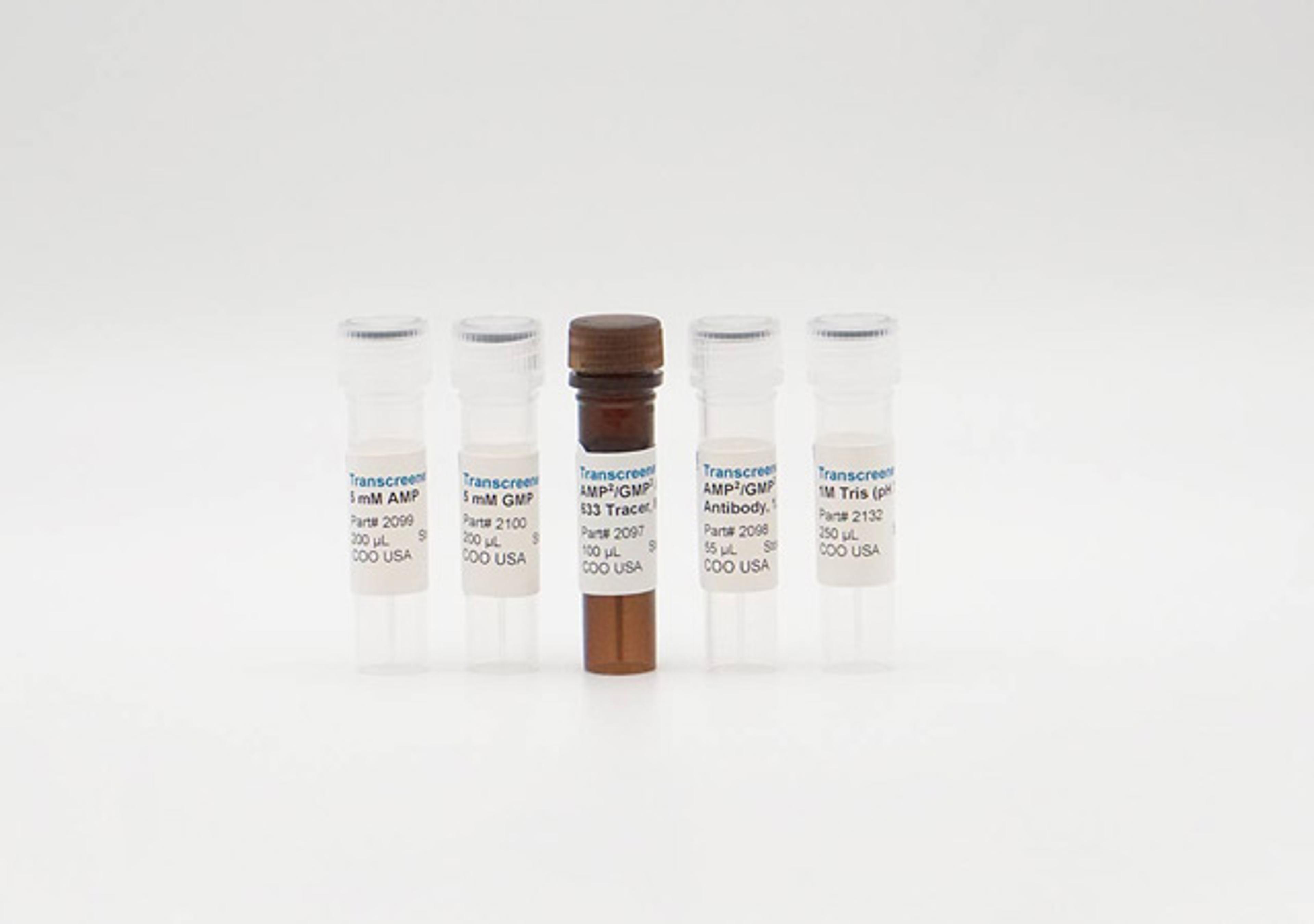
Transcreener® AMP²/GMP² Phosphodiesterase Assays

BellBrook Labs

The Transcreener® AMP²/GMP² Phosphodiesterase Assay Kit directly detects AMP or GMP produced by PDEs, ligases, synthetases, ENPP1, and related enzymes using a mix‑and‑read FP or TR‑FRET format—no coupling steps needed. Compatible with 1–1000 µM native substrates, it delivers excellent HTS performance (Z’ ≥ 0.7, ≥100 mP shift) in a one-step, far‑red fluorescence assay.

(2)

Transcreener® ADP² Kinase Assays

BellBrook Labs

The Transcreener® ADP² Kinase Assay Kit universally detects ADP produced by any kinase or ATPase using a direct mix‑and‑read format, eliminating coupling steps. Available in FP, FI, and TR‑FRET formats with far‑red tracers to minimize interference, it's HTS-ready across 96‑, 384‑, and 1536‑well plates with robust Z' ≥ 0.7 performance.

(3)

Links

Tags

Combinatorial ChemistryCombinatorial chemistry, also known as combichem, is a technique used in drug discovery to create libraries of structurally related compounds. A library is generated by synthesis with a chemical reactor system or by computer-based modeling of compound combinations. When undertaking combinatorial chemistry consider reagents, buffers, resins and standards.Lab-on-a-ChipLab-on-a-chip (LOC) technology uses microfluidic chips, such as microarrays, to perform biochemical assays on a small scale. Benefits of lab-on-a-chip include the small volume of sample required as well as the speed of analysis. In selecting lab-on-a-chip devices consider the assay, cost, reliability, sensitivity and signal to noise ratio.Compound LibrariesCompound libraries, or chemical libraries, are used in drug discovery for the identification of potential therapeutics compounds. Used in conjunction with high-throughput screening, the libraries of stored compounds are often generated for specific purposes as a drug target or disease model. Cheminformatics are commonly used when designing a compound library and software can be used to analyze the screening process.  Biopharmaceutical AdvancesBiopharmaceutical advances follow the development of pharmaceuticals derived from biotechnology, also known as biotechnology medicines. Biopharmaceuticals may be produced from cell lines, plants, or microbial cells. Important considerations of biopharmaceutical use include application, cost, production process and purification.Plate ProcessingAutomated plate processing is used in microplate technologies for high-throughput, speed and efficiency. Plate processing systems include microplate handlers for moving plates, heat sealers, stackers and carousels for storage, retrieval and delivery, microplate washers and piercers. Useful features of plate processors include walk-away automation, compatibility and easy integration with microplate systems.GC-MS GC-MS (gas chromatography-mass spectrometry) instruments and equipment are used to separate, quantify and identify mixtures of small and volatile compounds, such as polycyclic aromatics, fatty acids and alcohols. Often used in drug detection, forensic investigation and environmental analysis for pesticides and contaminants, GC-MS is a powerful addition to your lab’s analytical capabilities. GC-MS/MS instruments equipped with a qTOF or triple quadrupole analyzers can give greater sensitivity and resolution to your analysis. Find the best GC-MS instruments and equipment in our peer-reviewed product directory: compare products, check customer reviews and receive pricing direct from manufacturers.Drug DeliveryDrug Delivery refers to dosage form, route of administration, formulations, technologies, and systems for transporting a pharmaceutical compound in the body as needed to safely achieve its desired therapeutic effect. Drug delivery is often approached via the biopharmaceutical or small molecule drug's formulation, but it may also involve medical devices or drug-device combination products. Considerations include instrumentation, software and services. BiodiscoveryHigh ThroughputHigh throughput experiments allow the simultaneous processing of several samples. This parallelization reduces the cost per experiment and increases reproducibility and output volume of data.Assay DevelopmentThe process of proving an assay to be sensitive with respect to the target is known as assay development. The assay should be able to characterize novel compounds and measure the potency of these compounds against a validated biological target.Drug DiscoveryDrug discovery is the process of identifying potential new medications, involving stages such as target identification, compound screening, and preclinical development. It relies on cutting-edge technologies like high-throughput screening, artificial intelligence, and molecular modeling to accelerate the identification of drug candidates. Drug discovery plays a pivotal role in developing new therapies for diseases ranging from cancer to rare genetic disorders. Browse our peer-reviewed product directory to find the latest drug discovery technologies, compare options, check customer feedback, and get pricing directly from manufacturers.Drug DevelopmentDrug development refers to the process of bringing a new drug to market.Drug Discovery & Development Screening
BellBrook Labs receive NIH grant to treat lupus and related autoimmune diseases