Beckman Coulter's SARS-CoV-2 IgG antibody test receives FDA emergency use authorization

Only IgG assay from top four in vitro diagnostic manufacturers that detects antibodies targeting the receptor binding domain on the spike protein

28 Jun 2020

Diane Li
Assistant Editor

Industry news

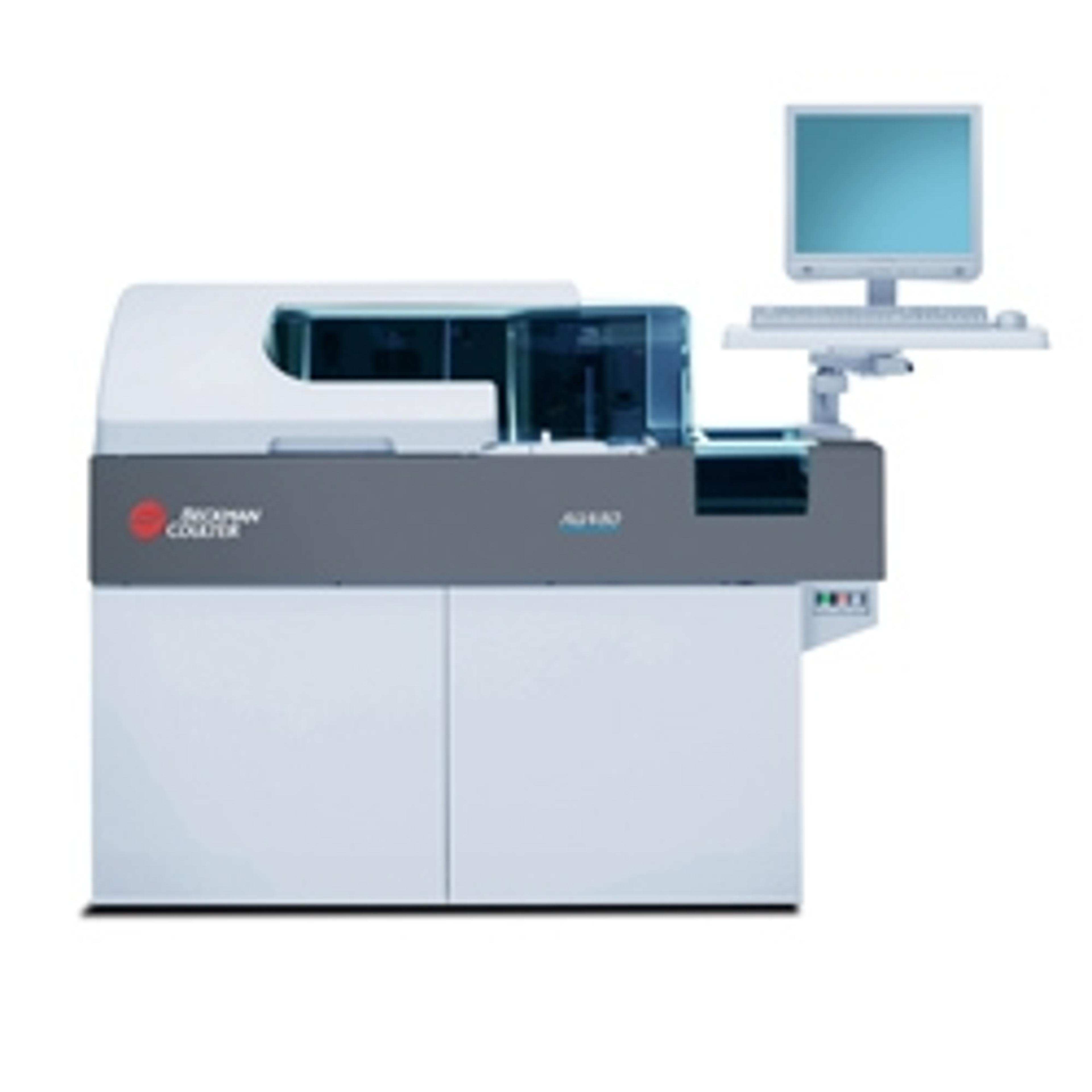
Beckman Coulter has announced that its Access SARS-CoV-2 IgG assay has received Emergency Use Authorization (EUA) from the U.S. Food & Drug Administration (FDA). Beckman Coulter has already shipped tests to more than 400 hospitals, clinics and diagnostics laboratories in the U.S., and has begun distribution of the new antibody test globally to countries that accept the FDA EUA and CE Mark. The company is able to deliver more than 30 million tests a month.

Henry Ford Health System was one of the first health systems to receive Beckman Coulter's test and independently validate its performance.

"We selected the Beckman Coulter Access SARS-CoV-2 IgG antibody assay to be the backbone of Henry Ford's COVID-19 serology testing program because of its outstanding performance in our rigorous independent evaluation," said Dr. Bernard C Cook, Division Head of Chemistry-Pathology, Henry Ford Health System. "Henry Ford found when running the Beckman Coulter SARS-CoV-2 assay on 204 PCR-confirmed COVID-19 patient samples, a test sensitivity of 100% at 14 days post-PCR and testing of 80 patient samples from the pre-COVID era yielded a specificity of 100%."

"At a time when significant confusion was created by the initial influx of poor-quality antibody tests, our team worked meticulously to develop a highly sensitive and specific assay," said Julie Sawyer Montgomery, president of Beckman Coulter. "With 100% Positive Percent Agreement and 99.6% Negative Percent Agreement, our test significantly reduces the risk for false positives, delivering the results that health care providers and their patients can trust. A lot has been written about accuracy issues with the initially launched antibody tests, but a test at this level offers positive predictive values greater than 90% even in very low prevalence communities. And, in areas hardest hit by the virus, the positive predictive values of our assay are greater than 98%."

Additionally, of the tests developed by the top four in vitro diagnostic manufacturers capable of delivering high-volume testing to the U.S., Beckman Coulter's test is the only SARS-CoV-2 IgG assay which targets antibodies that recognize the receptor binding domain (RBD) of the spike protein which SARS-CoV-2 uses to bind to a human cell receptor. This is significant as antibodies which target the RBD have the potential to be neutralizing and thus prevent future infection by blocking the virus from entering the cell. It is for this reason many vaccine developers are also targeting the RBD of the spike protein in their vaccine development.

Beckman Coulter has more than 16,000 immunoassay analyzers worldwide, 3,500 of which are in the United States. Many of Beckman Coulter's analyzers can deliver up to 400 routine tests an hour. A large number of analyzers are connected to hospital information systems, enabling laboratories to automate the reporting of serology test results. The Access SARS-CoV-2 IgG test can also be run on Beckman Coulter's Access 2 analyzer, a compact table-top analyzer enabling high-quality serology testing to be carried out in small hospitals and clinics. This test seamlessly integrates into laboratory workflows making it easy to add serology testing to routine blood tests performed during inpatient and wellness testing. This type of testing can enable health systems to comprehensively determine the immune status of their communities and potentially identify individuals that are eligible for future plasma donation.

"We anticipate that understanding the immune status of communities and convalescent plasma donation will play important roles in the fight against COVID-19 before a vaccine is widely available," said Shamiram R. Feinglass, M.D., MPH, chief medical officer Beckman Coulter. "While there is more to learn regarding how long an individual's immune response to the SARS-CoV-2 virus lasts, this test may be crucial to determining the portion of the population that may already be immune."

Sawyer Montgomery added, "Our assay can be utilized in a variety of healthcare settings, including central laboratories, as well as smaller clinics and hospitals in underserved communities with a range of Beckman Coulter immunoassay analyzers. This accessibility is vital to ensuring all communities, including minority, rural and urban have access to this testing and answers they can trust."

While immunoglobulin M (IgM) antibodies play a prominent role in the body's primary antibody response to infection, they decline within a short timeframe. IgG antibodies begin developing within the first 14 days, and may last for months or years depending upon the pathogen and the individual.

Dr. Feinglass added, "We developed the Access SARS-CoV-2 IgG test to help clinicians determine if a patient was infected with COVID-19 in the past and developed an immune response. In contrast, a total antibody test can't help a clinician determine whether an individual is currently infected or whether they developed an immune response from an earlier infection. The clinician must therefore perform additional testing, requiring added time and cost."

Do you use Beckman Coulter products in your lab? Write a review today for your chance to win a $400 Amazon gift card>>
Links

Tags

AntibodiesAntibodies are used in techniques such as confocal and fluorescence microscopy, flow cytometry, ELISA, ELISPOT, immunohistochemistry, western blotting and immunopreciptation. Select specific antigen reactivity, high specific affinity, low non-specific binding, monoclonal or polyclonal, primary or secondary antibodies and associated conjugates such as an enzyme or dye for visualization.Data AnalysisData analysis hardware and software is available to make data processing straight-forward yet powerful. Data software can be used for math and stats, technical graphing and image analysis. In addition, software is available for specific data analysis of electrophoresis, densitometry, ELISA and DNA sequencing.Blood TransfusionBlood Transfusion involves giving donor blood to a recipient patient. Screening is essential to avoid transfusion reactions. Blood banks use immunohematological techniques to determine rh and ABO blood group, and screen for antibodies using specific antisera. Blood Banks use Direct Coombs Tests (DCT) and Indirect Coombs Tests (IAT) to detect hemolysis and Haemolytic Disease of the Newborn (HDN).ImmunologyImmunological techniques measure and characterize immune responses. Immunology kits and analysis systems often use techniques such as ELISA, radioimmunoassay (RIA) and immunodiffusion assays, Immunohistochemistry, and flow cytometry. Immunologists use equipment such as flow Cytometers, plate readers, plate washers and fluorescent microscopes.Cellular PathologyCellular Pathology deals with the microscopic analysis of tissue samples and cells. Sample preparation and processing includes fixation, staining, sectioning and slide mounting, using equipment such microtomes and cryostats. In choosing immunohistochemistry and immunocytochemistry kits, consider chromogens, staining method, antibodies, microscopes and imaging.Biopharmaceutical AdvancesBiopharmaceutical advances follow the development of pharmaceuticals derived from biotechnology, also known as biotechnology medicines. Biopharmaceuticals may be produced from cell lines, plants, or microbial cells. Important considerations of biopharmaceutical use include application, cost, production process and purification.Clinical ChemistryBiochemistry (or clinical chemistry) involves the analysis of bodily fluids using chemical tests. Techniques used include HPLC, chromatography, spectroscopy, mass spectrometry, immunochemical, electrophoresis, turbidometric / spectrophotometric assay, MRI and ISE analysis. Tests are often carried out on plasma or serum but urine (urinalysis) and fecal specimens are also processed.Clinical GeneticsMolecular Genetics covers the analysis of hereditary genetic disease and chromosomal abnormalities. Genetics can be analysed using DNA, RNA, and protein microarrays, PCR, RT PCR and DNA sequencing. Genetic equipment includes genetic workstations, thermal cyclers, cooling blocks and electrophoresis products. Diagnostic kits are used for DNA / RNA extraction and purification.RegulatoryPharmaceutical regulations impact on all areas of drug development, manufacture and control and supply. Services are provided from the early stages of drug development and clinical trials through to dossier submission, approval and marketing. Regulatory also includes submission of analytical studies from the pharmaceutical product and safety. ImmunoassayImmunoassays are laboratory tests that utilize antibody-antigen interactions to detect specific substances. They are widely used in diagnostics for detecting diseases, drug testing, and environmental monitoring. These assays offer rapid, sensitive, and precise detection of biomarkers, making them invaluable in clinical and research labs. Browse our peer-reviewed product directory to compare immunoassay systems, read user reviews, and get pricing directly from manufacturers.Monoclonal AntibodiesMonoclonal antibodies (mAbs) are lab-made molecules that can bind to specific antigens on cells, making them highly effective in treating cancers, autoimmune diseases, and infections. These targeted therapies are transforming the treatment landscape for many conditions. Browse our peer-reviewed product directory to find monoclonal antibodies for research and clinical applications; compare products, check reviews, and get pricing directly from manufacturers.FDAThe Food and Drug Association (FDA) is an agency within the U.S. Department of Health and Human Services. Among other things, it is responsible for ensuring the safety, effectiveness and quality of drugs, vaccines and other biological products, and medical devices. CoronavirusCoronaviruses are a large family of viruses that can cause illnesses ranging from the common cold to more severe diseases like COVID-19. Research into the biology, transmission, and treatment of coronaviruses has become a global priority, particularly since the emergence of SARS-CoV-2. Understanding the virus�s structure and behavior is essential for developing vaccines, diagnostics, and antiviral treatments. Explore our peer-reviewed product directory to discover the latest research tools, diagnostic tests, vaccines, and treatments for coronavirus, compare products, read reviews, and receive pricing directly from manufacturers.Infectious DiseasesInfectious diseases are caused by pathogens such as bacteria, viruses, and fungi. Effective detection, prevention, and treatment are crucial to control outbreaks and improve public health. Diagnostic tools, vaccines, and antimicrobial treatments are essential components of managing these diseases. Research into emerging pathogens and resistance patterns continues to evolve. Browse our peer-reviewed product directory to find the best diagnostic tools, prevention solutions, and treatment options; compare products, read customer reviews, and get pricing directly from manufacturers.